
Silverfish thrive in exactly the conditions bathrooms provide: high humidity, warm temperatures, and dark, undisturbed corners. If you've spotted their silvery, tapered bodies darting under the bathmat or along the baseboard at night, you're dealing with a moisture problem as much as a pest problem. Getting rid of silverfish in the bathroom for good means tackling both — drying out their habitat and removing the food sources (mold, mildew, paper, and organic debris) that let them multiply.
Why Silverfish Love Bathrooms
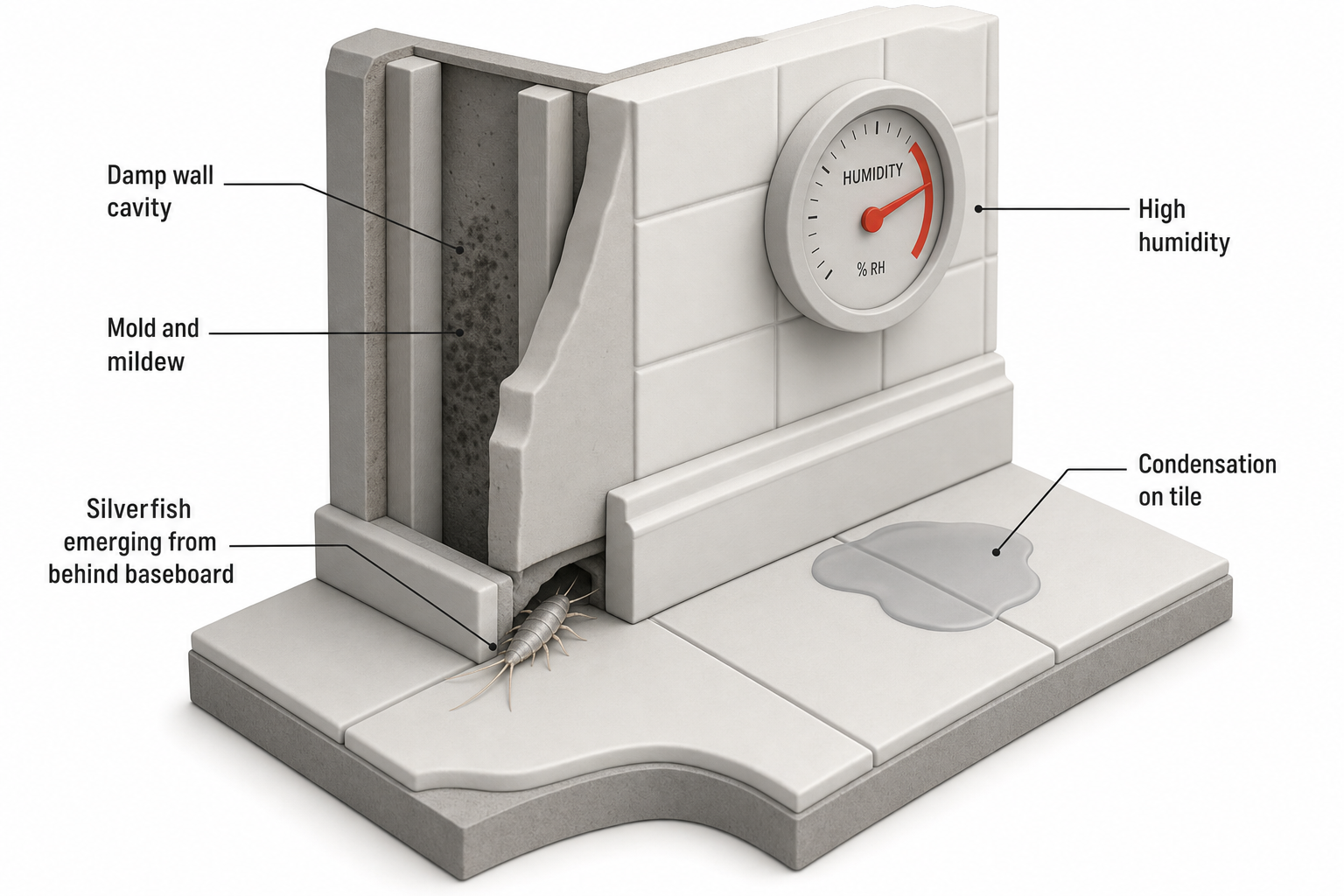
Silverfish (Lepisma saccharatum and related species) are nocturnal insects that need consistently damp air to survive — most references put their preferred range around 75%–95% relative humidity. Bathrooms with poor ventilation, leaky fixtures, or condensation on tile routinely hit that range, especially in homes without exhaust fans or in humid climates. They feed on mold, mildew, dead skin cells, hair, and even the glue in wallpaper or cardboard, which is why they also show up near stored toilet paper and cosmetic boxes.
Step 1: Confirm It's Silverfish
Silverfish are wingless, about 0.5in to 0.75in long, with a tapered, fish-like body, silvery-gray scales, and two long antennae plus three tail bristles at the rear. They move in quick, darting bursts rather than crawling steadily. If you see slow-moving bugs or ones with wings, you may be dealing with a different pest entirely — cockroach nymphs and certain moths are common look-alikes.
Step 2: Cut Off the Moisture They Need
This is the most important step. Chemical treatments will knock down a visible population, but silverfish will keep returning as long as the bathroom stays damp.
- Run the exhaust fan during and for at least {measure:20 minutes} after every shower or bath. If your bathroom doesn't have one, or the existing fan is undersized or noisy, consider having a licensed electrician evaluate installing a properly vented unit.
- Fix drips and leaks. Check under the sink, around the toilet base, and behind the tub surround for slow leaks. A dripping supply line or a failing wax ring can keep humidity elevated even with good ventilation.
- Wipe down wet surfaces — tile, tub, and countertops — after use instead of letting them air dry, especially in windowless bathrooms.
- Run a dehumidifier in the bathroom or an adjoining space if humidity consistently reads above 50% on a hygrometer.
- Seal grout and caulk lines that have cracked or gone moldy, since these hold moisture against the wall and give silverfish and mold a foothold at the same time.
[!safety] If you find soft, spongy drywall, warped subflooring, or visible black mold covering more than a small patch, treat it as a moisture-damage and mold issue first. Extensive mold remediation and any structural repair should be handled by a qualified contractor or mold remediation professional.
Step 3: Remove Food Sources and Hiding Spots
Silverfish need clutter and organic material as much as they need humidity.
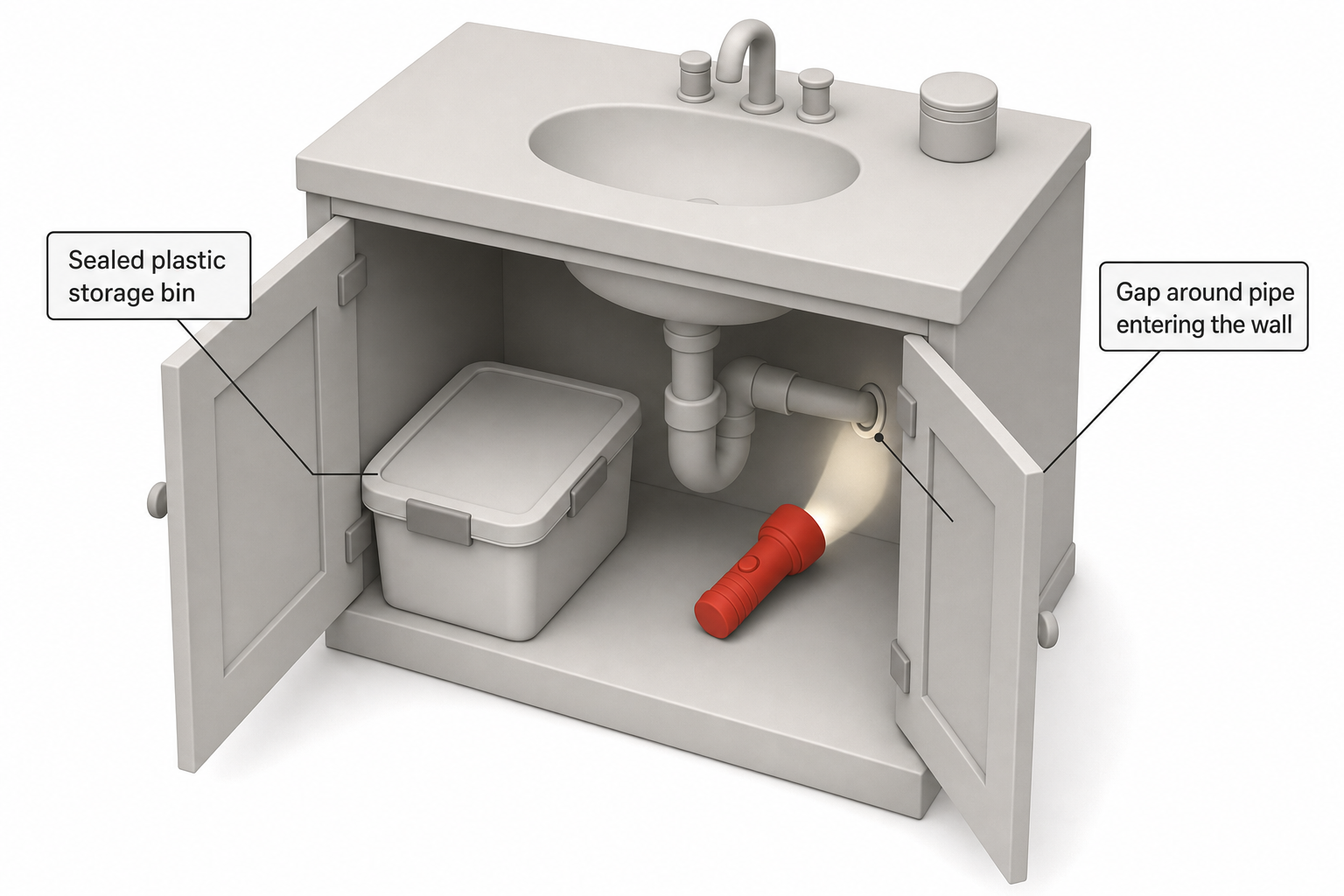
- Store spare toilet paper, tissue boxes, and cardboard packaging outside the bathroom, or in sealed plastic bins instead of on open shelves.
- Vacuum and mop baseboards, behind the toilet, and under the vanity regularly — hair, skin flakes, and dust are all silverfish food.
- Clear out old magazines, cardboard boxes, or paper labels from cleaning products stored under the sink.
- Declutter linen closets that share a wall with the bathroom; silverfish travel through wall voids and pipe chases.
Step 4: Seal Entry Points
Silverfish squeeze through gaps as thin as a credit card. Look for:
- Gaps around pipes under the sink or behind the toilet — seal with caulk or expanding foam sealant rated for the material.
- Cracks where baseboard meets flooring, especially in older homes with settled foundations.
- Gaps around window frames and exterior wall penetrations if the bathroom has an outside wall.
- Loose or missing grout, which lets moisture and insects into the wall cavity behind tile.
Step 5: Targeted Treatments
Once the environment is less hospitable, use direct treatments to clear the existing population.
Desiccant dusts
Diatomaceous earth (food-grade) and boric acid powder work by damaging the insect's exoskeleton or being ingested, causing dehydration. Apply a thin layer — a visible dusting is more effective than a thick pile, which silverfish will simply avoid — into wall voids, under the vanity, behind the toilet, and along baseboards. Keep dusts away from areas pets or children can access, and out of the bathtub or sink itself.
Sticky traps
Place glue traps along walls and in corners where you've seen activity. These won't solve an infestation on their own but are useful for monitoring how well your moisture and food-source changes are working — fewer catches over a few weeks means your fixes are taking hold.
Insecticide sprays
Residual sprays labeled for crawling insects can be applied to cracks, baseboards, and entry points according to the label. Because bathrooms involve high humidity and surfaces people touch with bare skin, avoid spraying tubs, sinks, countertops, or anywhere skin contact is likely, and always follow label directions on ventilation and re-entry time. Product-specific choices are covered in the recommendations below.
[!safety] Never mix insecticide products or combine them with bleach-based cleaners — some combinations release hazardous fumes. Ventilate the room well during and after application, and keep children and pets out until surfaces are dry.
Natural deterrents
Cedar shavings, dried bay leaves, or scent sachets are sometimes used as mild deterrents in cabinets and closets. These are not proven eradication methods and work best as a supplement to moisture control and sealing, not a replacement for them.
Step 6: Monitor and Maintain
After your initial cleanup, check sticky traps weekly for a month. A steady decline means the infestation is resolving. If numbers stay flat or increase despite dry conditions and sealed entry points, the colony may be nesting in a wall void, under the tub, or in a crawl space you can't easily reach.
[!region] Building codes and typical humidity control requirements vary by climate zone — in humid coastal or subtropical regions, some local code officials and building professionals recommend continuous mechanical bathroom ventilation as standard practice, while drier inland regions may not require it. Check with a local contractor or your jurisdiction's building department for what applies to your home.
When to Call a Pest Control Professional
If you've addressed moisture, sealed obvious gaps, removed clutter, and applied dusts or traps for several weeks without improvement, a licensed pest control professional can inspect wall voids and subfloor areas you can't access and apply treatments not available for consumer use. A persistent, worsening infestation despite dry conditions can also indicate a hidden leak or moisture source that needs a plumber's inspection.
FAQ
Are silverfish in the bathroom dangerous to my health? No — silverfish don't bite, sting, or transmit disease to humans. Their main impact is damage to paper, fabric, and stored items, plus the unease of an infestation. Their presence is a useful signal of excess moisture, which itself can encourage mold growth.
Why do I keep finding silverfish even though the bathroom looks clean? Visible cleanliness doesn't address hidden moisture. Check for slow leaks under the sink and around the toilet base, and verify your exhaust fan is actually venting outside rather than into an attic space, which is a common installation issue.
Will a dehumidifier alone get rid of silverfish in the bathroom? It helps significantly by making the environment inhospitable, but pairing it with sealing entry points, removing paper clutter, and using a desiccant dust or trap gets rid of the existing population faster than moisture control alone.
How long does it take to fully get rid of a silverfish infestation? With consistent moisture control and treatment, many homeowners see a noticeable drop within {measure:2 weeks} to {measure:4 weeks}, though a full resolution can take longer if the source is a hidden leak or a well-established colony in a wall void.
Do silverfish mean my house has a bigger pest or moisture problem? Not necessarily, but they're a strong early indicator of excess humidity and organic debris buildup. It's worth checking nearby areas — basements, crawl spaces, closets — for similar conditions, since silverfish often spread from one damp area to another.