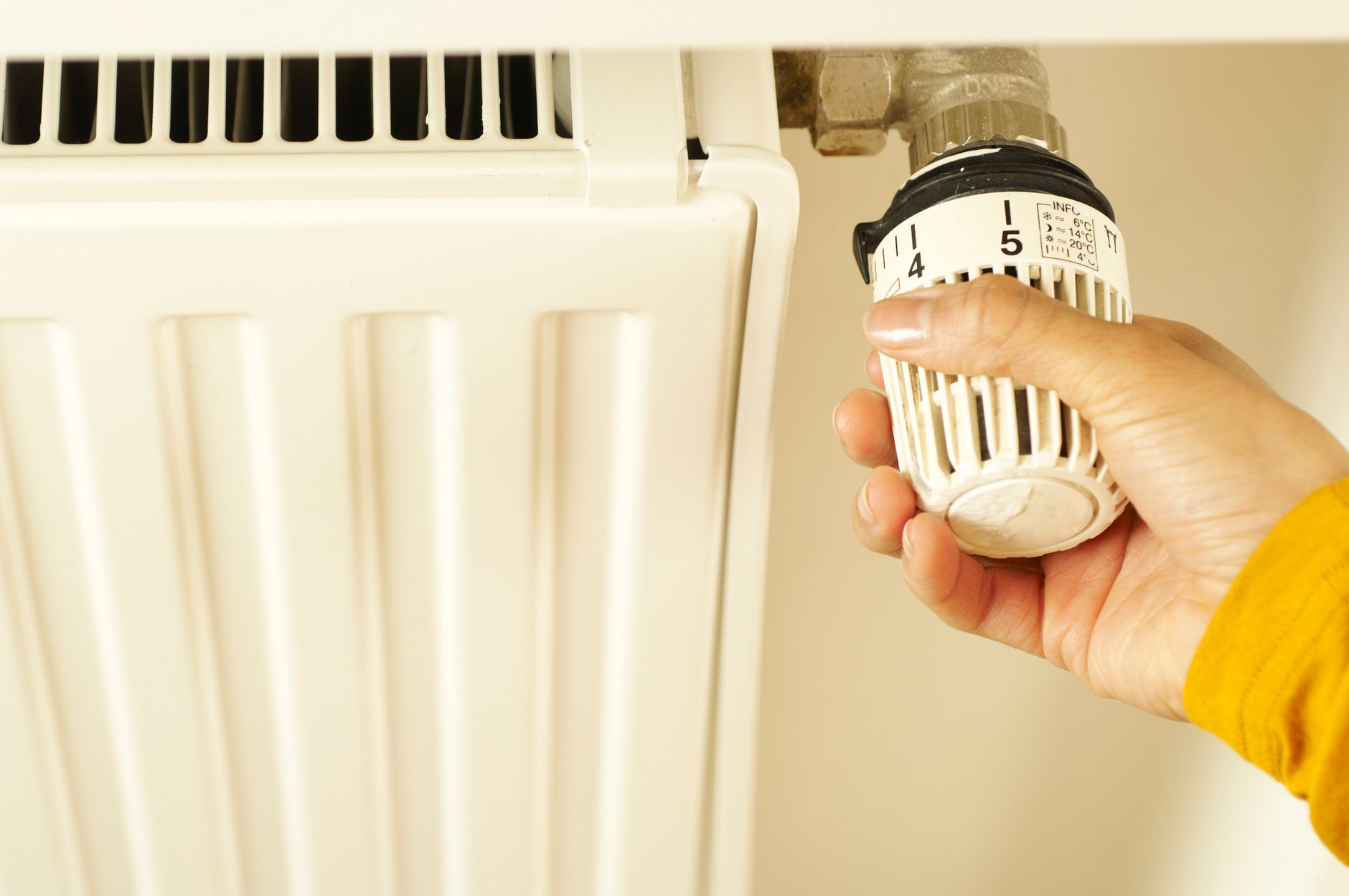
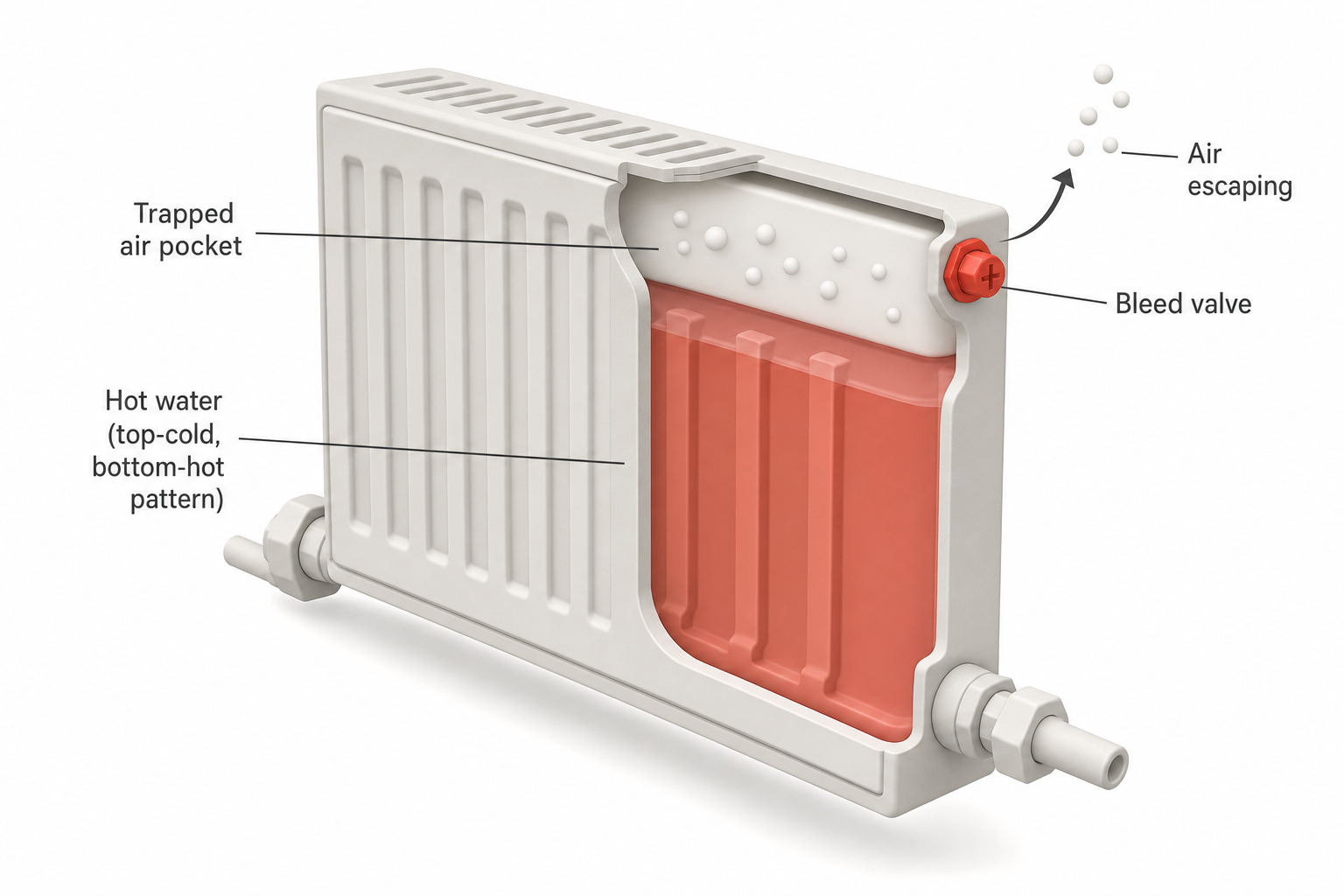
If your radiator feels hot at the bottom but stubbornly cold at the top, you're almost certainly dealing with trapped air rather than a failing radiator. Air rises to the highest point inside the radiator and forms a pocket that blocks hot water from filling that space, leaving you with reduced heat output, longer heating times, and sometimes a gurgling noise from the pipes. The fix is a simple maintenance task called bleeding, and most homeowners can do it in under ten minutes per radiator with a basic key and a cloth.
Why Radiators Trap Air in the First Place
Central heating systems are sealed loops, but air still finds its way in. Common causes include:
- Initial fill or refill of the system after maintenance, which introduces air that hasn't fully escaped yet.
- Corrosion inside the pipes and radiators, a chemical reaction between water and metal that can release hydrogen gas over time.
- A leaking automatic air vent or expansion tank issue, which allows air to be drawn into the system.
- Recent work on the boiler or pipework, such as adding a new radiator or replacing a valve.
A radiator that needs bleeding often develops a top-cold, bottom-hot pattern because air is lighter than water and collects at the highest point of the radiator's internal cavity.
Tools You'll Need
- A radiator bleed key (a small square-socket key sized to fit the bleed valve) — most valves use a standard size, but some older or decorative radiators use a flathead-screwdriver-style valve instead
- A cloth or small towel
- A shallow container or old rag to catch drips
- Optional: a wrench if the valve is corroded, and a small container to check for correct water pressure afterward on the boiler gauge
See the recommendations below if you don't already own a bleed key — it's an inexpensive tool worth keeping in a utility drawer.
Step-by-Step: How to Bleed a Radiator
1. Turn Off the Heating System
Switch off your boiler or thermostat and let the radiators cool for at least 30–60 minutes before starting. Bleeding a hot radiator risks scalding from pressurized hot water spraying out of the valve.
2. Find the Bleed Valve
Look for a small square or slotted fitting at the top corner of the radiator, usually opposite the inlet valve. On most radiators it's on the top-right or top-left end cap.
3. Locate the Boiler Pressure Gauge
Before you start, check your boiler's pressure gauge (often on the front panel) and note the reading. Bleeding radiators releases a small amount of water along with the air, which lowers system pressure slightly. You'll likely need to top it up afterward using the filling loop, per your boiler manufacturer's instructions.
4. Insert the Key and Turn Slowly
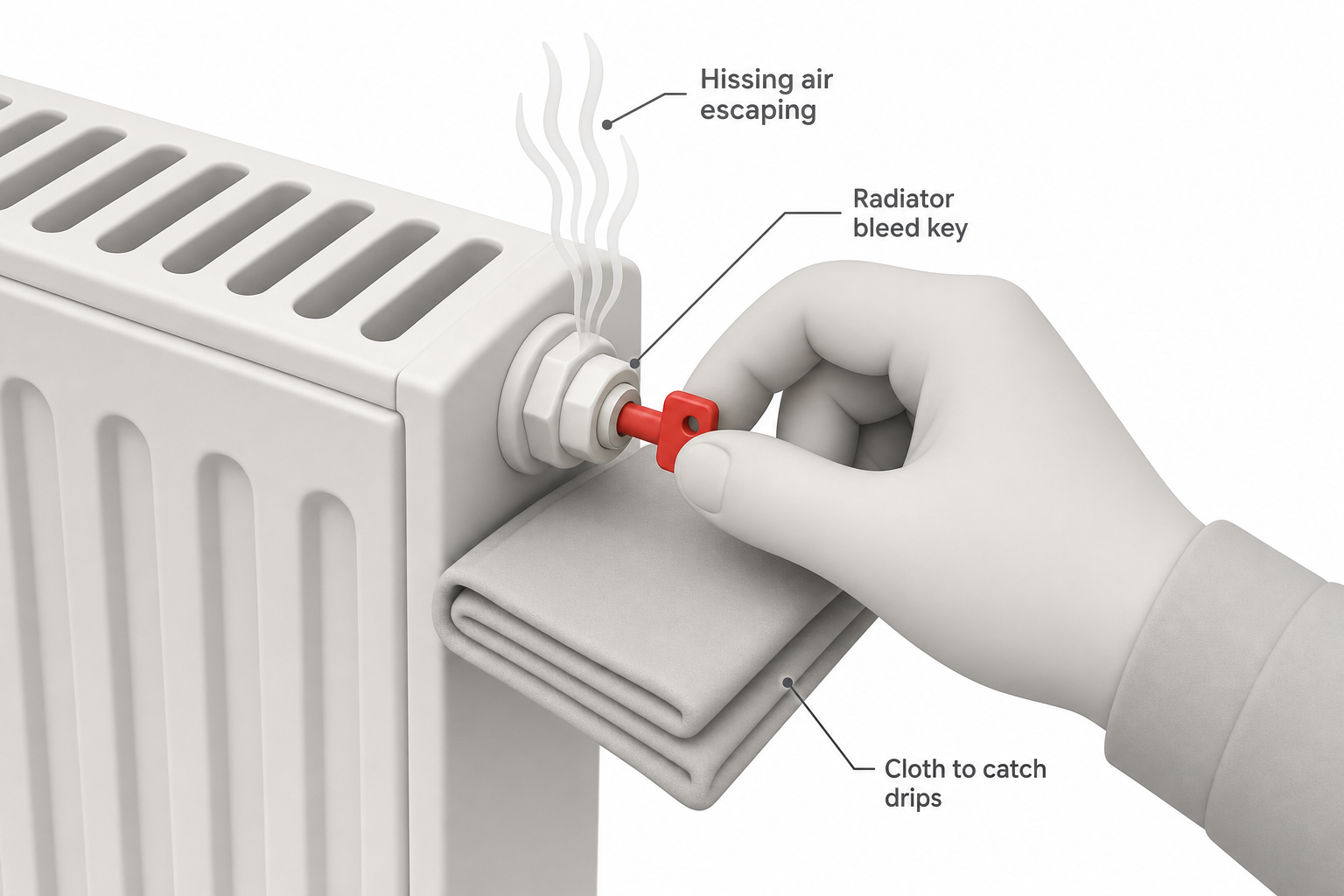
Hold a cloth around the valve to catch drips, then insert the bleed key and turn it counterclockwise about a quarter turn. You should hear a hissing sound as air escapes. Keep a firm grip — the key can slip if the valve is stiff.
5. Wait for Water to Flow Steadily
Continue holding the valve open until the hissing stops and water begins to dribble out steadily and without air bubbles. This usually takes anywhere from a few seconds to about a minute, depending on how much air was trapped.
6. Close the Valve Promptly
As soon as you see a steady trickle of water with no more hissing, turn the key clockwise to close the valve firmly, but avoid overtightening, which can damage the valve seat or seal.
7. Repeat for Every Radiator in the House
Work through each radiator in the property, typically starting with the one closest to the boiler and moving outward, though the order isn't critical for a basic bleed — the goal is simply to release air from every unit.
8. Check and Top Up System Pressure
Once you've bled all radiators, check the boiler pressure gauge again. If it's dropped below the manufacturer's recommended operating range (commonly indicated by a colored zone on the gauge), use the filling loop to top it up following your boiler's manual.
9. Turn the Heating Back On and Test
Restart your heating system and let it run for 20–30 minutes. Feel each radiator from top to bottom — it should now heat evenly across its entire surface.
When Bleeding Doesn't Fix the Cold Spot
If a radiator is still cold at the bottom, or cold in the middle while hot at both ends, the problem usually isn't air — it's often sludge buildup or corrosion debris settling inside the radiator. This typically requires a power flush of the system, which is a job best handled by a heating professional, since it involves specialized equipment and chemical cleaners.
A radiator that won't hold heat at all, even after bleeding, could also point to a stuck or faulty valve, a closed lockshield valve, or an issue with the circulation pump — worth investigating before assuming the radiator itself has failed.
FAQ
How often should I bleed my radiators? Most homes benefit from bleeding radiators once a year, typically at the start of the heating season, though you should also check any time you notice a cold spot or hear gurgling in the pipes.
Is it normal for water to spray out instead of trickle? No — steady dripping is normal, but a forceful spray suggests the system is still pressurized or hot. Close the valve immediately and let the system cool and depressurize further before trying again.
What if no air or water comes out at all? This can mean the valve is stuck, corroded, or that there's no air trapped and the cold spot has another cause, such as sludge buildup. Try gently working the key, and if nothing happens, consider calling a professional to inspect the valve.
Do I need to bleed radiators on a combi boiler differently than a system boiler? The bleeding process at the radiator itself is the same, but how you repressurize the system afterward differs by boiler type. Always follow your specific boiler manufacturer's instructions for using the filling loop.
Can bleeding a radiator damage it? Bleeding itself is a routine, low-risk maintenance task. The main risks are overtightening the valve, which can damage the seal, or bleeding a hot pressurized system, which can cause burns.