
A refrigerator that suddenly starts buzzing can be unsettling, but the sound itself is a clue. Different components hum, rattle, and buzz in distinct ways, and learning to tell them apart can save you a service call — or tell you exactly what to mention when you do call one. This guide walks through the most common buzzing sources, from harmless to serious, so you can diagnose before you spend money.
Start by Locating the Sound
Before diagnosing anything, figure out roughly where the buzzing originates:
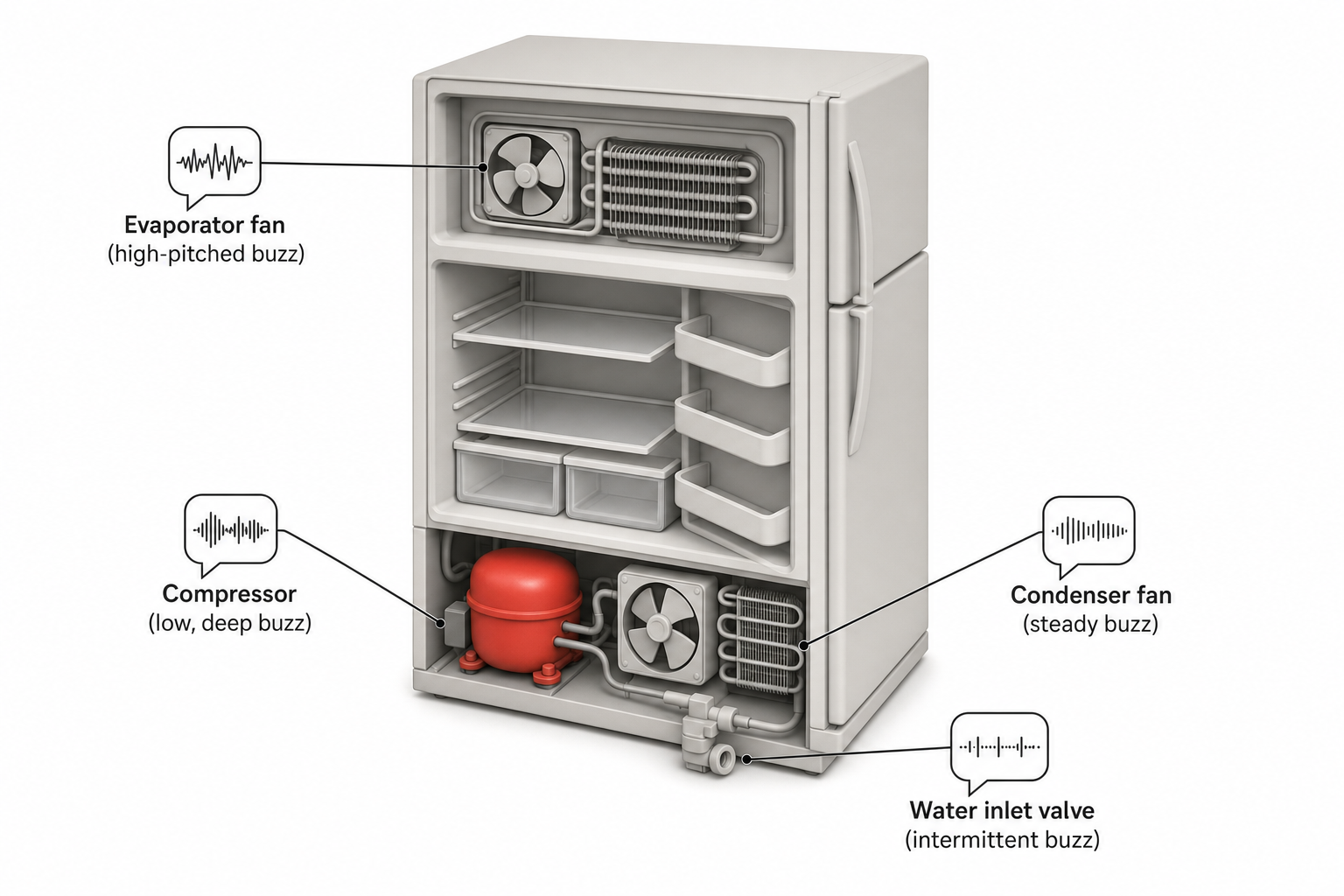
- Back or bottom of the fridge, near the floor — usually the compressor or condenser fan.
- Top or back interior wall of the freezer — usually the evaporator fan.
- Behind the kick plate at the very front bottom — usually the compressor, defrost timer, or a water valve.
- Inside near the water/ice dispenser — usually the water inlet valve.
Unplug the fridge, wait a few seconds, then plug it back in and listen at each area with your ear close (but not touching) the panels. This alone often narrows the culprit to one or two parts.
Compressor Buzzing (Bottom Rear)
The compressor is the black, dome-shaped unit at the bottom back of the fridge. It's the heart of the cooling system and the most common source of a low, steady buzz or hum.
Normal behavior: A soft hum whenever the fridge is running is expected — compressors cycle on and off throughout the day.
Problem signs:
- A loud, harsh buzz that's noticeably louder than usual, especially paired with the fridge not getting cold.
- Buzzing that starts, then cuts off with a clicking sound repeatedly (short-cycling) — often a sign the compressor is struggling to start due to a failing start relay/capacitor or internal winding issues.
- Buzzing accompanied by a burning smell.
What you can check yourself: Make sure the fridge isn't pushed flush against the wall — compressors need airflow clearance, typically an inch or two, though manufacturers vary in their exact spacing recommendations. Vacuum dust and pet hair off the condenser coils and compressor area, since a caked-up compressor runs hotter and louder.
Condenser Fan Buzzing (Bottom Rear, Near Compressor)
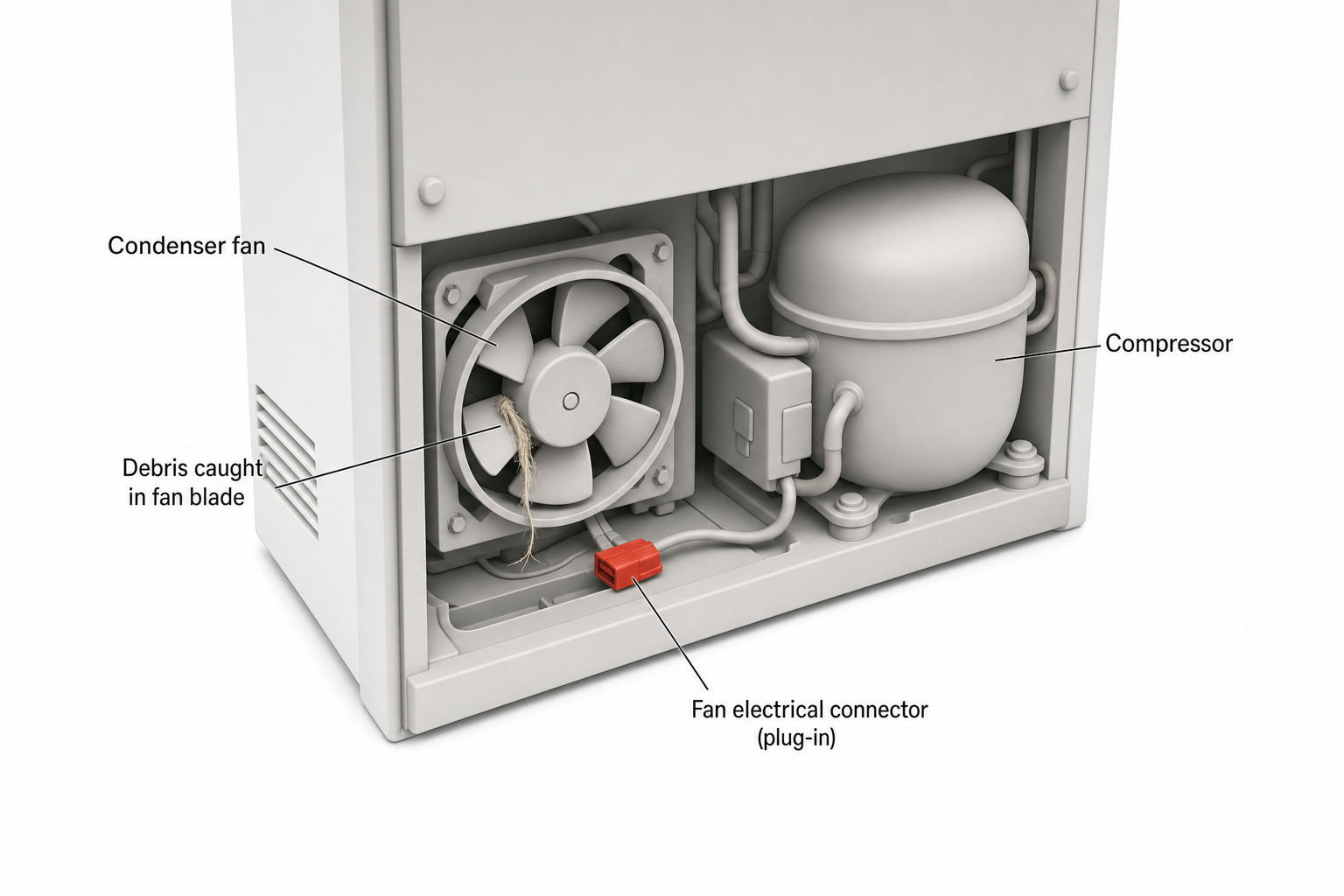
Next to the compressor, a small fan blows air across the condenser coils to dissipate heat. This fan is a frequent noise offender because it sits low to the floor and collects dust and debris easily.
Typical cause: A buzzing or rattling condenser fan is often caused by a foreign object — food debris, a small twist tie, or built-up lint — caught in the fan blades, or by a bearing that's starting to wear out.
Diagnosis steps:
- Unplug the refrigerator.
- Remove the rear access panel or pull the fridge out from the wall to access the bottom-back compartment (check your owner's manual for the exact panel location, since this varies by model).
- Spin the fan blade by hand. It should turn freely and smoothly.
- Look for debris tangled in the blades or a fan that wobbles instead of spinning true — a wobble usually means a worn bearing or a bent blade.
If the fan is simply dirty, clean it with a soft brush or vacuum attachment. If it wobbles, grinds, or won't spin freely, the fan motor typically needs replacing — a straightforward DIY repair on most models, since it usually clips or screws into place with a plug-in electrical connector (see the recommendations below for a compatible replacement fan for your model).
Evaporator Fan Buzzing (Inside the Freezer)
If the buzzing sound seems to come from inside the freezer compartment rather than underneath the fridge, suspect the evaporator fan. This fan circulates cold air from the evaporator coils (hidden behind the freezer's rear interior panel) throughout the fridge and freezer.
Distinguishing sign: Evaporator fan buzzing often gets noticeably louder when you open the freezer door, then quieter or stops when the door closes — many models wire the fan to slow or shut off when the door switch is triggered.
Common causes:
- Frost buildup on the fan blades from a failing defrost system, causing the blade to scrape against ice as it spins.
- A worn fan motor bearing, producing a buzzing or grinding noise independent of frost.
- Items in the freezer (a bag, a box corner) touching or blocking the fan.
What to check: Open the freezer and look at the back wall, top, or a rear panel (removable with a screwdriver on most models) for visible frost buildup shaped like ice sheets or spikes near the fan. Heavy, unusual frost typically points to a failing defrost heater, defrost thermostat, or door seal — not just the fan itself.
Water Inlet Valve Buzzing (Models with Ice Makers or Water Dispensers)
A sharp, vibrating buzz — sometimes described as sounding like a bee — that occurs briefly and then stops is often the water inlet valve. This solenoid valve opens to let water flow to the ice maker or dispenser, and it can buzz audibly, especially if:
- Household water pressure is too low, which manufacturers commonly specify a minimum for (often in the range of 20+ psi, though this varies by model).
- The valve's internal solenoid is beginning to fail electrically.
- Mineral deposits or debris are partially restricting flow.
Quick check: If the buzzing coincides with the ice maker cycling or you dispensing water, and stops shortly after, it's almost certainly the inlet valve. If your home has notably low water pressure elsewhere, that's likely contributing.
A failing inlet valve is usually replaced as a single unit and is a common, moderately easy DIY repair — it typically involves shutting off the water supply line behind or under the fridge, disconnecting the valve, and swapping it (see the recommendations below for a valve matched to your model).
Rattling vs. Buzzing: Don't Confuse Them
A true buzz is a continuous vibration-like hum. If what you're hearing is more of an intermittent rattle or clatter, look instead at:
- Items on top of the fridge vibrating against each other.
- A drain pan (underneath, at the bottom) sitting loose against the compressor housing.
- Loose ice cubes or the ice maker's auger during a fill cycle.
- An unlevel fridge rocking slightly as the compressor cycles — check with a level and adjust the front leveling legs, usually with a wrench or by hand-turning them.
When the Buzzing Signals a Bigger Problem
Call a licensed appliance repair technician if:
- The buzzing is loud, harsh, and paired with the fridge failing to cool.
- You smell burning, plastic odor, or see scorch marks near the compressor.
- The compressor clicks on and off repeatedly without running (classic sign of relay or start capacitor failure).
- You're not comfortable pulling the fridge from the wall or handling the water line.
FAQ
Why is my refrigerator suddenly buzzing loudly when it wasn't before? A sudden increase in buzzing volume usually means a fan has debris in it, a fan bearing is wearing out, or the compressor is working harder than normal — often due to dirty condenser coils, a failing door seal letting warm air in, or the start relay beginning to fail. Start by checking fan blades and cleaning the coils before assuming the worst.
Is it normal for a refrigerator to buzz sometimes? Yes — a soft, steady hum while the compressor or fans are running is normal and expected. It becomes a concern when the sound is unusually loud, harsh, grinding, or paired with poor cooling.
Can I fix a buzzing refrigerator myself? Many causes — a dirty or debris-caught fan, an unlevel fridge, a straightforward fan or water valve replacement — are reasonable DIY fixes for a comfortable homeowner. Compressor issues and refrigerant-related repairs should be left to a licensed technician.
Will a buzzing noise mean my fridge stops cooling? Not always, but a buzzing compressor that's struggling to start, or a frosted-over evaporator fan, can eventually lead to cooling problems if left unaddressed. It's worth diagnosing promptly rather than ignoring it.
How do I know if it's the compressor or the fan buzzing? Location is the biggest clue: sounds from the bottom rear near the floor point to the compressor or condenser fan, while sounds from inside the freezer point to the evaporator fan. Opening the freezer door and listening for a change in volume also helps confirm the evaporator fan.