
Window tracks collect a stubborn mix of dust, pollen, dead insects, and condensation residue that hardens into a gritty paste over time. Scraping at it with a rag usually just pushes the grime around. The faster, less exhausting approach combines targeted vacuuming to pull out loose debris, a vinegar-based paste to break down the bonded grime, and a few inexpensive shaped tools to get into the narrow grooves — no white-knuckle scrubbing required.
What You'll Need
- A vacuum with a crevice tool or narrow brush attachment
- White vinegar and baking soda (for the paste)
- A small bowl or cup for mixing
- An old toothbrush or narrow detail brush
- A flathead tool wrapped in cloth, or a purpose-made track-cleaning tool (see the recommendations below)
- Cotton swabs or pipe cleaners for tight corners
- Microfiber cloths or paper towels
- A spray bottle (optional, for rinsing)
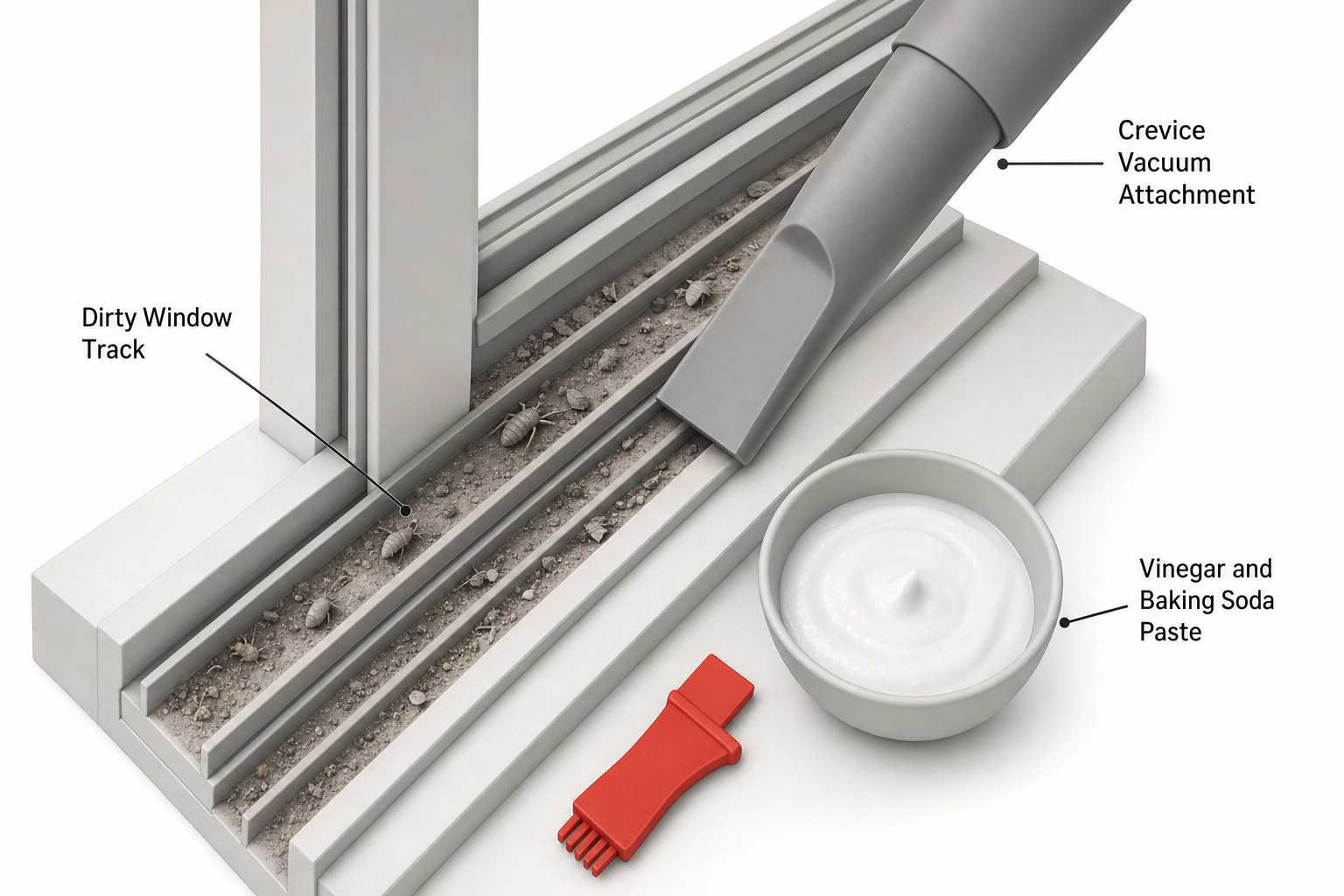
Step 1: Vacuum Out the Loose Debris First
Before introducing any liquid, remove everything that's dry and loose. Wet grime mixed with dry dust just turns into thicker mud.
Run the crevice attachment slowly along the full length of each track, angling it to reach both the front and back walls of the groove. For tracks with a center divider (common on sliding windows and patio doors), vacuum both channels separately. If your vacuum has adjustable suction, use the higher setting here — you're trying to pull out compacted dust and dead insects, not just surface fluff. For very fine debris in tight corners, a can of compressed air can dislodge material the vacuum nozzle can't reach directly, which you then vacuum up immediately after.
Step 2: Mix the Vinegar Paste
Combine white vinegar with baking soda in roughly equal parts until it forms a thick, spreadable paste — start with about two tablespoons of each and adjust as needed. The mixture will fizz briefly; that's the reaction breaking up ahead of application, so let it settle for a minute before use.
This paste works because the mild acidity in vinegar helps dissolve mineral deposits and grease film, while the baking soda adds gentle abrasion without scratching painted aluminum or vinyl track surfaces. It's considerably gentler than commercial degreasers and safe for most standard window track materials, though see the caution below for specific finishes.
[!safety] Avoid using vinegar-based cleaners on natural stone sills (marble, limestone, travertine) or on any track with a visibly worn, chalky, or unusual metallic finish. The acid can etch stone and may dull certain specialty coatings. Test an inconspicuous spot first, or stick to plain warm water and mild dish soap on those surfaces.
Step 3: Apply and Let It Sit
Spread the paste along the track using the toothbrush, pushing it into the corners and along the base where grime is most compacted. Don't rinse right away — let it sit for 5 to 10 minutes so the vinegar has time to soften baked-on residue. On tracks that haven't been cleaned in a year or more, you can extend this to 15 minutes for deeper penetration.
While it sits, this is a good time to wipe down the surrounding sill and frame with a damp cloth, since splatter tends to land there anyway.
Step 4: Agitate With the Right Tool Shape
After the paste has had time to work, go back over the track with the toothbrush using short, firm strokes along the length of the groove rather than side to side — this lifts debris up and out instead of packing it back into corners.
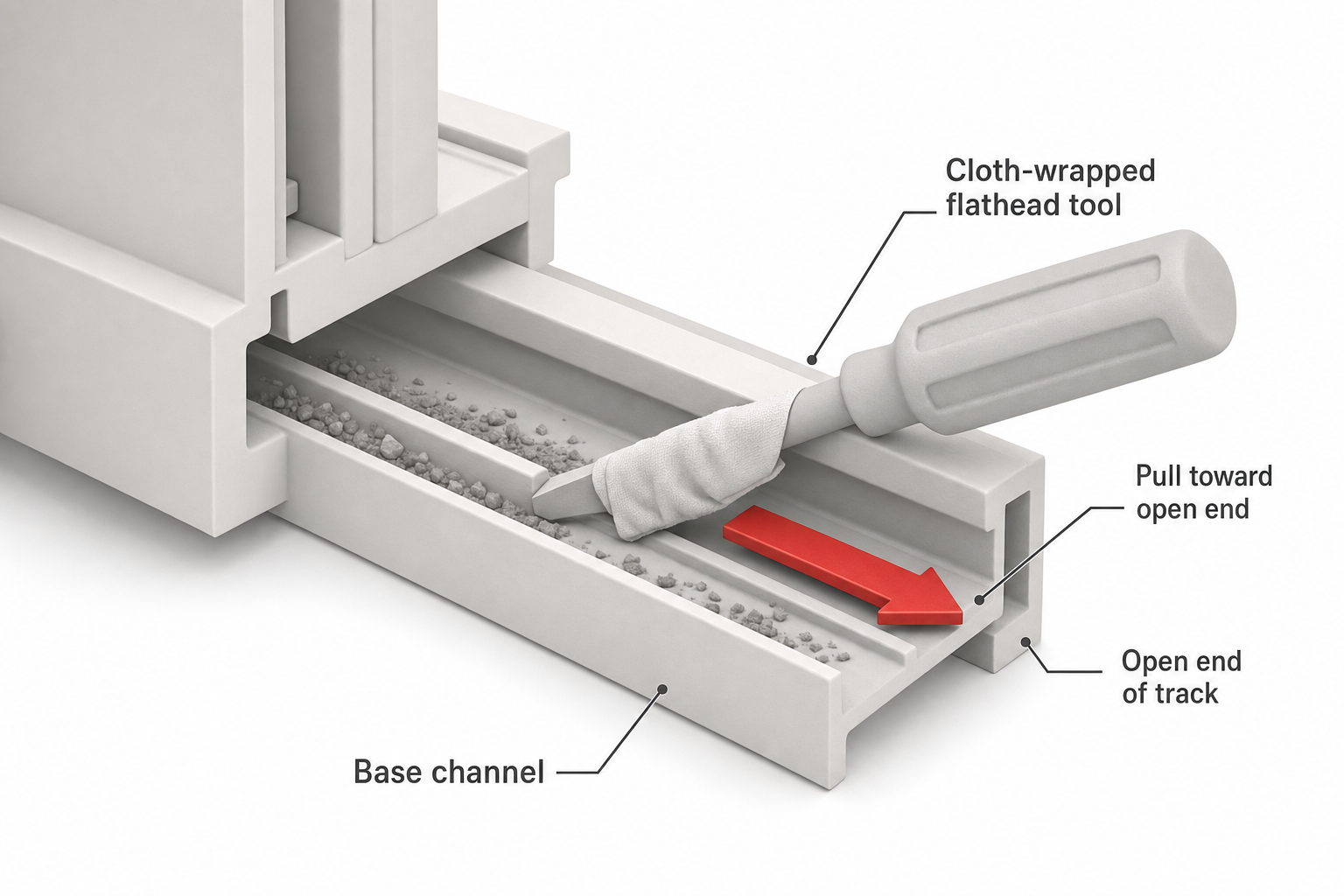
For the deep central channel that most brushes can't reach, wrap a flathead screwdriver tip in a thin cloth or use a purpose-shaped plastic track tool to scrape along the base. Cotton swabs are useful for the rounded end caps and corner returns where brushes can't get full contact.
Step 5: Vacuum Again, Then Wipe
Once the grime has been loosened, vacuum the track a second time to pull out the now-softened debris before it dries back down. This second pass is what actually removes most of the material — the first vacuum just cleared the way, and the paste did the loosening.
Finish with a damp microfiber cloth to wipe the track clean, then a dry cloth to remove any remaining moisture. Standing water left in the track can encourage mold growth or, on steel and untreated aluminum, contribute to corrosion over time.
Step 6: Address the Weep Holes
Most sliding window and door tracks have small weep holes or slots along the outer edge designed to drain rainwater that gets past the seals. These clog easily with the same debris you just cleaned out of the main channel.
Use a pipe cleaner or a thin wire to clear each weep hole, checking that water can pass through freely. A clogged weep hole can lead to water pooling in the track and eventually leaking into the wall cavity below the window.
[!region] Weep hole design and placement vary by window manufacturer and by regional building code requirements for water drainage. If you're unsure whether your window has weep holes or where they're located, check the manufacturer's documentation or consult a local window installer.
Maintaining Clean Tracks Going Forward
A quick vacuum pass every month or two, especially before pollen season or after a dusty spell, prevents the buildup from compacting into the stubborn layer that requires the full paste treatment. Keeping a narrow brush attachment on hand (see the recommendations below) makes this a five-minute task rather than a deep-clean project.
FAQ
Can I use this method on wooden window tracks? Yes, but use the vinegar paste sparingly and avoid letting it sit too long, since prolonged moisture exposure can affect wood finish and raise the grain. Dry the track thoroughly afterward and consider a light coat of appropriate wood wax or sealant if the finish looks dulled.
What if the grime is too hardened for the paste to work? For very old, crusted buildup, apply the paste, cover it loosely with a damp paper towel to slow evaporation, and let it sit for 20 to 30 minutes before agitating. Repeat the process a second time if needed rather than scrubbing harder.
Is it safe to use a steam cleaner on window tracks instead? A handheld steamer with a narrow nozzle attachment can loosen grime effectively and is a good alternative to chemical pastes, but avoid directing steam directly at electrical components on motorized windows, and keep it away from wood tracks where excess moisture could cause warping.
How do I clean the tracks on windows I can't fully open? Use a longer, flexible crevice attachment or an extension hose for the vacuum step, and apply the paste with a long-handled brush. For casement or awning windows with limited access, cleaning from both the interior and exterior side when the sash is cracked open usually covers the full groove.
Will this method remove mold or mildew stains in the track? The vinegar's mild acidity can help with light mildew, but for visible mold growth, especially anything black and spreading, treat it as a mold issue rather than general grime — ventilate the area, wear gloves, and consider a diluted bleach solution or a dedicated mold-removal product instead of the vinegar paste.
[!safety] If mold covers a large area, keeps returning despite cleaning, or you notice a persistent musty smell inside the wall near the window, this may indicate a moisture intrusion problem beyond surface cleaning. Consult a professional for an inspection.