
Cockroaches in an apartment are rarely just your problem. In multi-unit buildings, roaches travel through shared plumbing chases, electrical conduits, and wall voids, moving freely between units regardless of how clean any single apartment is kept. That's why sprays alone almost never work long-term — you need to combine sealing, sanitation, and bait strategies that outlast a single treatment cycle. This guide focuses on what actually works when you don't control the whole building.
Why Apartments Are Especially Hard to Clear
German cockroaches, the species most common in apartments, prefer to live within a few feet of food and water and reproduce quickly — a single female can produce dozens of offspring in an egg case (ootheca) roughly every three to four weeks under good conditions. Because they hide in cracks as small as 1/16 inch and travel along shared pipes, an infestation in one unit can reseed a neighboring apartment within days of treatment. This means your strategy has to address both your own space and the pathways connecting you to it.
Step 1: Identify and Seal Entry Points
Start by walking your apartment with a flashlight, focusing on the kitchen and bathroom where plumbing penetrates walls.
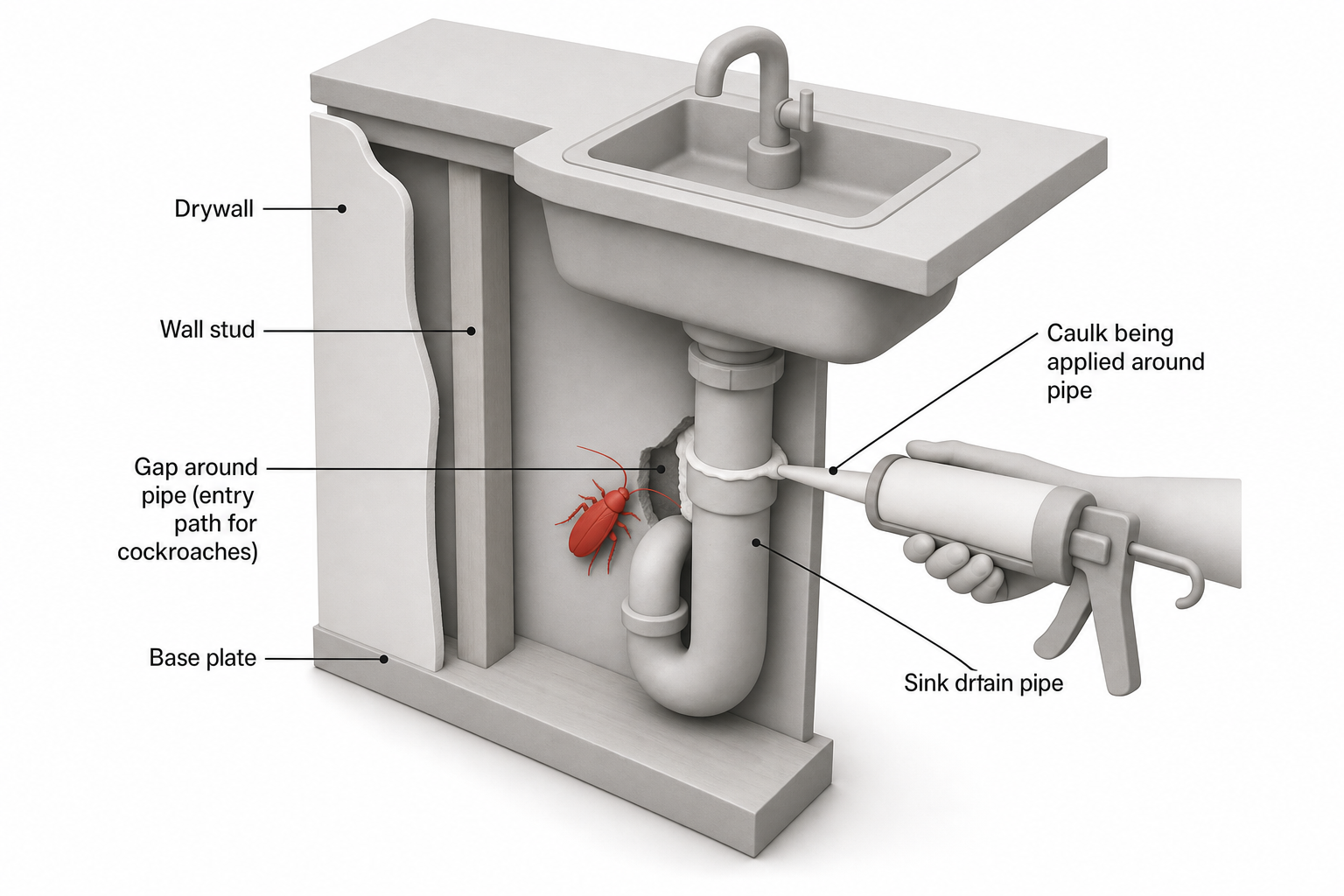
- Under sinks: Look for gaps around supply lines and drain pipes where they pass through the cabinet back or floor. Roaches use these as highways between units stacked vertically.
- Baseboards and floor-wall junctions: Gaps here often connect to wall voids shared with adjacent units.
- Electrical outlets and switch plates: Especially on shared walls, these are common entry points because conduit runs are rarely airtight.
- Around the stove and refrigerator: Gas and water lines here often have loose escutcheon plates.
Seal small gaps (under about 1/4 inch) with a paintable silicone or acrylic latex caulk. For larger gaps, especially around pipes, use a fire-rated or general-purpose expanding foam sealant, or steel wool packed into the gap before caulking — cockroaches generally won't chew through steel wool the way rodents chew through foam alone.
Step 2: Remove Food, Water, and Clutter
Sealing slows migration, but roaches already inside need their resources cut off.
- Store all food, including pet food, in sealed rigid containers — bags and boxes are not sufficient barriers.
- Wipe down counters and stovetops nightly; grease residue alone can sustain a roach population.
- Fix any dripping faucets or slow drains; roaches can survive longer without food than without water.
- Take out trash daily and use a bin with a tight-fitting lid.
- Reduce clutter (paper bags, cardboard boxes, stacks of mail) since these provide harborage and are often how infestations travel in via deliveries or recycling.
Step 3: Use Gel Bait Strategically, Not Sprays
This is the step most people get backwards. Aerosol sprays kill on contact but can actually worsen an infestation by causing roaches to scatter into wall voids and neighboring units, and by contaminating bait stations, making roaches avoid them.
Instead:
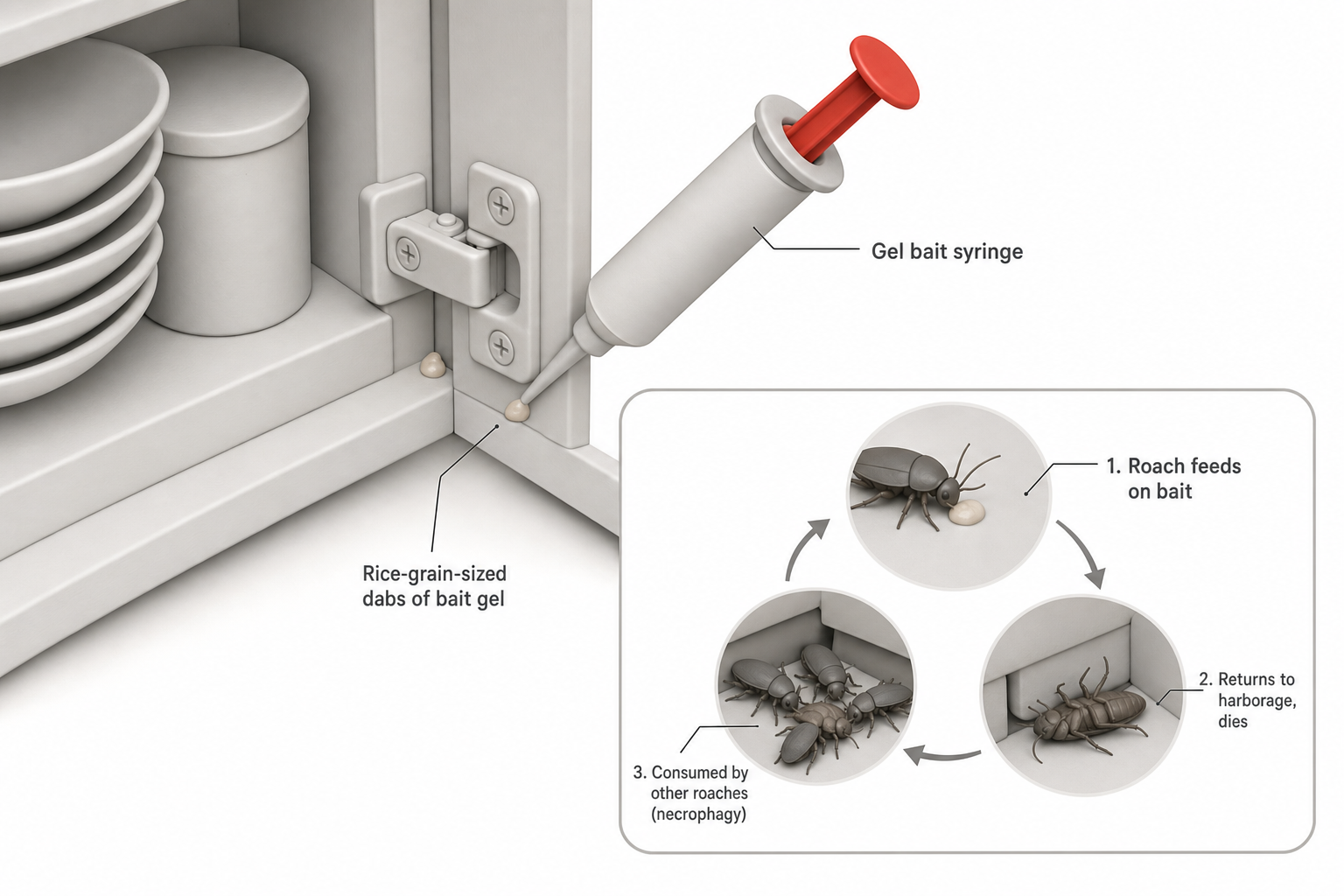
- Apply a cockroach gel bait in small dabs (about the size of a grain of rice) along known travel routes — hinge corners of cabinets, behind the refrigerator, along baseboards, and near sealed entry points you've identified. Don't smear it in visible globs; small, frequent dabs are more effective and less likely to be avoided.
- Avoid cleaning bait placement areas with degreasers or all-purpose cleaner for at least a week after application, since this can destroy the bait's effectiveness before roaches feed on it.
- Pair gel bait with insect growth regulator (IGR) products where available, which disrupt roach reproduction rather than killing on contact — this addresses the egg cases you can't see.
- Refresh bait every few weeks according to the product label, since it dries out and loses potency.
Gel baits work through a delayed-kill mechanism: a roach feeds on the bait, returns to the harborage area, dies, and is then eaten by other roaches (a behavior called necrophagy), spreading the active ingredient through the population. This is why bait typically outperforms sprays for full colony elimination, though it takes one to several weeks to show major results.
Step 4: Address Shared Walls and Common Areas
Because roaches move between units, your individual effort can be undermined by an untreated neighboring apartment.
- Notify your property manager or landlord in writing if you suspect the infestation originates from a shared wall, hallway, or trash chute area — this also creates a paper trail if the issue affects your right to withhold rent or request repairs under your local tenant protections.
- Ask whether the building has a routine pest control schedule and whether adjacent units are being treated at the same time. Treating only one apartment in a connected building often just pushes roaches temporarily into your neighbor's unit and back again.request a building-wide or coordinated treatment if possible.
- Trash chutes, shared laundry rooms, and utility closets are common roach reservoirs in apartment buildings; report visible activity in these common areas to management.
Step 5: Monitor and Maintain
Once bait and sealing are in place, use sticky monitoring traps in the kitchen and bathroom to track population trends over several weeks. A shrinking number of roaches caught per week indicates the bait is working; a stagnant or rising count suggests you need to identify additional entry points or a source in a neighboring unit.
Continue routine sanitation and re-seal any new gaps that appear (for example, after appliance repairs or if you notice fresh droppings — which resemble small black pepper flecks — near baseboards).
When to Call a Professional
If you've sealed entry points, removed food and water sources, and used gel bait consistently for four to six weeks without a noticeable decline in activity, it's time to call a licensed pest control operator. Professionals have access to stronger IGR formulations and can coordinate treatment across multiple units in a building — something that's often necessary for a lasting fix in apartments, since resistance to certain bait formulations has become more common in some German cockroach populations after repeated exposure to the same active ingredient.
FAQ
Why do I keep seeing roaches even after cleaning thoroughly? Sanitation removes food and water sources but doesn't address roaches migrating in from neighboring units through shared walls and plumbing chases, which is extremely common in apartment buildings. Sealing entry points and using bait are necessary alongside cleaning.
Are foggers or bug bombs a good option for an apartment? Foggers generally aren't recommended for cockroach control because they don't reach the cracks and voids where roaches hide, and the fumes can cause roaches to scatter into neighboring units rather than dying, potentially worsening a building-wide infestation.
How long does it take for gel bait to fully work? Most gel baits show a noticeable reduction in activity within one to two weeks, but fully eliminating an established colony, including egg cases, can take four to eight weeks of consistent application and monitoring.
Can I be charged for pest control if the infestation isn't my fault? This depends heavily on your lease terms and local tenant-landlord law. In many jurisdictions, landlords are responsible for pest control in multi-unit buildings, especially if the infestation stems from a neighboring unit or building-wide conditions, but rules vary, so check your local regulations or a tenant rights resource.
Will getting a cat or using ultrasonic repellent devices help? There's no reliable evidence that ultrasonic pest repellent devices are effective against cockroaches, and while cats may occasionally catch a roach, they aren't a practical control method for an infestation. Sealing, sanitation, and bait remain the evidence-based approach.