A GFCI (ground-fault circuit interrupter) outlet that trips and refuses to reset is one of the most common electrical complaints in homes, especially in kitchens, bathrooms, garages, and outdoor circuits. The good news is that a stubborn GFCI almost always has one of a handful of causes, and most of them can be diagnosed without opening a single wire. Work through the steps below in order — they go from safest and simplest to more involved.
1. Confirm What "Won't Reset" Actually Means
Before troubleshooting, get precise about the symptom:
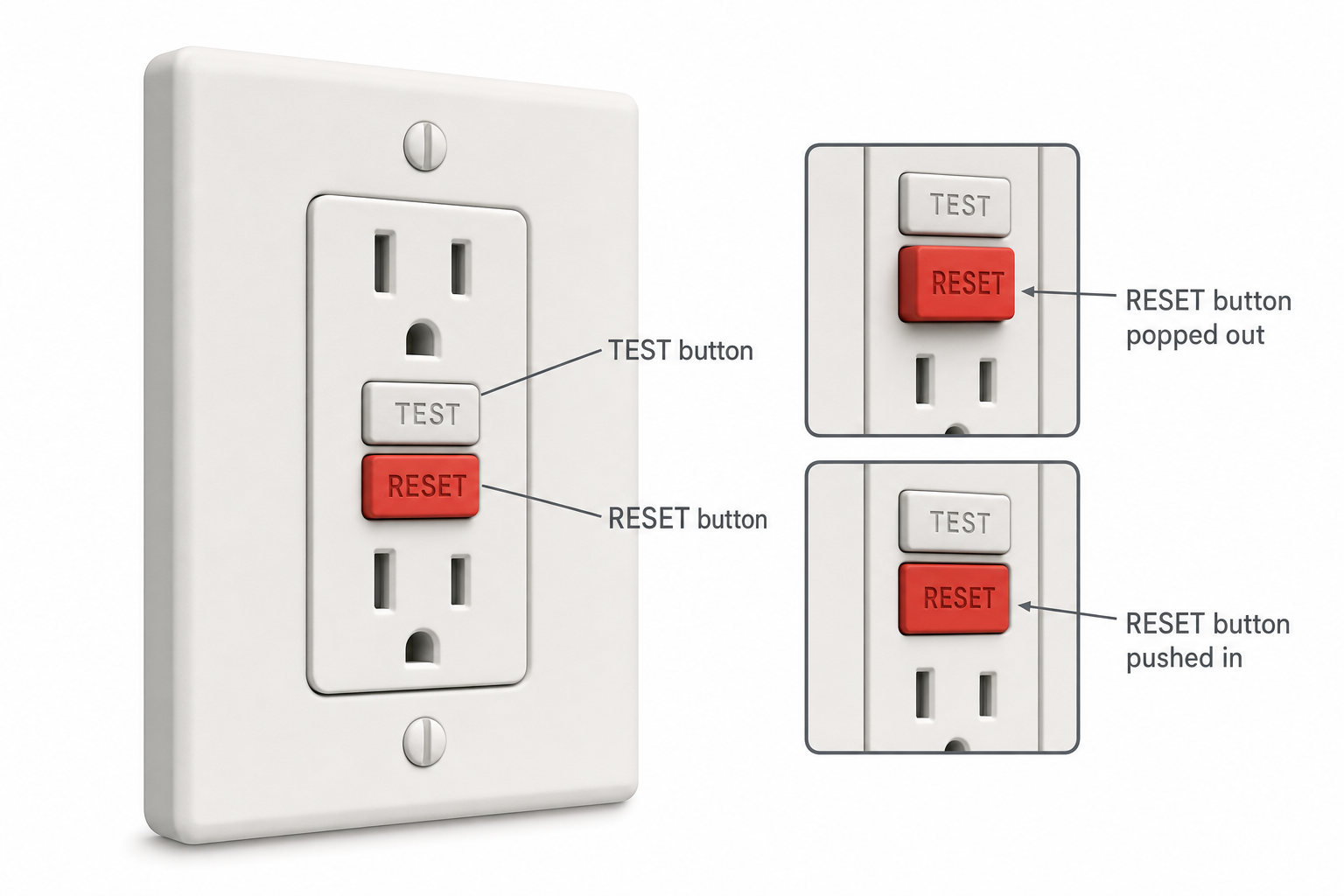
- The reset button won't push in at all — often means the internal mechanism has failed or the outlet is de-energized (no power reaching it).
- The reset button pushes in but pops back out immediately — usually means an active ground fault or overload is still present somewhere on the circuit.
- The button stays in, but nothing downstream has power — points to a wiring or downstream device issue rather than the GFCI itself.
Knowing which of these you have will save time in the steps that follow.
2. Check the Breaker Panel First
A tripped breaker will cut power to the GFCI itself, and a de-energized GFCI often won't let its reset button engage at all.
- Open your electrical panel and look for any breaker that is in the middle position (neither fully ON nor fully OFF) or shows a red/orange indicator, depending on the panel style.
- Flip that breaker fully to OFF, then firmly back to ON.
- Return to the GFCI and try the reset button again.
If the breaker trips again immediately, that suggests a short circuit or overload elsewhere on the branch circuit — stop and consider calling an electrician rather than repeatedly resetting the breaker.
3. Unplug Everything on the Circuit
GFCIs trip in response to ground faults, but a genuine short or an overloaded circuit can sometimes prevent a clean reset too.
- Unplug every device and appliance connected to the GFCI outlet and any outlets it protects downstream.
- Press reset again with nothing plugged in.
- If it resets successfully now, plug devices back in one at a time, waiting a few seconds between each, until you find the one that trips it. That device may have a damaged cord, a failing motor, or moisture intrusion (common with outdoor tools, space heaters, and older appliances).
4. Look for Hidden Downstream Outlets
This is the step most homeowners miss, and it's the most likely explanation when a GFCI outlet won't reset even though the outlet itself seems fine.
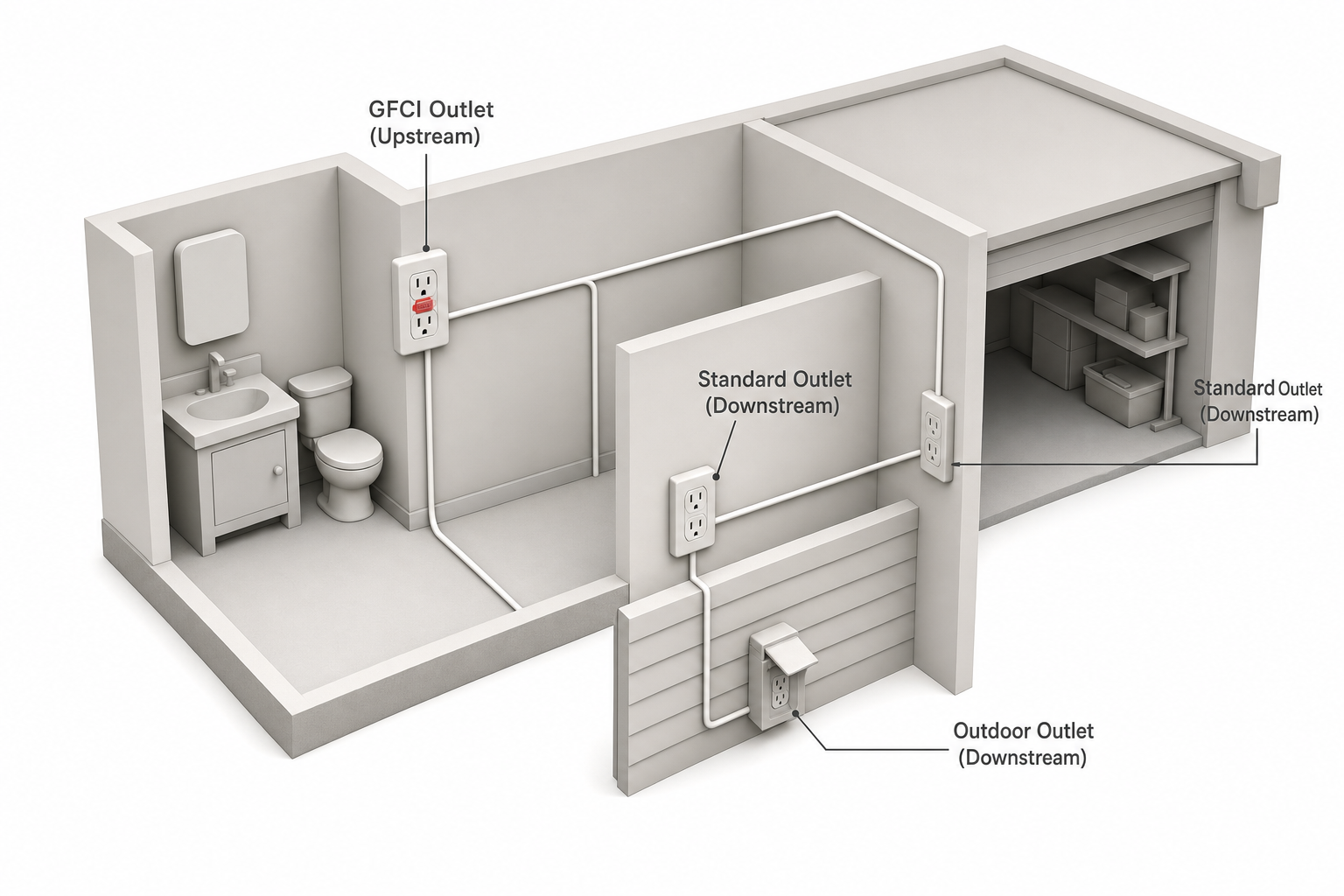
GFCI outlets are often wired to protect one or more standard (non-GFCI) outlets "downstream" on the same circuit — for example, a single GFCI near a bathroom sink might also protect an outlet behind a mirror, in a hallway, in the garage, or even outdoors. If a downstream outlet has a fault — a wet outdoor receptacle, a nicked wire, a corroded connection, or a failed appliance plugged into it — it can prevent the upstream GFCI from resetting, even though nothing appears wrong at the GFCI itself.
- Map out every outlet in the house that might share a circuit with the problem GFCI. Bathrooms often share one GFCI across multiple rooms; garages and exteriors are frequently daisy-chained together.
- Unplug anything connected to those outlets, especially outdoor receptacles that may have collected moisture or outlets behind appliances.
- Check exterior GFCI-protected outlets for pooled water, insect nests, or a cover that hasn't closed properly — all common culprits after rain or irrigation.
- Try the reset button again after clearing these.
5. Rule Out a Wet or Damp Outlet
Moisture is one of the most frequent triggers for a GFCI that won't reset, particularly for exterior receptacles, ones near sinks or tubs, or outlets in unfinished basements and crawl spaces.
- Dry the outlet and surrounding area with a cloth; avoid using it again until it's fully dry.
- Check that any "in-use" weatherproof cover on an outdoor outlet is intact and closing fully — a cracked or missing cover lets rain in directly.
- If an outlet has a history of dampness, the fix is usually a proper weatherproof cover, not repeated resetting.
6. Test With a Different Device
Swap in a known-working lamp or plug-in tester rather than relying on the same appliance that was plugged in when the outlet tripped. This helps separate a bad appliance from a bad outlet.
A basic outlet tester (the three-light plug-in type) can also tell you whether the outlet is wired correctly — reversed wiring or an open ground can sometimes interfere with GFCI behavior. See the recommendations below for this kind of tester if you don't already have one.
7. Inspect the Outlet Itself for Age or Damage
GFCI outlets have a working lifespan and don't last forever — the internal electronics can degrade with age, heat cycling, or a history of tripping.
- If the outlet is more than 10–15 years old, or you can't recall it ever being replaced, wear on the internal components is a reasonable suspicion, though actual lifespan varies by manufacturer and usage.
- Look for a manufacture date stamped on the face or back of the device if it's removed.
- If you press TEST and the outlet no longer trips at all (should trip and cut power), or it trips but flatly refuses to reset under any circumstance after the steps above, the device itself has likely failed and needs replacement.
8. When to Call an Electrician
Bring in a licensed electrician if:
- The breaker trips repeatedly even with everything unplugged.
- You see scorch marks, melted plastic, or smell burning at the outlet or panel.
- The GFCI trips immediately every time you reset it with nothing plugged in anywhere on the circuit.
- You've traced the issue to wiring inside a wall, ceiling, or panel rather than a plugged-in device.
- The home has aluminum wiring or a panel you know to be outdated — these situations benefit from professional diagnosis.
FAQ
Why does my GFCI outlet trip but not reset? This usually means an active ground fault or moisture issue is still present somewhere on the circuit, or the internal mechanism has failed with age. Work through unplugging devices, checking downstream outlets, and drying any damp receptacles before assuming the outlet itself is bad.
Can one GFCI outlet control other outlets in my house? Yes. It's common for a single GFCI to protect one or more standard outlets wired downstream on the same circuit, sometimes in a completely different room. If a downstream outlet has a fault, it can prevent the upstream GFCI from resetting.
Is it safe to keep pressing the reset button repeatedly? Occasional resets are normal, but if it keeps tripping immediately or won't reset after basic troubleshooting, stop resetting it repeatedly. Continuing to force a reset on a persistent fault can indicate a real safety hazard rather than a nuisance trip.
How do I know if the GFCI outlet itself is bad versus a downstream problem? Unplug every device on the circuit, including anything on downstream outlets, and try resetting with nothing connected. If it resets and holds, the fault is with a device or downstream outlet; if it still won't reset with everything unplugged, the outlet itself is more likely at fault.
How often should GFCI outlets be replaced? There's no universal replacement schedule, since lifespan depends on the manufacturer, usage, and environment, but many electricians suggest testing GFCIs monthly using the TEST button and considering replacement if a unit is old, corroded, or no longer trips properly during a test.