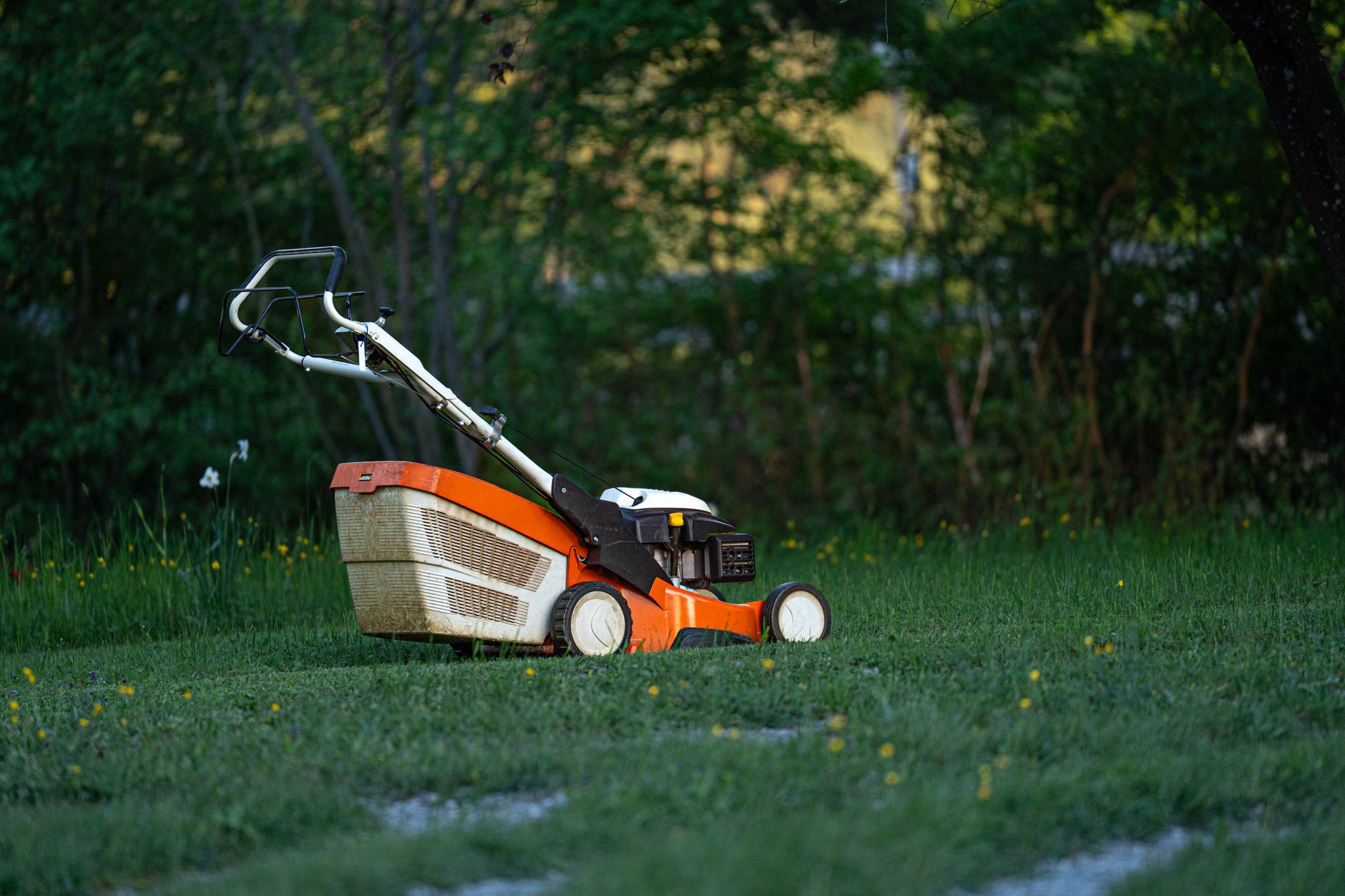
A lawn that thins out, puddles after rain, or feels hard as a sidewalk underfoot is usually suffering from soil compaction. Aeration relieves that compaction by creating channels in the soil so air, water, and nutrients can reach grass roots. Knowing how to aerate a lawn correctly — and picking the right method for your soil — makes the difference between a quick chore and a genuinely healthier yard.
Why Aeration Matters
Over time, foot traffic, mowing, lawn furniture, and clay-heavy soil compress the top few inches of ground. Compacted soil starves roots of oxygen and makes it hard for water to soak in rather than run off. Aeration physically breaks up that compaction, giving roots room to grow deeper and access more moisture and nutrients. Deeper roots generally mean a lawn that handles drought and heavy use better.
How to Tell If Your Lawn Needs Aeration
A few practical signs suggest it's time:
- Water pools on the surface or runs off instead of soaking in after rain or irrigation.
- The lawn feels spongy or, conversely, rock-hard when you walk on it.
- Grass thins out in high-traffic areas like paths to the mailbox or a play area.
- You can't push a standard screwdriver into moist soil more than a couple of inches without a lot of resistance.
- The lawn was part of new construction, since construction often leaves soil heavily compacted from equipment traffic.
A simple test: cut a small wedge of turf about 6 inches deep with a spade and look at the roots. Healthy turf typically has roots reaching 3–4 inches or more; roots stopping short at an inch or two often point to compaction or a thick thatch layer.
Matching the Method to Your Soil Type
Not every lawn needs the same aeration approach. Soil type is the biggest factor in deciding which method — and how often — to use.
Clay Soil
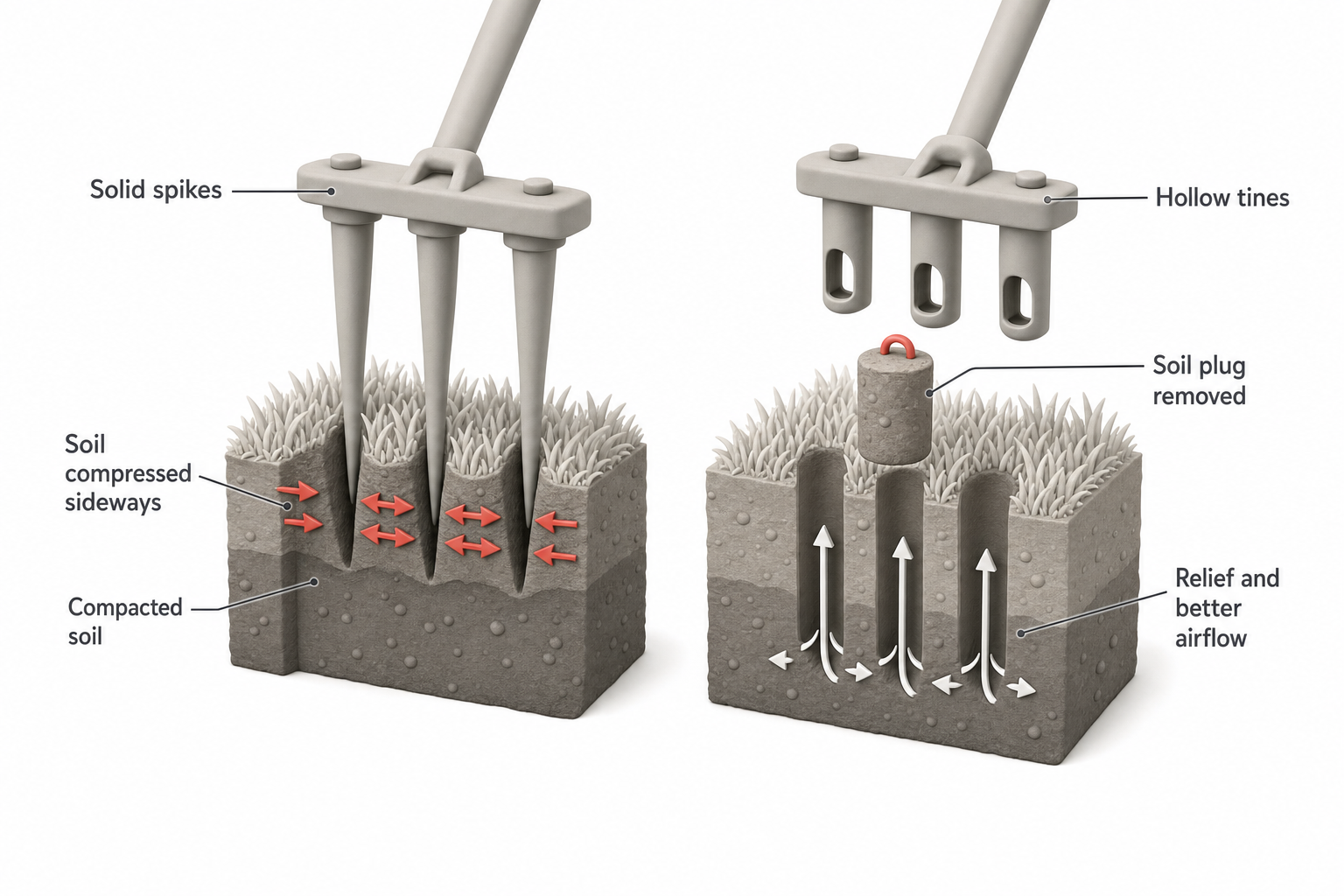
Clay compacts easily and drains slowly, so it's the soil type that benefits most from aeration, and generally needs it most often — often once a year for lawns under heavy use. Core aeration is usually the better choice here because clay needs actual soil removed to create lasting air pockets; simply poking holes tends to compress clay further around the holes rather than relieving pressure.
Loam Soil
Loam is the balanced, crumbly soil most lawn-care guides consider ideal. It compacts less severely, so aeration once a year or even every other year is often enough for an established lawn. Either core or spike aeration can work, though core aeration still gives a more lasting benefit.
Sandy Soil
Sandy soil drains quickly and resists compaction much better than clay or loam. Many sandy lawns need aeration only occasionally, mainly if there's a heavy thatch layer or very high foot traffic. When aeration is needed, spike aeration is often sufficient since compaction is rarely severe.
[!region] Soil type varies significantly by region and even by yard. If you're unsure what you have, a simple jar test (mix a soil sample with water, let it settle, and observe the layered sand/silt/clay bands) or a local extension office soil test can confirm it before you decide on a method.
Core Aeration vs. Spike Aeration
Core Aeration
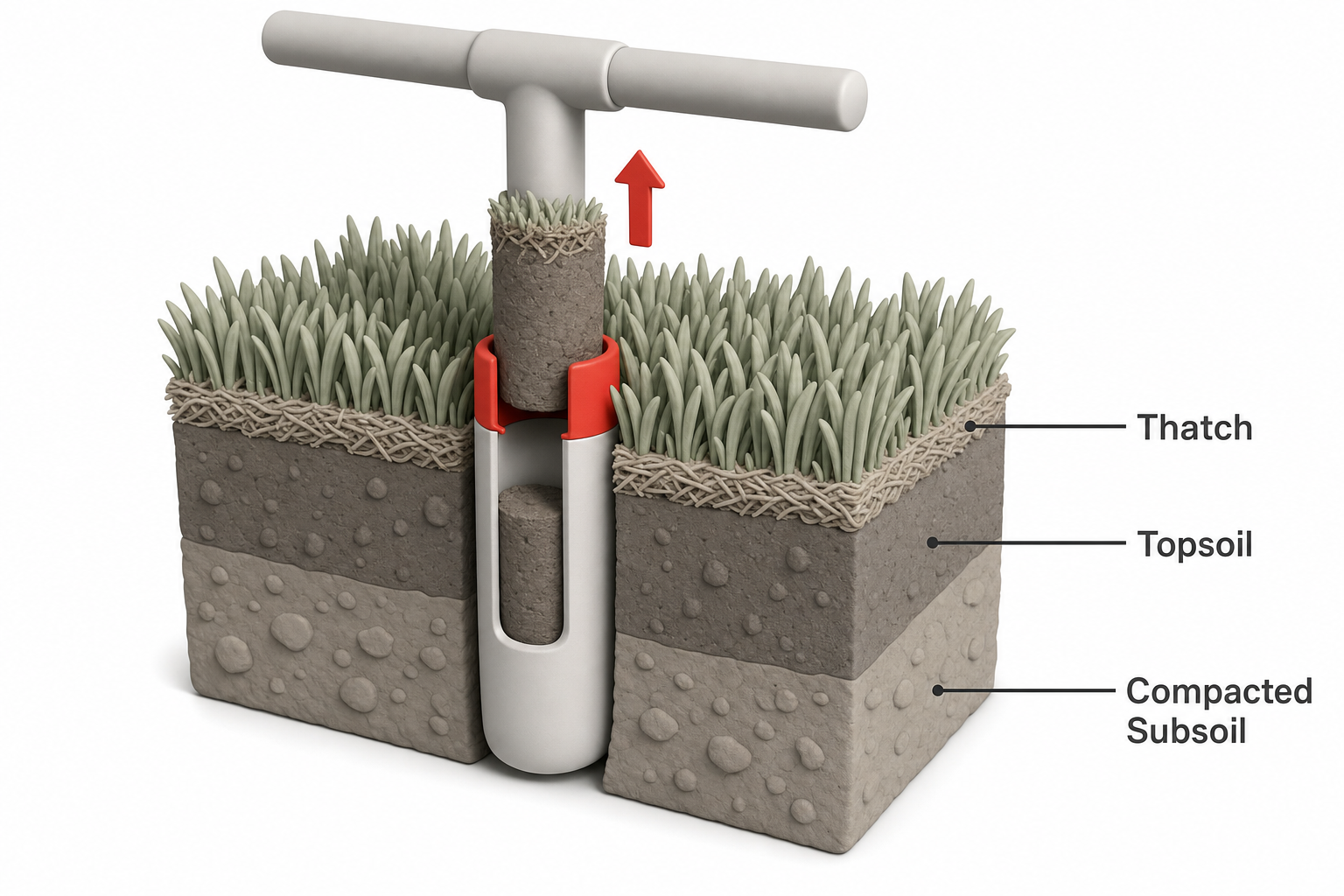
Core (or plug) aeration uses a machine with hollow tines that physically remove small plugs of soil, typically 2–3 inches deep and about half an inch to three-quarters of an inch in diameter, and deposit them on the surface. Those plugs break down and work back into the lawn within a couple of weeks, especially after mowing passes over them.
Pros: genuinely relieves compaction by removing material, improves water and nutrient penetration, helps reduce thatch over time, and generally gives longer-lasting results than spiking.
Cons: requires a core aerator, which is usually rented rather than owned by most homeowners; leaves visible soil plugs on the lawn temporarily; heavier and slower to maneuver than a spike aerator.
Spike Aeration
Spike aeration uses solid spikes — on a rolling lawn aerator, aerator shoes, or even a garden fork — to poke holes into the soil without removing any material.
Pros: simpler and cheaper equipment, no plugs to clean up, easier for small yards or light touch-ups.
Cons: can actually make compaction worse in clay soil, because the spikes push soil sideways and compress it around the hole rather than removing it; results tend to be shorter-lived.
As a general rule: if your soil is clay-heavy or your lawn sees heavy use, core aeration is worth the extra effort and rental cost. If your soil is sandy or loamy and only mildly compacted, spike aeration can be a reasonable lower-effort option.
Step-by-Step: How to Aerate a Lawn
1. Choose the Right Time
Aerate when grass is actively growing so it can recover quickly and fill in the holes. For cool-season grasses (such as fescue, ryegrass, or bluegrass, common in northern climates), early fall or early spring is typically recommended. For warm-season grasses (such as Bermuda or zoysia, common in southern climates), late spring through early summer, once the grass is fully green, tends to work better.
[!region] Grass type and climate zone strongly influence timing. If you're not sure which category your lawn falls into, a local cooperative extension office or garden center can usually identify it and recommend a seasonal window for your area.
2. Mow and Water Beforehand
Mow the lawn a bit shorter than usual a day or two before aerating, and water the lawn thoroughly the day before if the soil is dry. Moist (not soggy) soil allows tines or spikes to penetrate more effectively than bone-dry, hard ground.
3. Mark Sprinkler Heads and Shallow Utilities
Flag any irrigation heads, shallow cable lines, or septic components before running equipment over the lawn to avoid damaging them.
[!safety] If you're unsure where underground utility lines run, contact your local utility locating service before aerating with a machine, especially a larger rented core aerator. Striking a buried electrical or gas line is a serious hazard — treat any suspected gas line damage as an emergency and call your gas utility or 911 immediately rather than investigating it yourself.
4. Run the Aerator in a Pattern
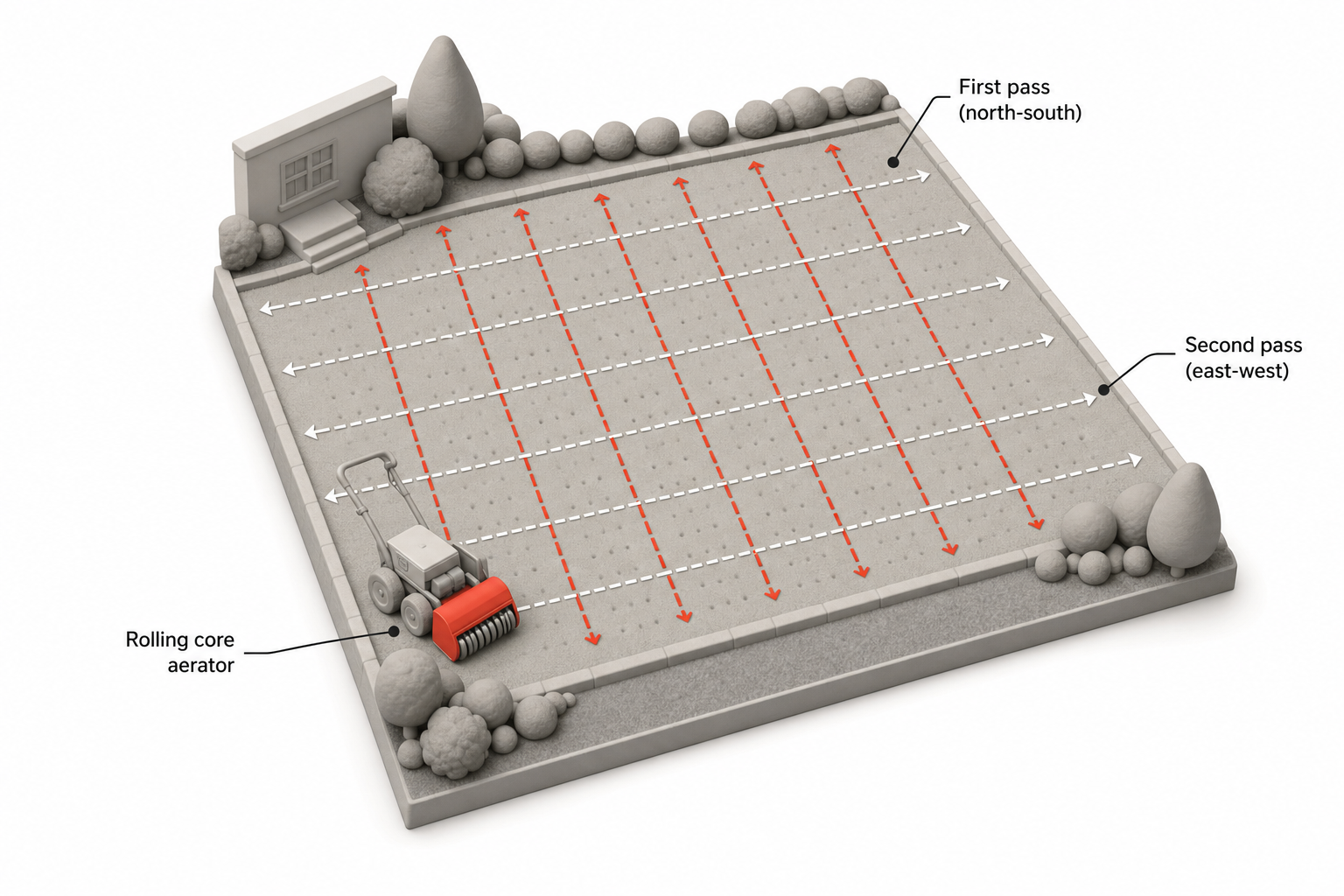
Go over the whole lawn in one direction, then make a second pass perpendicular to the first for more thorough coverage, similar to mowing in a grid pattern. Pay extra attention to compacted zones you identified earlier, like paths and play areas.
5. Leave the Plugs (If Core Aerating)
Resist the urge to rake up core plugs immediately. Left in place, they break down within a couple of weeks and return organic matter and beneficial soil microbes to the lawn. Mowing over them a few times speeds up the breakdown.
6. Overseed and Topdress (Optional but Effective)
Aeration creates ideal conditions for overseeding because seed can fall into the holes, where it's protected and in good contact with soil. If the lawn is thin, spreading grass seed and a light layer of compost right after aerating often produces noticeably better results than aerating alone.
7. Water and Fertilize After Aerating
Water the lawn within a day or two of aerating to help the holes stay open and support any new seed. Many homeowners also apply a fall or spring fertilizer at this point, since nutrients can reach roots more effectively through the fresh channels.
How Often to Aerate
As a general guideline:
- Clay soil or heavy-traffic lawns: once a year.
- Loam soil, average use: every one to two years.
- Sandy soil, light use: every two to three years, or only when compaction signs appear.
These are general starting points rather than fixed rules — always adjust based on how your specific lawn responds and recovers.
FAQ
Can I aerate my lawn myself, or do I need a professional? Most homeowners can rent a core aerator or use a spike aerator themselves for an average-sized yard. Professional lawn care services can be worth it for very large properties, heavily compacted clay soil, or if you'd rather not deal with renting and transporting equipment.
Is it better to aerate in spring or fall? It depends mainly on your grass type. Cool-season grasses generally recover best from aeration in early fall or early spring, while warm-season grasses generally do best when aerated in late spring to early summer during active growth.
Do I need to remove the soil plugs after core aerating? No, leaving them on the lawn is usually recommended. They break down within a couple of weeks, especially with regular mowing, and return organic matter to the soil.
Will aerating kill my grass? Aeration is generally low-risk for established, healthy grass, though a freshly aerated lawn can look a bit rough for a week or two as plugs break down and any overseeding germinates. Watering consistently afterward supports a quicker recovery.
How do I know if my soil is clay, loam, or sandy? A simple jar test — shaking a soil sample with water in a clear jar and observing how it settles into layers — can give a rough idea, or a local extension office can run a more precise soil test.