
A little haze curling out of the oven vent the first time you fire up a new range is usually nothing to worry about. Thick, dark smoke pouring out every time you preheat is a different problem, and it's worth figuring out which one you're dealing with before you roast anything else.
This guide walks through the common causes of oven smoking when preheating, how to tell harmless burn-off from a genuine hazard, and what steps to take for each.
Normal Burn-Off vs. a Real Problem
Manufacturers coat oven interiors, heating elements, and insulation with lubricants and protective oils during production. The first few times you run a brand-new oven at a high temperature, that residue burns off and produces a thin gray or white smoke with a faint chemical or "hot metal" smell. This typically clears up within the first two or three uses and doesn't return.
Smoke that shows up on an oven you've had for months or years, or that gets worse rather than better each time you preheat, points to something else: baked-on grease and food spills, a failing heating element, or a wiring fault. The color, smell, and pattern of the smoke are your best clues.
Signs It's Just Burn-Off
- The oven is new, or you just ran a self-clean cycle, or you recently replaced a part like a heating element or igniter.
- The smoke is thin, whitish or light gray, and thins out noticeably after 10in of ventilation time with a range hood or open window.
- There's no burning-plastic or electrical smell, no visible flame, and no smoke on reheat once the oven has fully preheated once.
Signs It's a Real Hazard
- Smoke is thick, dark gray, or black.
- You smell burning plastic, ozone, or an acrid electrical odor rather than a "burnt food" smell.
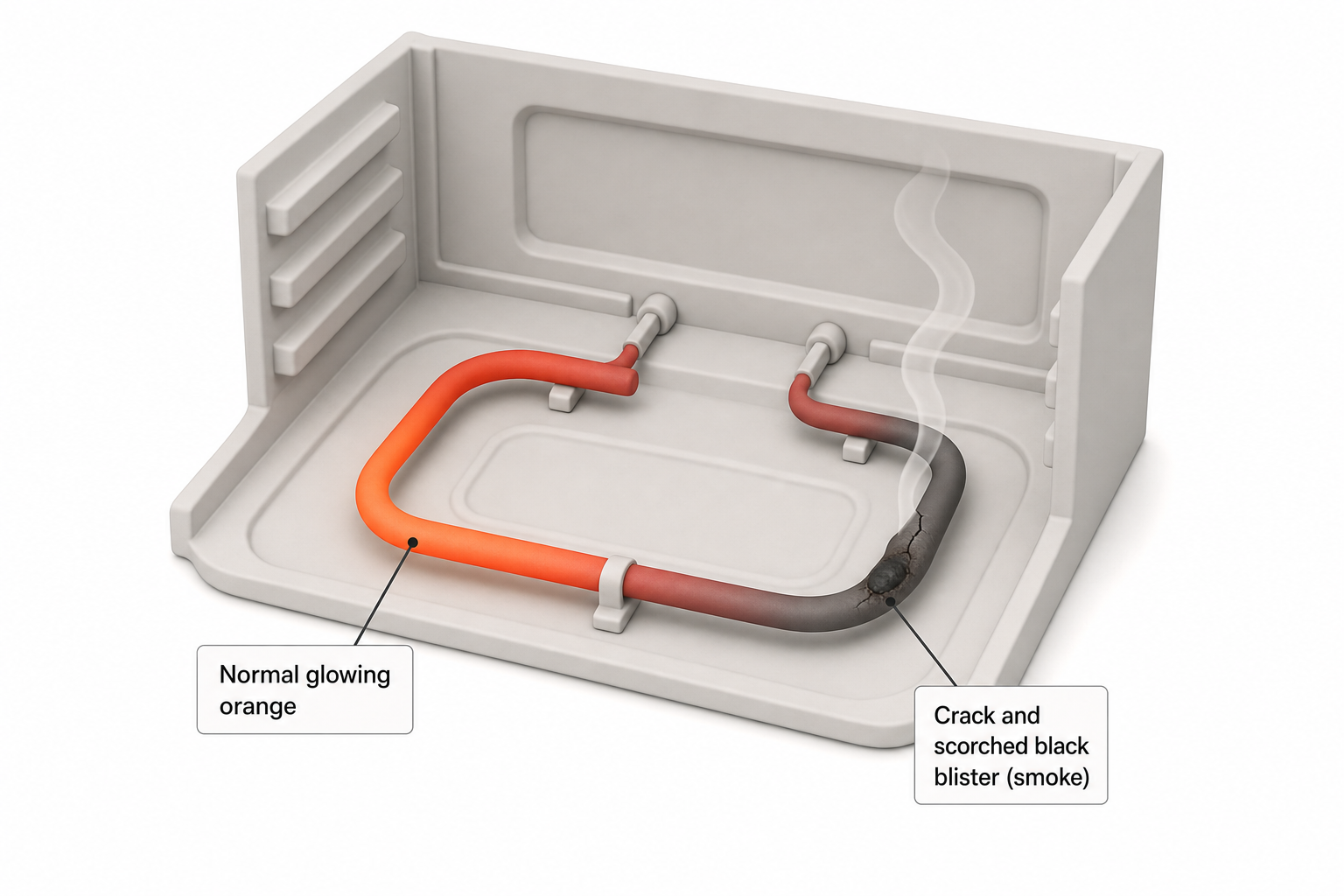
- You see sparks, arcing, or a glowing spot on a heating element that isn't uniformly orange.
- Smoke keeps recurring at the same point in the preheat cycle every single time, meal after meal.
- The smoke is accompanied by a tripped circuit breaker, a burning smell from the wall behind the range, or visible melted insulation.
Grease and Food Residue: The Most Common Cause
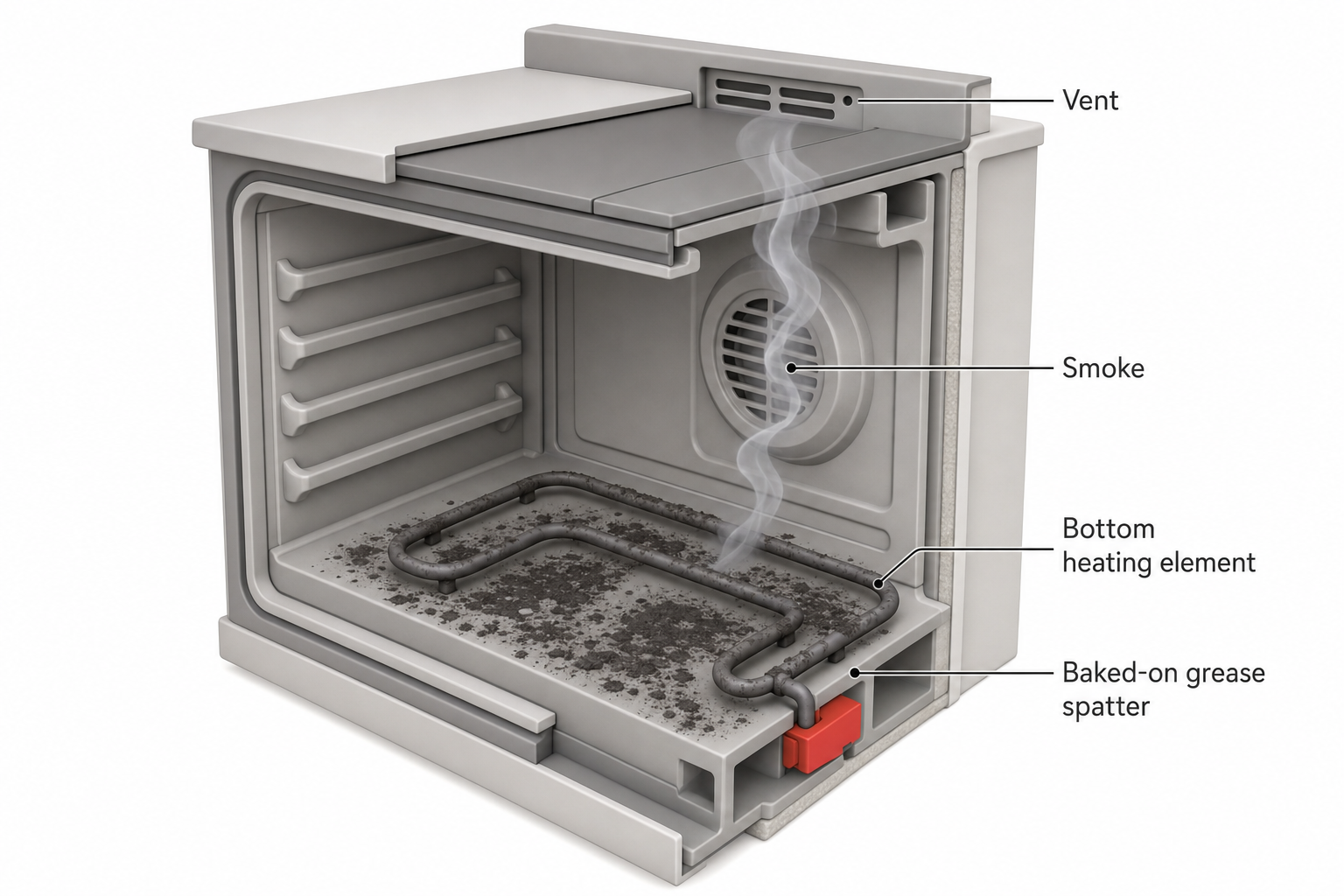
By far the most frequent reason an older oven smokes on preheat is baked-on grease and food debris on the oven floor, the underside of the broiler element, or the door gasket area. Every time the oven heats past roughly 400°F, that residue starts to carbonize and smoke, and it gets worse with each use as more grease accumulates.
- Let the oven cool completely, then pull out the racks.
- Scrape off loose, hardened debris with a plastic putty scraper. Avoid metal scrapers or steel wool on painted or enamel interiors since they can scratch the coating and create spots where grease seeps in and bakes harder next time.
- Wipe down the oven floor, walls, and door glass with a solution of warm water and a small amount of dish soap, or a dedicated oven cleaner made for painted interiors. Let it sit for the time the product label recommends before wiping clean.
- Check underneath and around the bottom heating element (on ovens where it's exposed) for drips that have pooled and hardened. A build-up here is a common smoke source because it sits closest to the highest heat.
- Run the oven empty at 350°F for about fifteen minutes with the kitchen vented to confirm the smoke is gone before you cook in it again.
If your range has a self-clean or steam-clean cycle, that's the manufacturer's intended way to remove stubborn residue, but it comes with its own smoke risk if the oven hasn't been wiped down first.
Self-Clean Cycles and Smoke
Self-clean cycles heat the oven interior to somewhere in the neighborhood of 800°F to 900°F, hot enough to incinerate grease into ash. If there's a heavy layer of grease before you start the cycle, that combustion can produce a surprising amount of smoke, and in bad cases can set off smoke alarms throughout the house.
A Failing Heating Element
Electric ovens use exposed or hidden resistance elements (the bake element at the bottom, the broil element at the top) that glow orange when working correctly. A few element-related smoke sources:
- Grease baked onto the element itself. On ovens with an exposed bake element, spills that land directly on the coil will smoke and sometimes spark as they burn off.
- A cracked or blistered element. Over years of use, elements can develop hot spots, bulge, or crack. A damaged section can arc, throw sparks, and produce a burning-metal smell along with smoke.
- A failing element that's shorting to the oven's metal frame. This is more serious: it can trip the breaker, cause visible arcing, and in some cases scorch the wiring behind the element.
A bake or broil element that's visibly bulging, blistered, split, or scorched black in one spot should be replaced rather than cleaned. Elements are generally a straightforward swap on most electric ranges, often just unplugging a wire harness and unscrewing a mounting bracket, and a suitable replacement part matched to your model is something to look for among the recommendations below rather than guessing at a generic one.
Gas Ovens: A Different Set of Causes
Gas ovens smoke on preheat for a few distinct reasons beyond grease: a dirty or misadjusted burner producing an incomplete, yellow-tipped flame instead of a clean blue one, a spill dripping onto the igniter or burner tube, or ventilation issues in the flue.
A gas flame that burns yellow or orange instead of blue, especially combined with soot marks on the oven floor or the underside of the burner box, suggests incomplete combustion. That can also mean the burner isn't getting enough air, or that carbon monoxide is being produced at higher levels than it should.
Other Less Common Causes
- A wandering thermostat or control board. If the oven overshoots its set temperature significantly before correcting, it can push residue past its normal smoke point even in a reasonably clean oven. This usually shows up alongside inconsistent baking results, like consistently burnt bottoms.
- Foil or bakeware liners on the oven floor. Aluminum foil laid directly on the oven floor can trap grease drips and reflect heat unevenly, sometimes scorching food debris underneath it faster than an open oven floor would.
- A door gasket problem. A torn or misaligned door seal can let extra heat and drips concentrate around the door frame, where residue then smokes at the seam rather than inside the cavity.
When to Call a Professional
Beyond the immediate safety situations already flagged, it's worth calling a licensed appliance technician if the smoke keeps returning after a thorough cleaning, if you see any arcing or sparking, if a breaker trips during preheat, or if you're not confident diagnosing whether an element, thermostat, or gas burner is at fault. Ovens involve both high heat and, depending on the model, either high-voltage wiring or a gas supply line, and a misdiagnosis can mean a repeat repair or a genuine fire risk.
FAQ
Is it normal for a brand-new oven to smoke the first time I use it? Yes, in most cases. Manufacturing residues and protective coatings burn off during the first couple of high-heat uses and produce a light, short-lived smoke with a chemical smell rather than a burnt-food smell. If it continues past the first few uses or smells acrid, treat it as a fault rather than normal burn-off.
Why does my oven smoke every time I preheat, even after I clean it? Recurring smoke despite cleaning usually points to a heating element issue, grease that's worked its way into a spot you can't easily reach (like under the element or behind a liner panel), or, on gas ovens, a burner that isn't combusting cleanly. It's worth having a technician inspect the element and burner directly.
Can I keep using my oven if it's smoking a little on preheat? If it's a thin, decreasing haze consistent with grease burn-off and there's no burning-plastic smell, sparking, or breaker trip, it's generally safe to finish preheating with the kitchen vented. If the smoke is thick, dark, or accompanied by any electrical smell or sparking, stop and don't use the oven again until it's inspected.
Does running the self-clean cycle cause smoking? It can, especially if there's a heavy grease layer beforehand, since self-clean temperatures are high enough to incinerate residue into ash. Wiping out loose debris before starting the cycle reduces the smoke significantly.
How do I know if it's the heating element rather than just grease? Grease smoke tends to come from a specific visible spot of buildup and clears once you clean it. An element problem often shows visible damage (cracks, blisters, scorched spots), sparking, uneven glow, or a burnt-metal or electrical smell rather than a burnt-food smell.