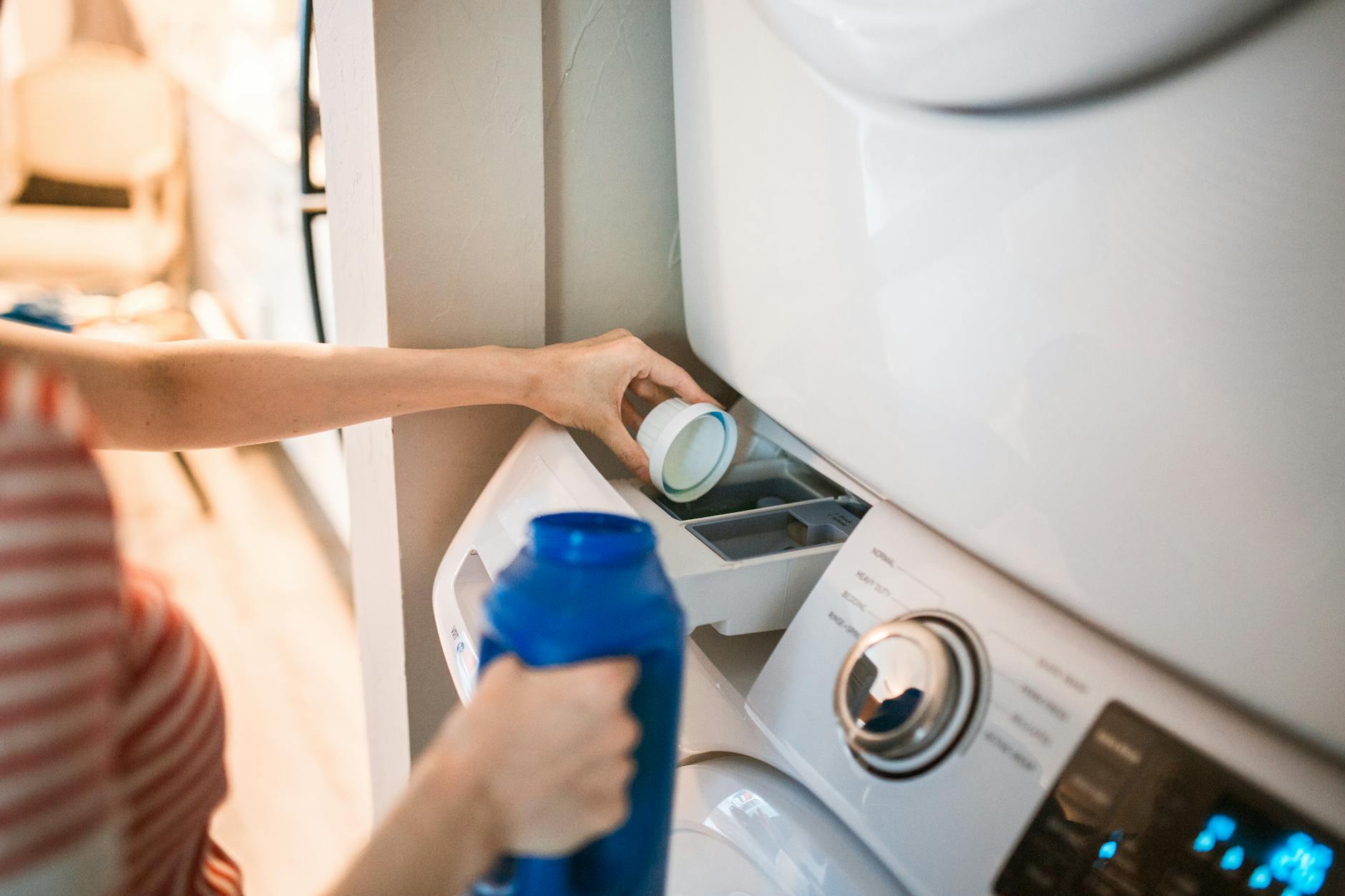
A puddle under the washing machine is one of those problems that feels urgent but is usually simple to trace if you work through it methodically. The trick is narrowing down where the water is actually coming from before you start pulling parts. Water pooling under a washer almost always comes from one of three places: a supply or drain hose connection, the internal pump, or the door/tub seal. Each leaves different clues, and this checklist walks through how to read them.
Before You Start: Basic Safety
Step 1: Confirm the Water Is Actually From the Washer
Before diagnosing the machine itself, rule out other sources:
- Check for condensation from a nearby water heater, AC line, or cold supply pipe running overhead.
- Look at the floor drain or standpipe the washer drains into — if it's clogged or undersized, water can back up and overflow onto the floor, mimicking a machine leak.
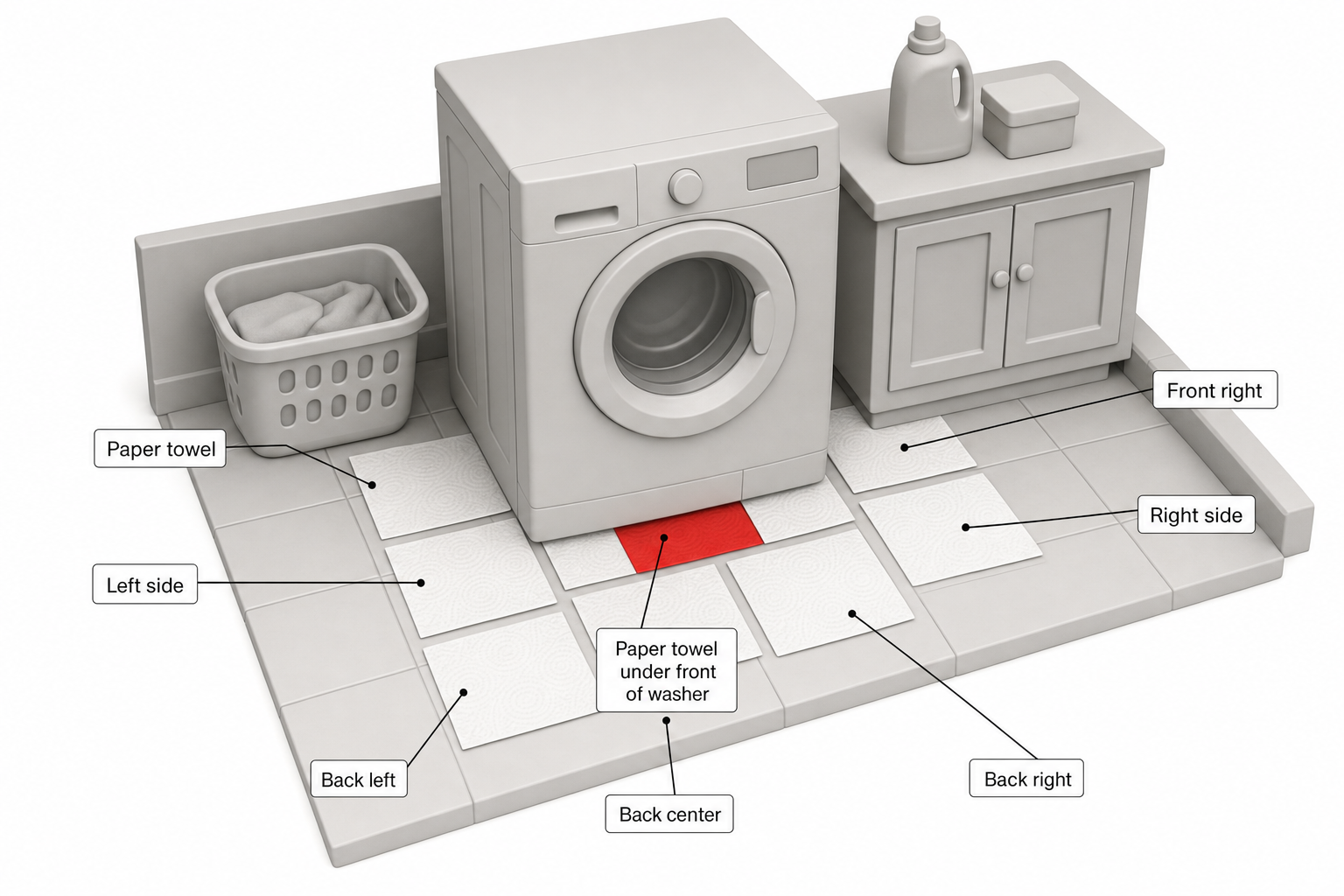
- Run an empty cycle (no clothes, no detergent) with a dry floor and paper towels laid out around the base. Watching where water first appears is the single most useful diagnostic step you can take.
Step 2: Inspect the Hose Connections
Hose leaks are the most common cause and the easiest to fix. They tend to leak steadily during the fill or drain portion of the cycle, not throughout.
What to check:
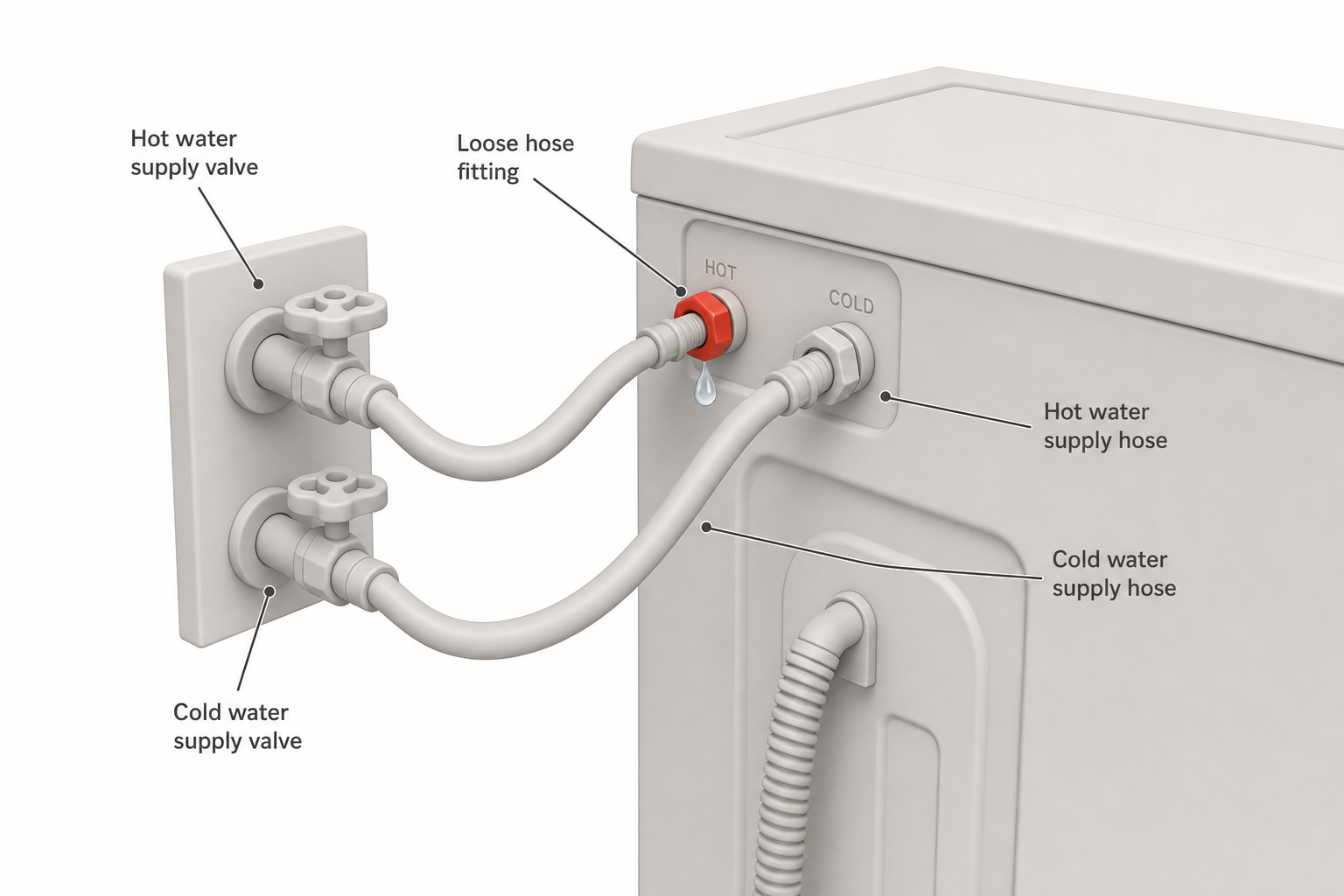
- Inlet (supply) hoses at the back, where they thread onto the hot and cold valves. Feel for dampness right at the connection point during the fill cycle. A worn rubber washer inside the hose fitting is a frequent culprit — these are inexpensive to replace and often included in hose repair kits (see the recommendations below).
- Hose material and age. Rubber supply hoses typically last several years before they crack or bulge; many manufacturers and plumbers recommend upgrading to braided stainless-steel hoses, which resist bursting under pressure.
- Drain hose at the back, where it connects to the pump and where it hooks into the standpipe or drain. Look for a loose clamp, a hose that's been forced into too tight a bend, or a hose sized wrong for the standpipe (water can splash out if it's jammed in too far or not far enough).
Visual cue: water appears at the very back of the machine, often trickling down the rear panel, and mainly during fill (supply hose) or drain (drain hose) — not throughout the whole cycle.
Step 3: Check the Door Seal or Gasket (Front-Loaders)
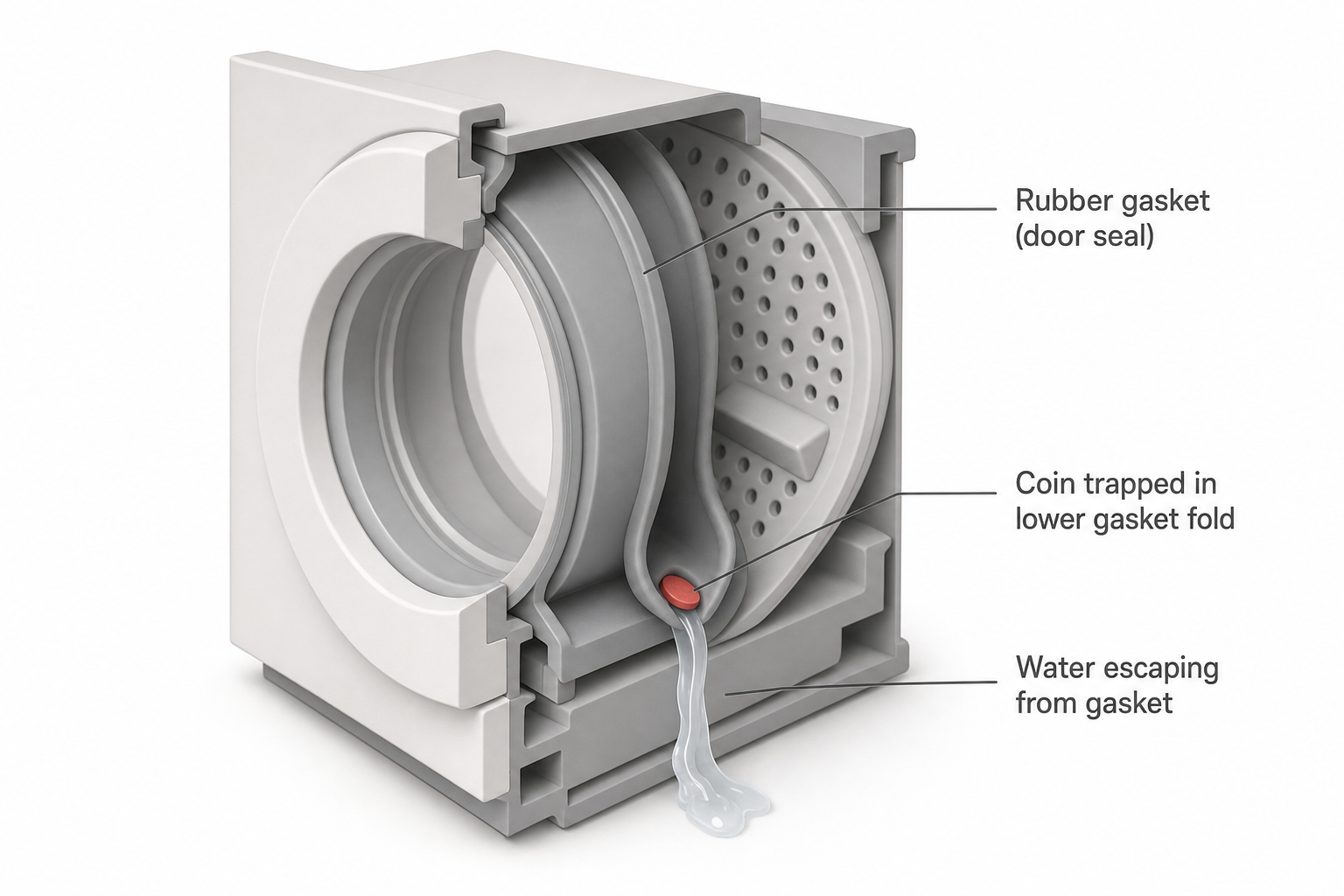
On front-loading machines, the rubber door gasket (boot seal) is a very common leak point, especially as it ages.
What to check:
- Trapped debris. Run your hand around the entire fold of the gasket — coins, buttons, small socks, or hair clips often lodge in the lower fold and prevent a full seal.
- Tears or thinning rubber, especially at the bottom fold where the seal flexes most and where soap scum and moisture accumulate.
- Overloading. Stuffing the drum too full can prevent the door from compressing the gasket evenly, allowing water to seep past during the wash and spin cycles.
- Detergent buildup or mold, which can stiffen the rubber and stop it from sealing properly. A gasket that looks fine when dry may still leak if it's lost its flexibility.
Visual cue: water appears at the front of the machine, often pooling directly under the door, and tends to worsen during the wash and spin cycles when the drum is fullest and spinning fastest.
Step 4: Check the Pump and Pump Filter
The drain pump moves water out of the tub between cycles, and it's a common failure point on both front- and top-loaders.
What to check:
- Pump filter access panel, usually a small door at the bottom-front of the machine. Many models have a self-drain tube behind this panel — leaks here often mean the filter cap wasn't reseated tightly after cleaning, or its O-ring has degraded.
- Pump housing itself, visible after removing the front or rear service panel. Look for cracks in the plastic housing, a loose hose clamp on either side of the pump, or mineral deposits (white/orange residue) indicating a slow leak over time.//- Pump seal wear. If the pump motor shaft seal is worn, water can leak continuously whenever the pump runs, not just during drain — a good clue it's the pump rather than a hose.Visual cue: water leaks from underneath the middle of the machine, often appears whenever the pump runs (drain or spin), and may be accompanied by a grinding or humming noise if the pump impeller itself is failing.
Step 5: Check the Tub-to-Pump Hose and Internal Connections
If hoses, gasket, and pump filter all check out but the leak persists, the internal hose connecting the tub to the pump may be cracked, loose, or chewed through by rodents in some cases. This requires removing the outer cabinet and is a reasonable point to weigh your own comfort with appliance repair against the cost of a service call.
Quick Reference: Matching the Clue to the Cause
| Where water appears | When it happens | Likely source |
|---|---|---|
| Back of machine | During fill | Supply hose connection |
| Back of machine | During drain | Drain hose or standpipe |
| Front, under door | During wash/spin | Door gasket |
| Bottom-center | During drain or spin, with noise | Pump or pump filter |
| Bottom-center | Constant, slow drip | Internal tub-to-pump hose or pump seal |
FAQ
Why does my washing machine only leak sometimes? Intermittent leaks often point to a hose connection that's only under enough pressure to leak at certain points in the cycle, or a door gasket that only fails to seal on larger loads. Running an empty diagnostic cycle with paper towels laid out, as described in Step 1, helps catch the pattern.
Can I fix a washing machine leak myself? Hose replacements and clearing debris from a door gasket are within reach for most homeowners with basic tools. Pump replacement and internal hose repairs typically require removing panels and handling electrical connections, and are reasonable to hand off to a professional if you're not comfortable with appliance disassembly.
Is it safe to keep using the washer while I diagnose the leak? A small, identified leak from a hose connection is generally low-risk to observe over one or two cycles, but stop using the machine immediately if water is pooling near an outlet, if you notice a burning smell, or if the leak is worsening — these suggest an electrical or pump failure that needs prompt attention.
Does a leaking washing machine always mean the pump is broken? No — the pump is only one of several possible sources. Hose connections and door gaskets cause leaks far more often than pump failures, so it's worth ruling those out first since they're cheaper and easier to fix.
How do I know if it's the door seal versus a hose leak? Location and timing are the best clues: gasket leaks appear at the front of the machine and worsen during wash and spin, while hose leaks appear at the back and correlate with fill or drain portions of the cycle.