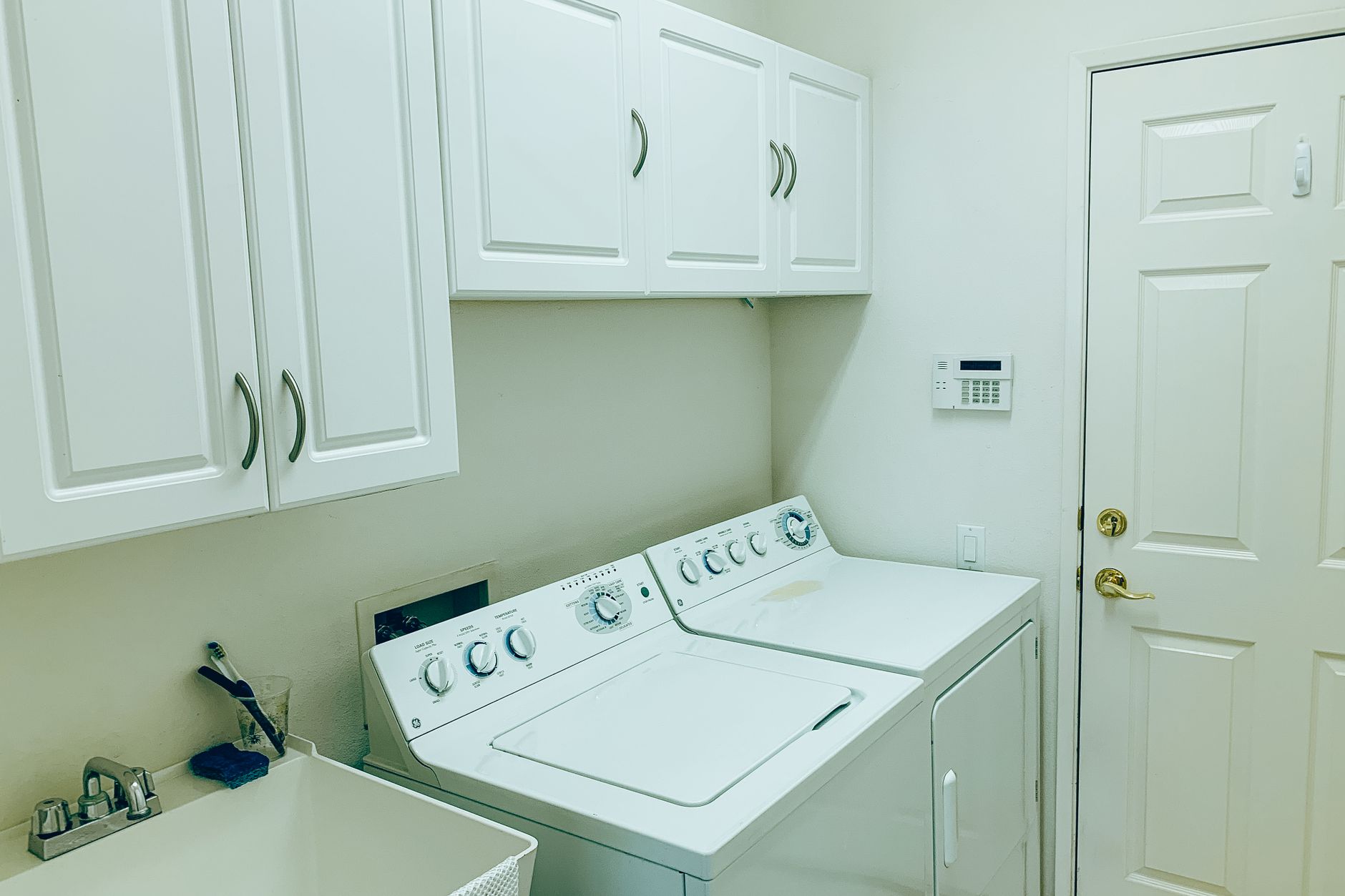
A washing machine that won't fill is one of the more common appliance calls, and the good news is that most of the causes are things you can check yourself in under half an hour. Before you assume the fill valve or control board has failed, it pays to work through the supply side first: the shutoff valves, the hoses, the inlet screens, and the lid or door switch. Each of these is cheap and easy to inspect, and together they account for the large majority of no-fill complaints.
Start With the Water Supply Valves
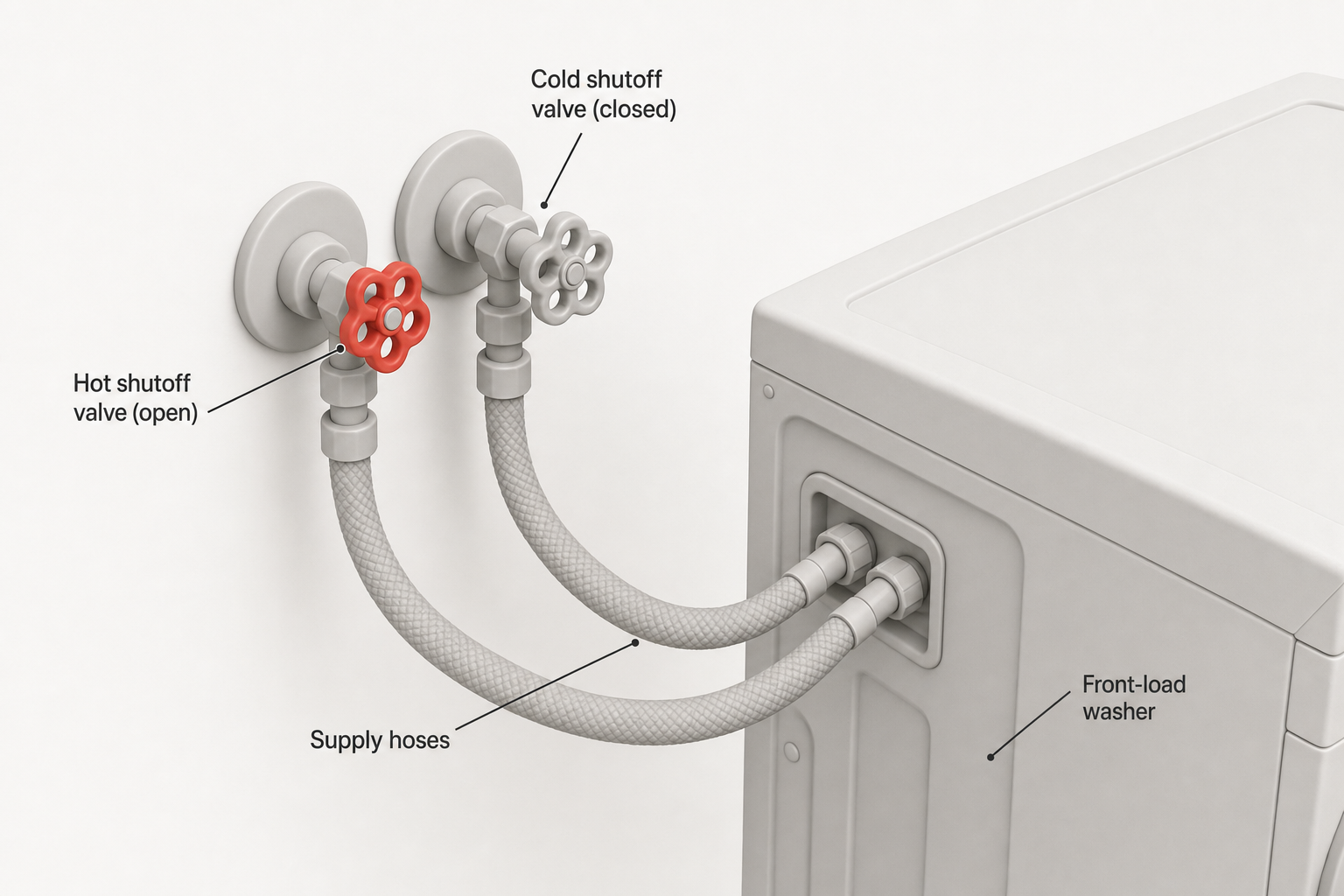
Most washers connect to two shutoff valves on the wall, usually labeled hot and cold, each feeding a braided or rubber supply hose to the back of the machine. If either valve is only partly open, or has been bumped closed during a move or a cleaning project behind the machine, the washer may fill slowly, fill with only hot or only cold water, or not fill at all.
- Pull the washer out slightly (unplug it first) so you can see the valves clearly.
- Turn each valve fully counterclockwise to make sure it's open all the way. Older gate-style valves can seize up half-open after years of not being touched.
- Check that both supply hoses are free of kinks, especially where they bend behind the machine.
[!safety] If a valve is corroded, weeping at the packing nut, or won't turn without excessive force, don't force it. A stuck or leaking supply valve is a plumbing issue, and cranking on a corroded valve can snap it off and cause a flood. Call a licensed plumber to replace it.
Check the Inlet Screens for Clogs
Even with the valves wide open, sediment, rust flakes, or bits of plumber's tape can collect in the small mesh screens where the hoses connect to the back of the washer. This is probably the single most common cause of slow or absent filling, especially in homes with older galvanized pipe or a water heater that's due for flushing.
- Shut off both supply valves before disconnecting anything.
- Unscrew the hot and cold hoses from the back of the machine. Have a towel ready, since some water will drain out.
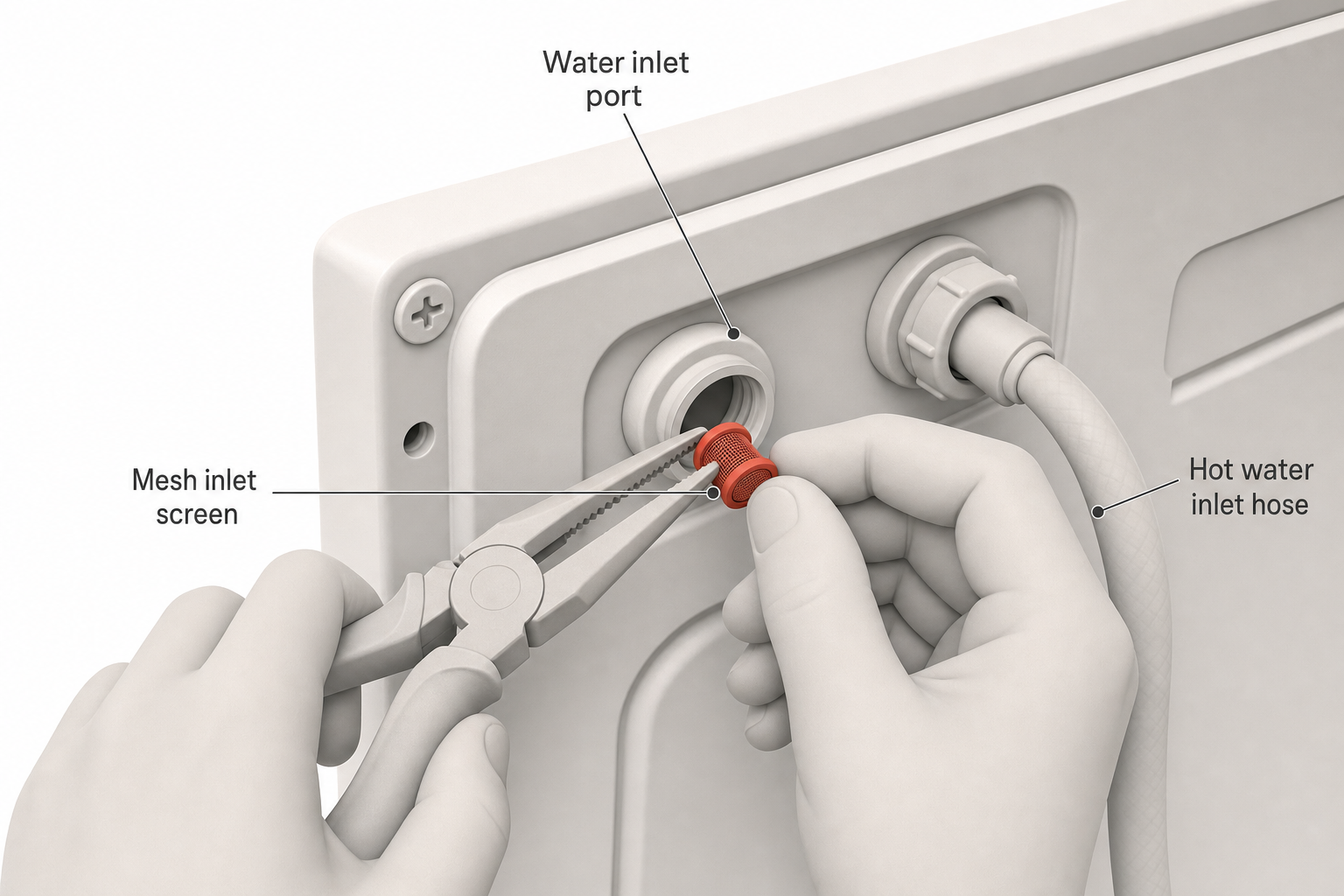
- Look inside each inlet port on the washer. You'll see a small plastic-framed screen, sometimes recessed 1in or so inside the fitting.
- Pull the screen out with needle-nose pliers and rinse it under a faucet. If it's torn or clogged with grit that won't rinse free, replace it. These are inexpensive and often sold in pairs; the recommendations below include options that fit most common washer models.
- Check the screens or washers inside the hose ends too, since some hoses have their own built-in filter.
- Reattach the hoses hand-tight, then snug them another quarter turn with pliers. Overtightening can crack the plastic fitting on the machine.
[!region] Homes on well water or with older galvanized supply lines seem to clog these screens more often, according to appliance repair technicians who service rural properties. If you're on a well system, it's worth checking the screens every year or two even if the washer is filling normally.
Test the Lid Switch or Door Latch
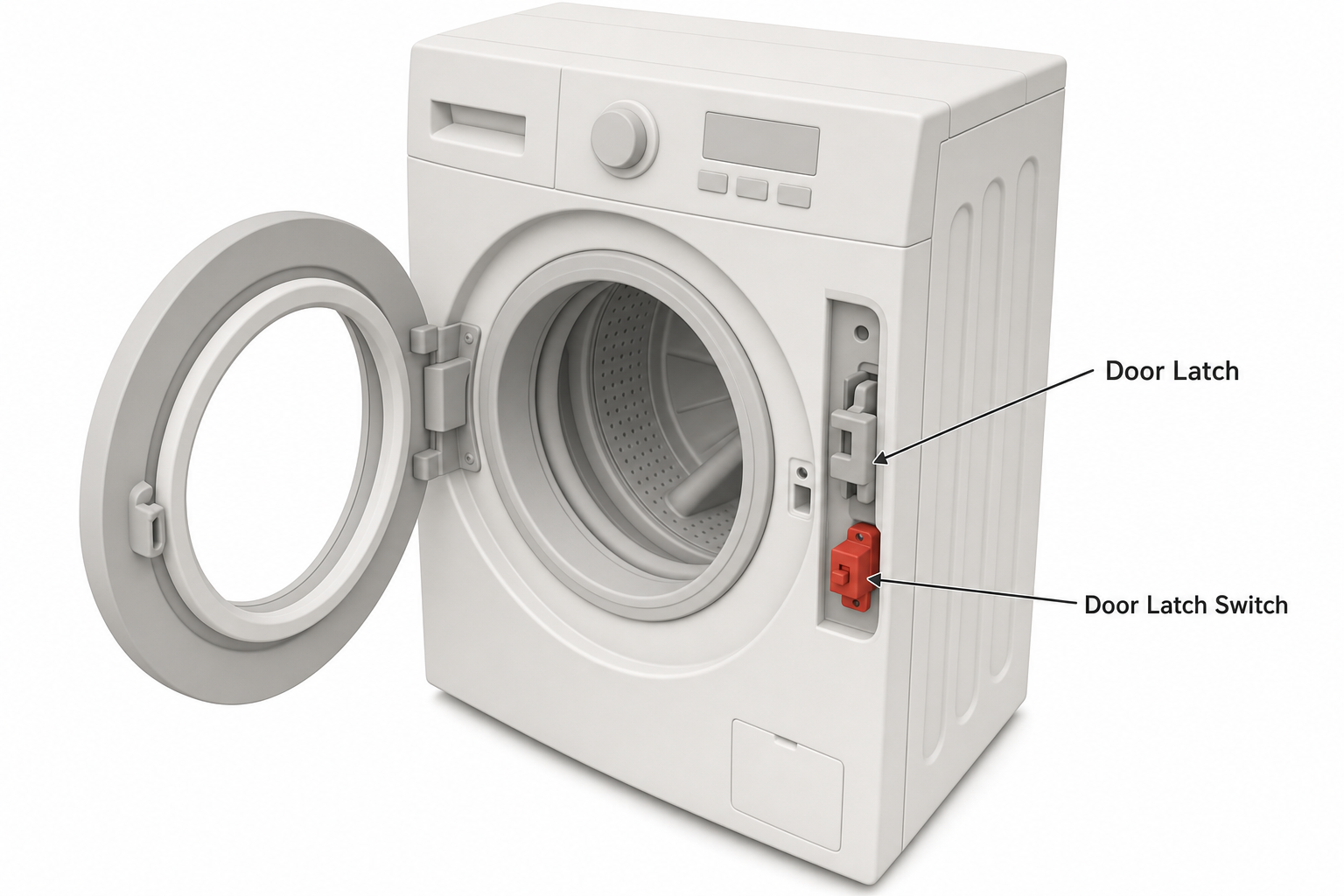
Modern washers, both top-load and front-load, won't run the fill cycle unless the machine's control board sees a signal that the lid is closed or the door is latched. A failed lid switch or door latch assembly is a frequent cause of a washer that starts a cycle, makes normal control-panel sounds, but never actually fills.
- On top-load washers, the lid switch is usually a small plastic tab or magnetic sensor near the hinge. Open and close the lid and listen for a distinct click. If the lid feels loose on its hinges or doesn't sit flush, the switch may not be triggering.
- On front-load washers, the door latch assembly includes a switch that the control board checks before allowing water in, partly as a safety measure to keep the door locked during a wash. If the door doesn't feel like it's latching solidly, or the display shows a door or lid error, that's your clue.
- Try pressing the lid or door firmly closed while starting a cycle. If the machine suddenly fills, the switch or latch is the likely culprit and probably needs replacing.
[!safety] Never bypass a lid or door switch by taping it down or removing it so the machine thinks it's closed. These switches also prevent the drum from spinning with the lid open, which is a serious injury risk. If you need to test the switch itself, unplug the washer first, since some switches carry line voltage.
Rule Out Low Water Pressure
If both valves are open and the screens are clean but the washer still fills painfully slowly, low household water pressure could be the issue rather than the washer itself. Check whether other fixtures in the house, like an upstairs shower or an outdoor spigot, also seem weak. Most washer fill valves are designed to work with normal residential pressure, and manufacturers often specify a minimum pressure in the owner's manual, typically somewhere in the range of 20 to 100 psi. A whole-house pressure-reducing valve that's failing, or a partially closed main shutoff, can starve every appliance in the house at once.
When It's the Fill Valve Itself
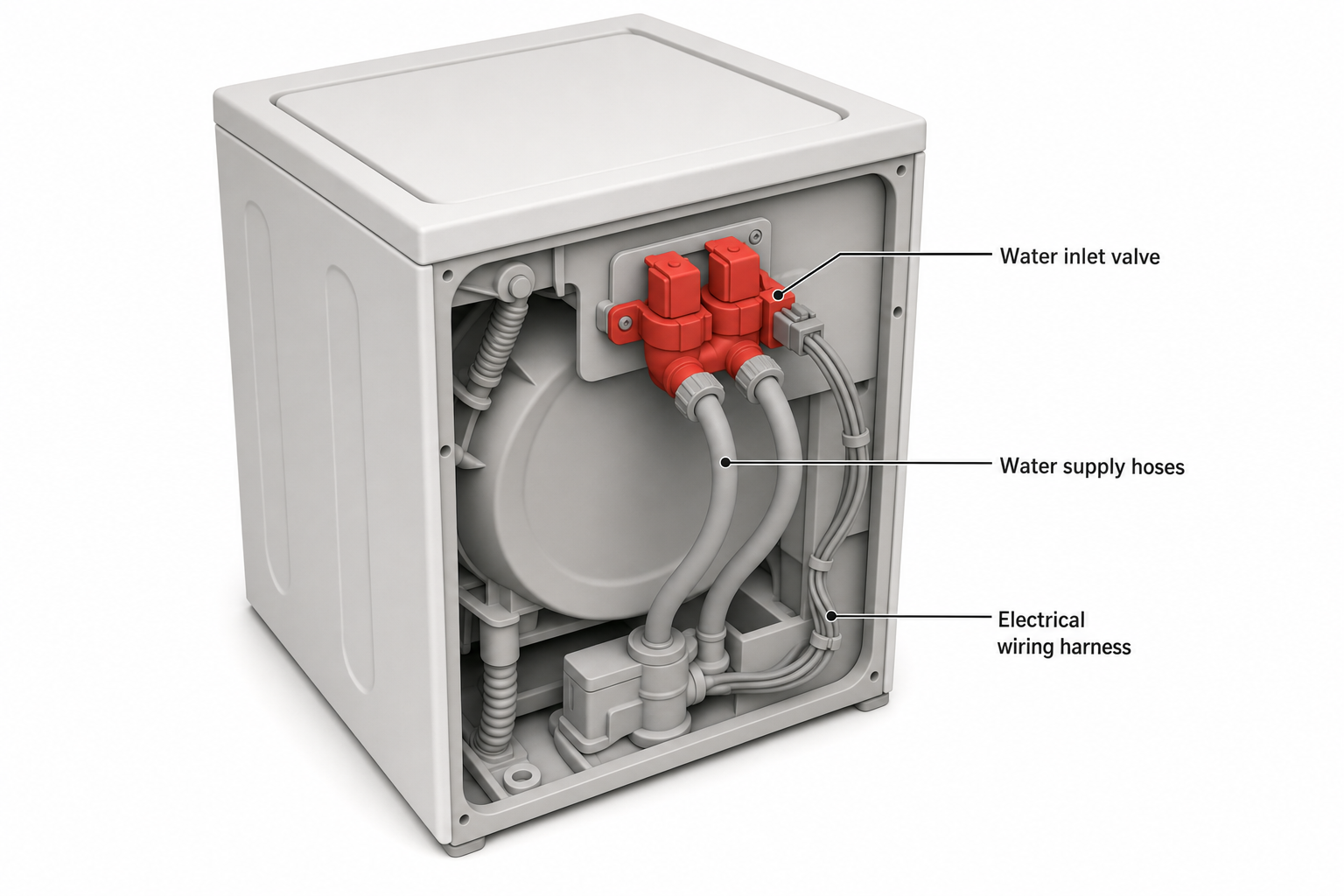
If the supply valves, hoses, screens, and lid switch all check out and the washer still won't fill, the water inlet valve on the machine itself has likely failed. This is the solenoid-operated valve, usually mounted where the hoses attach to the cabinet, that opens electrically to let water through. Fill valves can fail from mineral buildup, a burned-out solenoid coil, or a cracked housing. Replacing one usually means pulling the top or rear panel off the cabinet, disconnecting the wiring harness and hoses, and swapping in a matching valve assembly. It's a manageable DIY repair for anyone comfortable with basic tools, but if you're not confident working inside the cabinet or don't want to deal with disconnecting electrical connectors, a licensed appliance repair technician can usually handle it in one visit.
[!safety] Always unplug the washer and shut off both water valves before opening any panel to inspect or replace the fill valve. Water and exposed electrical connections are a bad combination.
Quick Diagnostic Checklist
- Confirm both hot and cold shutoff valves are fully open.
- Inspect and clean the inlet screens on the back of the machine.
- Make sure the lid or door is latching and the switch clicks.
- Compare water pressure at the washer to other fixtures in the house.
- If everything upstream checks out, suspect the fill valve or control board.
FAQ
Why does my washer fill with only hot or only cold water, not both? This almost always points to one supply valve being partly closed or one inlet screen being clogged, rather than a valve failure inside the machine. Check the side that isn't filling first, since a single clogged screen or a valve bumped half shut behind the machine is the most likely cause.
Can a clogged inlet screen really stop the washer from filling completely? Yes. If sediment or a torn screen fully blocks the inlet port, no water can get through even with the shutoff valve wide open. This is especially common in homes with older plumbing or well water where mineral and rust particles build up over time.
Is it safe to clean the inlet screens myself? Yes, as long as you shut off both supply valves and disconnect the hoses first. The screens are simple mesh filters and don't involve any wiring, so this is one of the lowest-risk repairs on this list.
My washer shows a door or lid error but the door looks closed. What's going on? The latch may be seated but the switch inside isn't registering it, often because of a worn latch mechanism or a loose strike plate. Try closing the door firmly and listening for the click; if the error persists, the latch assembly likely needs replacing.
Should I call a professional instead of replacing the fill valve myself? If you're comfortable removing panels and disconnecting hose and wiring connectors, it's a reasonable DIY job. If you're unsure about the wiring or don't want to risk damaging the cabinet, a licensed appliance repair technician can diagnose and replace it quickly, and it's worth calling one if the washer is still under warranty.