
Weeds compete with your flowers and vegetables for water, nutrients, and light, but most weed-killing sprays don't know the difference between a dandelion and your tomato plant. The trick to clearing a garden bed without collateral damage is choosing methods that target the weed directly, whether that's pulling it by hand, smothering it, or applying a control so precisely that it never touches a leaf you want to keep. Here's how to do it in a way that actually holds up over a season, not just for a week.
Start With Hand-Pulling and Mechanical Removal
For established beds with plants you care about, manual removal is still the safest and most reliable method. It costs nothing but time and won't drift onto anything nearby.
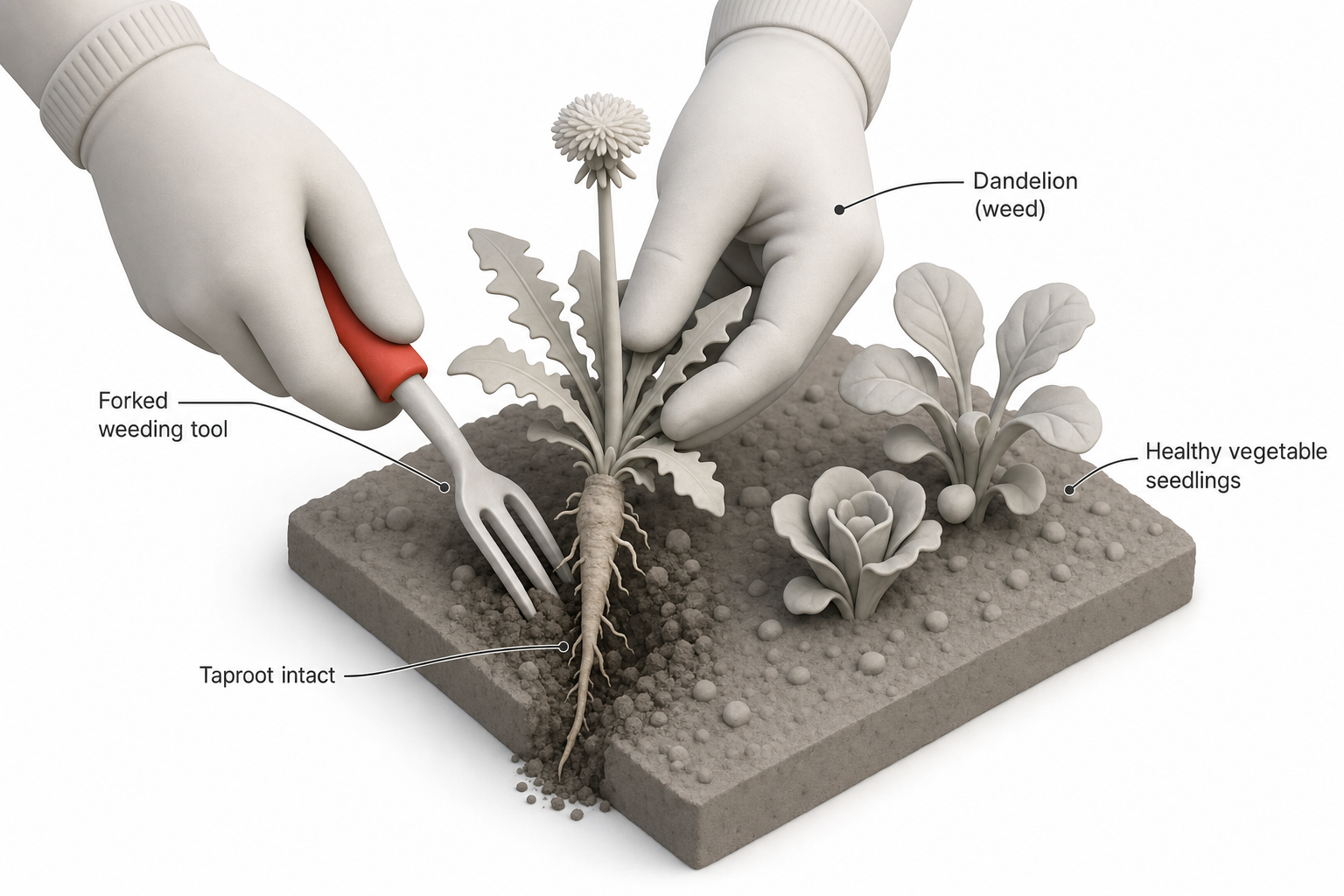
Pull weeds after watering or a rain, when the soil is soft. Grip low, near the base of the stem, and pull slowly and steadily rather than yanking. For weeds with a single taproot like dandelion or dock, a narrow garden knife or a forked weeding tool slipped 4in to 6in down alongside the root lets you lever the whole thing out, taproot included. Leaving root fragments behind is why some weeds seem to return within days.
For grassy weeds that spread by runners (crabgrass, quackgrass), work along the runner and pull the entire chain rather than snapping off the visible top. If you hoe instead of hand-pull, use a stirrup or scuffle hoe just under the soil surface, moving it in a shallow back-and-forth motion between plants. Keep the blade a few inches from the base of anything you're growing so you don't nick roots or stems.
Smother New Growth With Mulch
Once a bed is weeded, a mulch layer blocks the sunlight weed seeds need to germinate. Spread 2in to 3in of shredded bark, straw, or compost over the soil, keeping mulch pulled back an inch or two from plant stems and tree trunks to avoid trapping moisture against them, which can cause rot.
For an extra barrier under mulch in particularly weedy beds, a few sheets of newspaper or plain cardboard laid down first will smother existing weed seedlings while breaking down over the following months. Avoid glossy or colored print, which may contain additives you don't want leaching into soil where you're growing food.
Use Boiling Water or Vinegar for Isolated Weeds
For weeds sprouting in cracks, along edging, or in isolated spots away from your desired plants, boiling water is a genuinely effective non-chemical option. Pour it directly onto the weed's leaves and root crown; it works by scalding plant tissue, so it kills whatever it touches, desired or not. Use it only where there's clear separation from your plants' root zones, and be careful pouring near root systems that spread wider underground than the visible plant does above ground.
Household vinegar (5% acetic acid) can knock back small, young weeds in the same way, by burning foliage on contact. It's a contact herbicide, not systemic, meaning it kills what it touches but generally doesn't travel down to the root, so tougher perennial weeds often regrow. Horticultural vinegar sold at higher concentrations (20% or more) is more effective but also more hazardous to skin and eyes and should be handled with the same caution as a strong acid.
[!safety] Boiling water causes serious burns on contact with skin. Carry the pot with both hands, pour slowly and low to the ground, and keep children and pets away from the area until it cools. Higher-concentration horticultural vinegar can cause chemical burns to skin and eyes; wear gloves and eye protection and avoid it on windy days when it could drift.
Spot-Treat With a Targeted Herbicide
When hand-pulling isn't practical, such as with a large infestation of a persistent perennial weed, a targeted spot treatment lets you use an herbicide without putting your garden plants at risk. The key is application method, not just product choice.
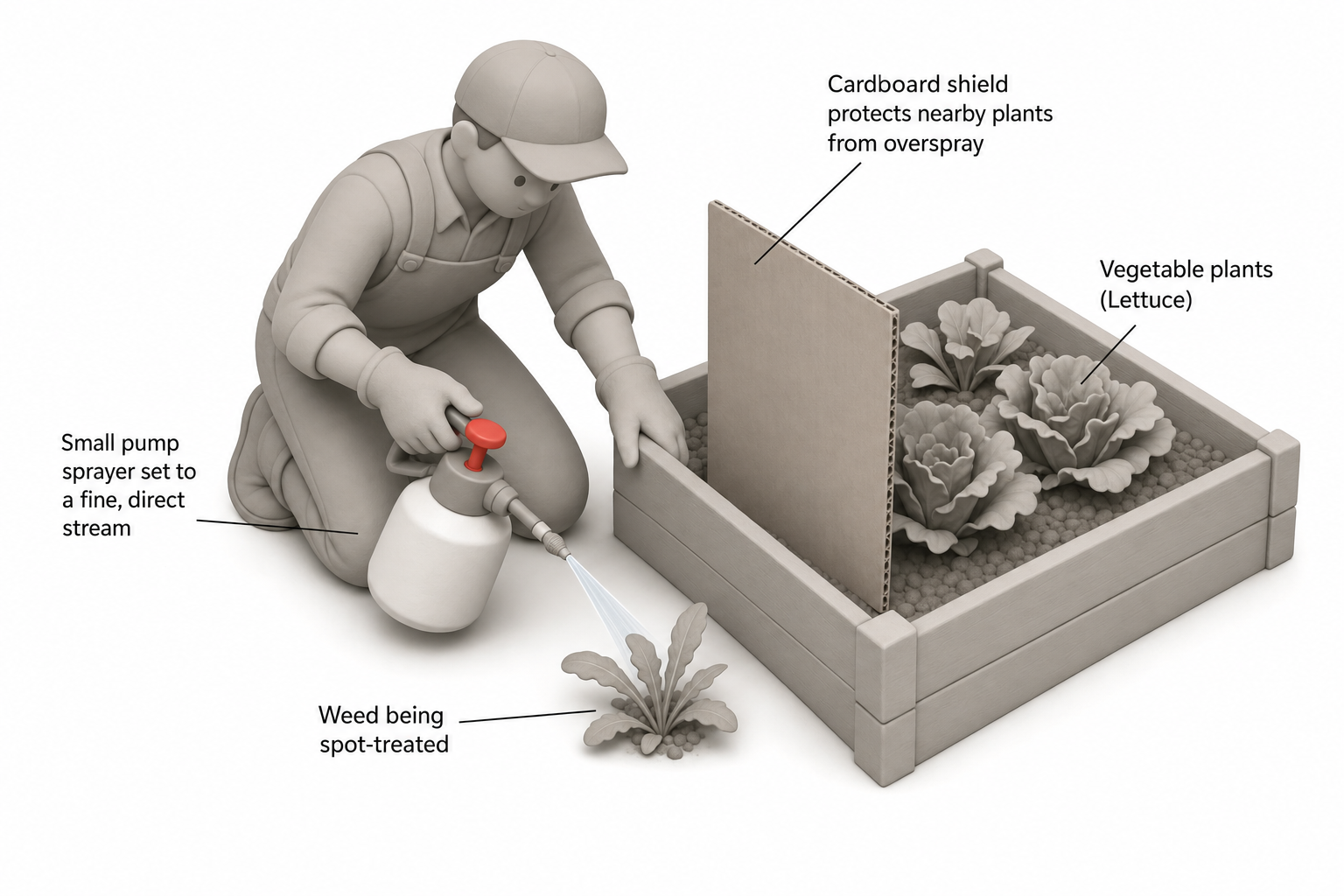
Use a small pump sprayer set to a fine, direct stream rather than a fan mist, or apply with a foam paintbrush or sponge directly onto the weed's leaves. This keeps the herbicide off nearby foliage entirely. Choose a still, calm day, ideally with no rain expected for the next day or two so the product has time to be absorbed rather than washed off. Shield nearby plants with a piece of cardboard or a plastic sheet held between the weed and anything you want to protect if the two are growing close together.
For perennial weeds with deep or spreading roots, a systemic herbicide (one that moves down into the root system after being absorbed by the leaf) is more effective long-term than a contact type, since it kills the plant rather than just the visible growth. Always read and follow the label directions for the specific product regarding dilution, reapplication intervals, and any restrictions near edible plants; labels vary by formulation and manufacturers set different pre-harvest intervals for food gardens.
[!safety] Wear gloves and eye protection when mixing or applying any herbicide, even one marketed as "natural" or vinegar-based, since concentrated acetic acid and many other weed-control products can irritate skin and eyes. Keep pets and children off treated areas until the product has dried completely, as recommended on the label.
Prevent Regrowth With a Pre-Emergent Barrier
Once your beds are cleared, a granular pre-emergent herbicide applied around, but not directly on top of, your desired plants can stop new weed seeds from germinating for a period of weeks to a couple of months, depending on the product. Pre-emergents work by disrupting seedling root development, so they don't harm established plants with mature root systems, but they also won't do anything for weeds that have already sprouted. Apply after your last major planting or transplanting is done for the season, since some pre-emergents can also interfere with the germination of desired seeds you sow afterward.
[!region] Some pre-emergent and other herbicide products are restricted or require licensing for certain uses depending on local and regional regulations. Check your local extension office or equivalent regional agricultural authority before applying any weed control product near edible crops or waterways.
Keep the Bed From Reinfesting
Weeds that go to seed nearby will restock your bed every season. Pull or mow weedy areas at the border of your garden before they flower, and inspect any new mulch, compost, or topsoil for weed seed contamination before spreading it, since low-quality bulk compost is a common source of fresh weed seed. Checking beds every week or two during the growing season and pulling small weeds while they're still seedlings takes a few minutes and is far easier than dealing with an established root system months later.
FAQ
Will pouring boiling water on a weed hurt the soil? A single application generally has minimal lasting effect on soil chemistry or structure, though repeated heavy use in the same spot can affect soil microbial life and moisture retention over time. For occasional spot use it's considered low-risk.
Is vinegar safe to use in a vegetable garden? Household vinegar sprayed directly and only on weed foliage, away from your vegetables, is generally considered low-risk to nearby soil and plants since it breaks down quickly and doesn't move systemically through soil. Avoid spraying it on windy days or near the base of vegetable plants themselves.
How do I kill weeds growing right next to my flowers without damaging the flowers? Hand-pulling is the safest option when weeds are intertwined with desired plants. If you need a liquid treatment, apply it with a small brush or foam applicator directly onto the weed's leaves, or shield the flower with cardboard during a spray application.
Why do my weeds keep coming back after I pull them? Most likely you're leaving root fragments behind, especially with taprooted or rhizome-spreading weeds. Use a forked weeding tool to lift the entire root system, and follow up with mulch to block new seeds from germinating in the disturbed soil.
Do pre-emergent herbicides harm the plants already growing in my bed? Established plants with developed root systems are generally not harmed by pre-emergents, since these products work by preventing new seedling roots from forming. They can, however, prevent flower or vegetable seeds you sow afterward from germinating, so timing matters.