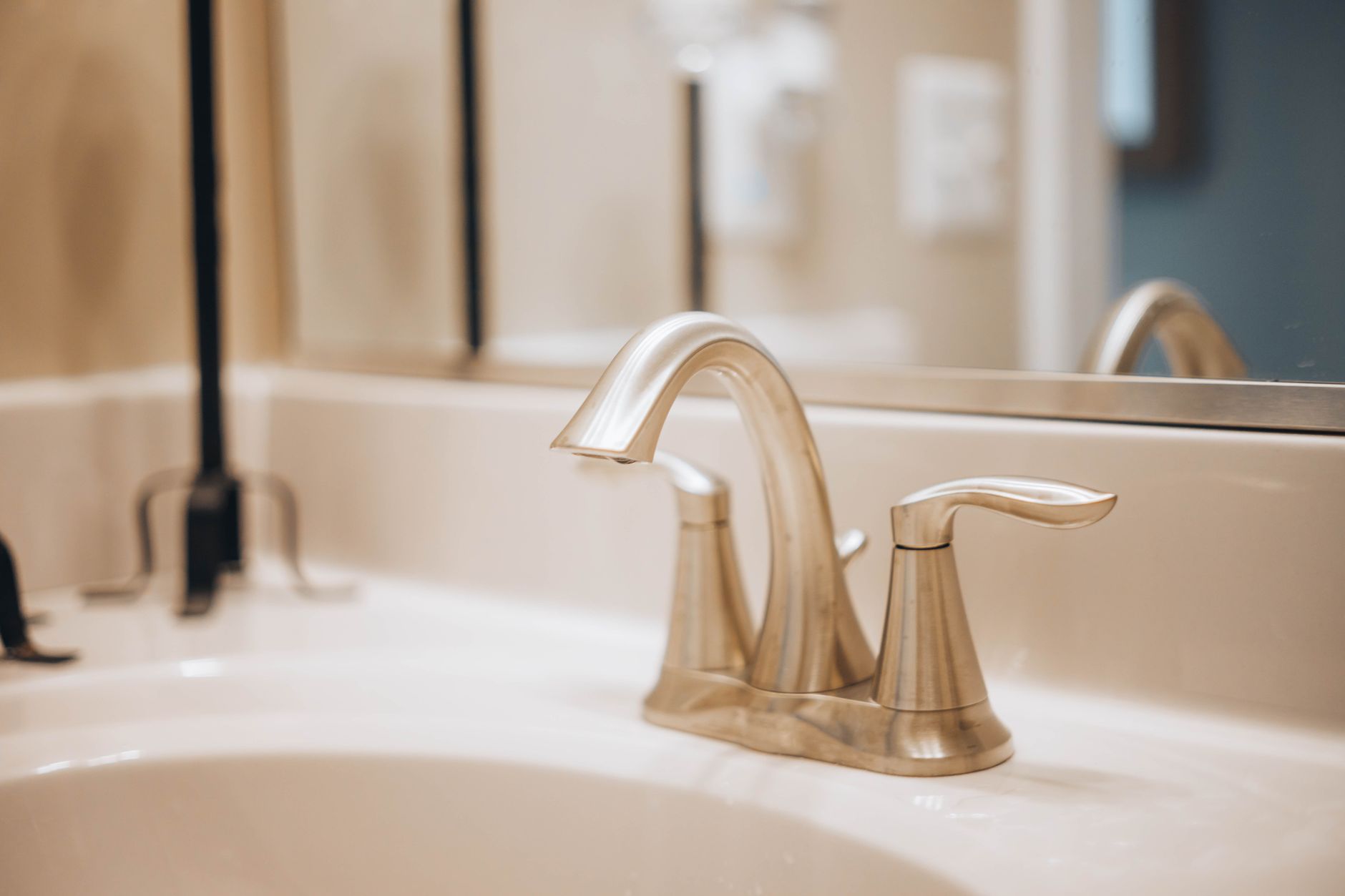
A bathroom sink that drains slowly is almost always one of three problems: a hair clog in the stopper assembly, gunk buildup in the P-trap, or a blocked vent line that's letting air pressure fight the water. Each has a different fix, and tackling them in the wrong order wastes time. This guide walks through the cheapest, least invasive fix first, then moves to more involved work only if needed.
Step 1: Rule Out the Easy Culprit — The Stopper and Drain Flange
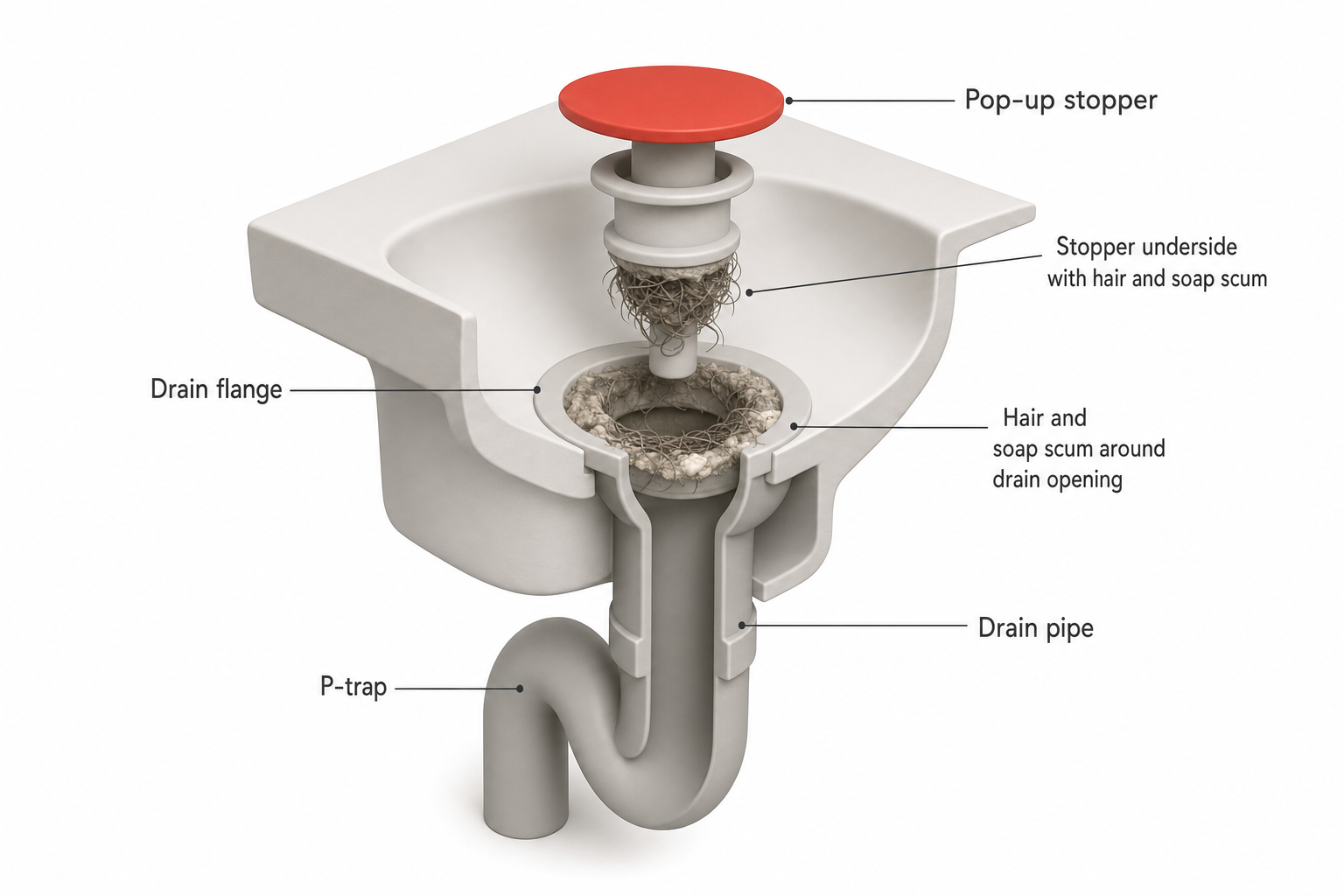
Most slow bathroom sinks are clogged right at the top, where hair and soap scum wrap around the pop-up stopper or drain flange. Start here before touching any tools under the sink.
- Remove the stopper. Most pop-up stoppers lift straight out after you rotate them a quarter turn, though some are held by a pivot rod under the sink that you'll need to unscrew and slide out first.
- Pull the hair mass. Shine a flashlight down the drain opening — you'll often see a dark, ropy clump of hair and soap scum sitting just below the flange. A bent wire (an unfolded wire coat hanger with a small hook on the end) or a specialized plastic drain-cleaning tool with barbs works well to snag it.
- Clean and reassemble. Wipe down the stopper and pivot rod, then reinstall.
This single step resolves a large share of slow-draining bathroom sinks, since the stopper assembly is the narrowest point in the whole system and the first place moving water slows down enough to drop debris.
Step 2: Check and Clean the P-Trap
If pulling the stopper didn't fix it, or water still drains sluggishly, the U-shaped P-trap under the sink is the next suspect. This curved pipe holds standing water to block sewer gas, but it also collects soap scum, toothpaste, and mineral buildup over time.
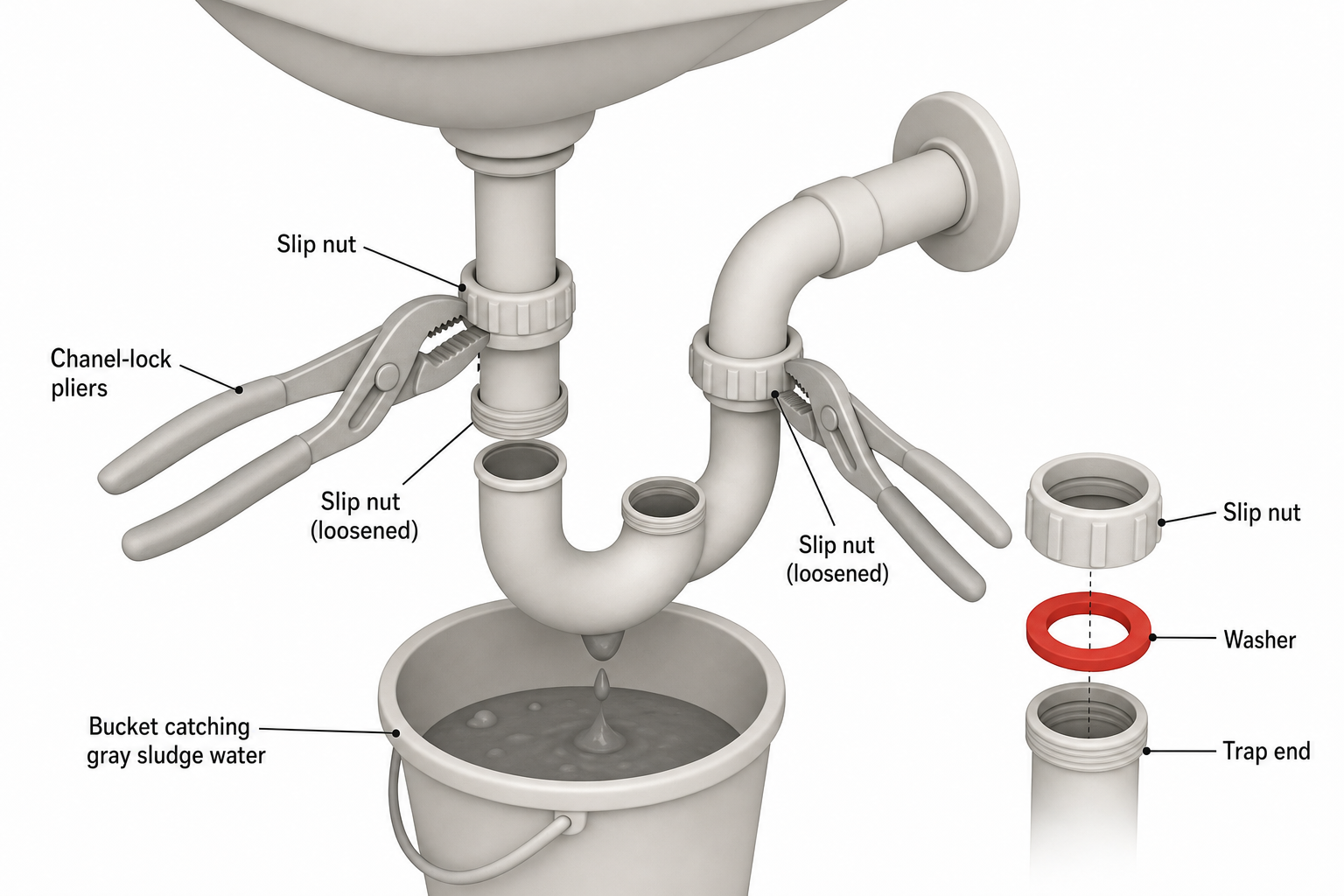
- Place a bucket or shallow pan under the trap to catch residual water.
- Loosen the slip nuts at both ends of the P-trap using channel-lock pliers or a strap wrench if they're too tight to turn by hand. Turn counterclockwise.
- Remove the trap and dump it into the bucket. You'll likely see a coating of grayish sludge inside — this is the buildup that narrows the pipe's inner diameter and slows drainage even without a hard blockage.
- Scrub the trap with an old bottle brush and hot water, or a mild dish soap solution. Check the slip-nut washers for cracking or flattening; replace them if they look worn, since this is the most common source of a leak after reassembly.
- Reinstall the trap, hand-tighten the slip nuts, then snug them a quarter turn further with pliers — overtightening can crack the plastic nuts or distort the washer seal.
- Run water for a minute and check every joint for drips.
If the Trap Is Clean but Still Slow
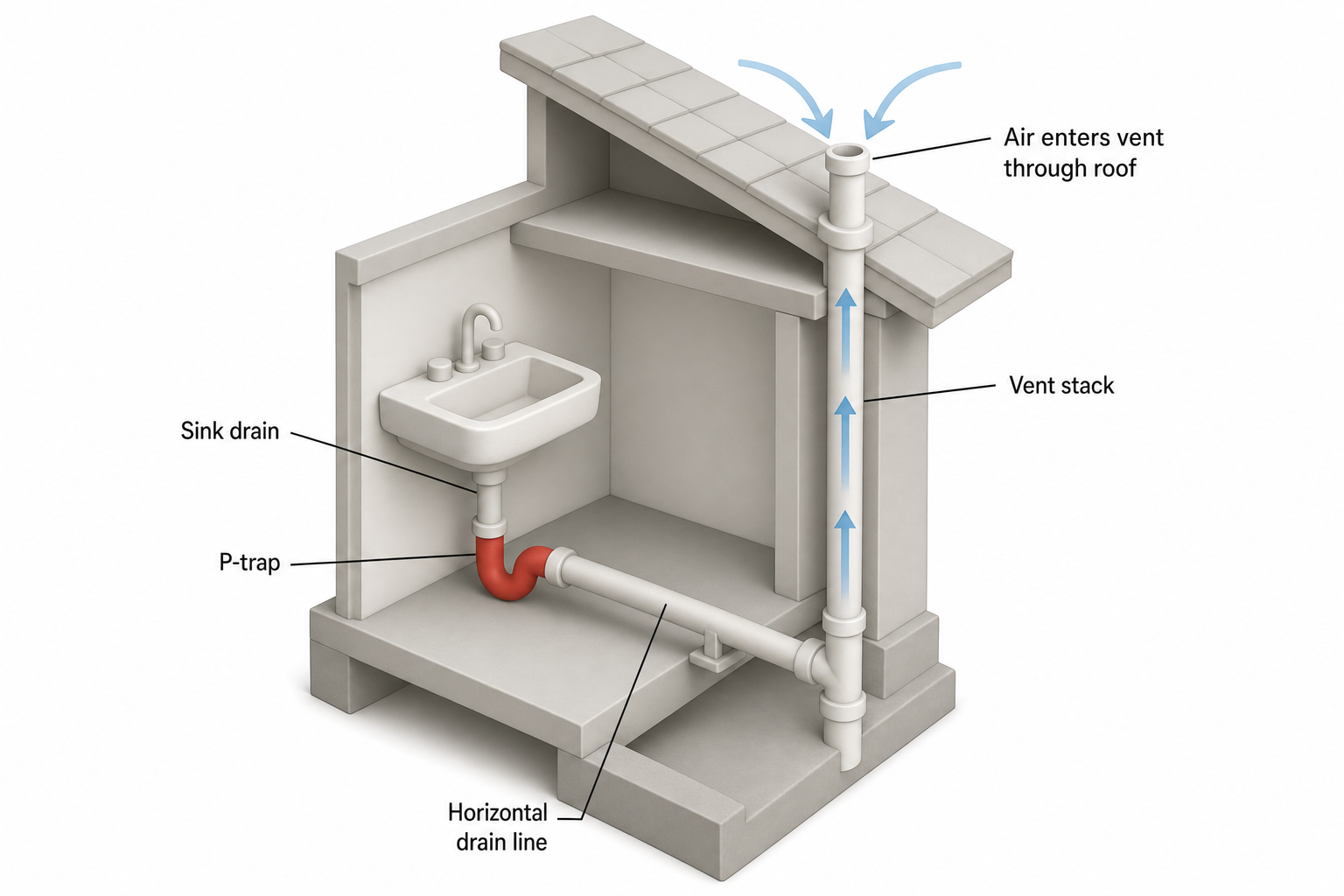
Sometimes the clog sits past the trap, in the horizontal drain line running to the wall. A flexible drain auger (hand crank, not the toilet auger's bulb design) fed through the open trap arm can reach several feet into this line. Crank clockwise while gently pushing, and pull back slowly when you feel resistance — often a wad of hair or a buildup ridge will come back on the tip.
Step 3: Consider the Vent Stack
If the sink gurgles, drains in slow glugs, or drains fine one day and poorly the next with no visible clog, the plumbing vent may be at fault rather than the drain line itself. Vents run from the drain system up through the roof and let air in behind draining water; without that air, water drains sluggishly or sucks the trap dry, which can also let sewer odor into the bathroom.
Common causes include a bird's nest, leaves, or ice blocking the vent's roof opening, or a vent that was poorly sized or installed too close to another vent during construction.
When to Skip Straight to a Professional
Call a licensed plumber if:
- Multiple fixtures in the house are draining slowly at once — this points to a main line clog or vent problem beyond a single sink fix.
- You smell sewer gas consistently, which can indicate a dry trap, a vent failure, or a cracked drain line.
- A drain auger meets hard, immovable resistance that feels like a pipe fitting rather than debris — forcing it can damage older or corroded pipes.
- The sink is original to an older home with cast iron or galvanized drain lines, where interior corrosion narrows the pipe in ways no amount of augering will fully clear.
What to Avoid
Chemical drain cleaners are tempting for a quick fix, but repeated use can degrade older PVC or metal pipes and washers, and the caustic liquid sitting in a trap you later need to remove by hand is a real safety hazard. Mechanical removal — stopper cleaning, trap cleaning, and augering — is generally the safer and more effective sequence for a slow draining bathroom sink. A cordless drill-powered drain snake or a hand auger from the recommendations below can make the trap-clearing and drain-line steps considerably easier than a manual crank model.
FAQ
Why does my bathroom sink drain slowly but not the tub or shower? A single slow fixture usually means the clog is local to that sink's stopper, trap, or the short drain run before it joins the main line — start with Step 1 and Step 2 above rather than suspecting the whole house's plumbing.
Is it safe to use a plunger on a bathroom sink? Yes, a small cup plunger can work, but block the overflow hole (the small opening near the top of the sink basin) with a wet rag first, or the plunger will just push air through it instead of building pressure in the drain.
How often should I clean the P-trap to prevent slow draining? There's no fixed schedule, since buildup speed depends on usage and water hardness, but many homeowners find cleaning it once or twice a year prevents the gradual slowdown that leads to a full clog.
Can a slow bathroom sink fix itself over time? No — buildup and clogs generally worsen, since debris that narrows the pipe gives new hair and soap scum more surface area to catch on, so it's worth addressing early rather than waiting for a full stoppage.
Why does my sink gurgle when the nearby toilet flushes? That's a classic sign of a venting issue — the toilet flush is pulling air from the sink's trap through a shared vent line, and it's worth having a plumber check the vent stack for blockage or an undersized connection.