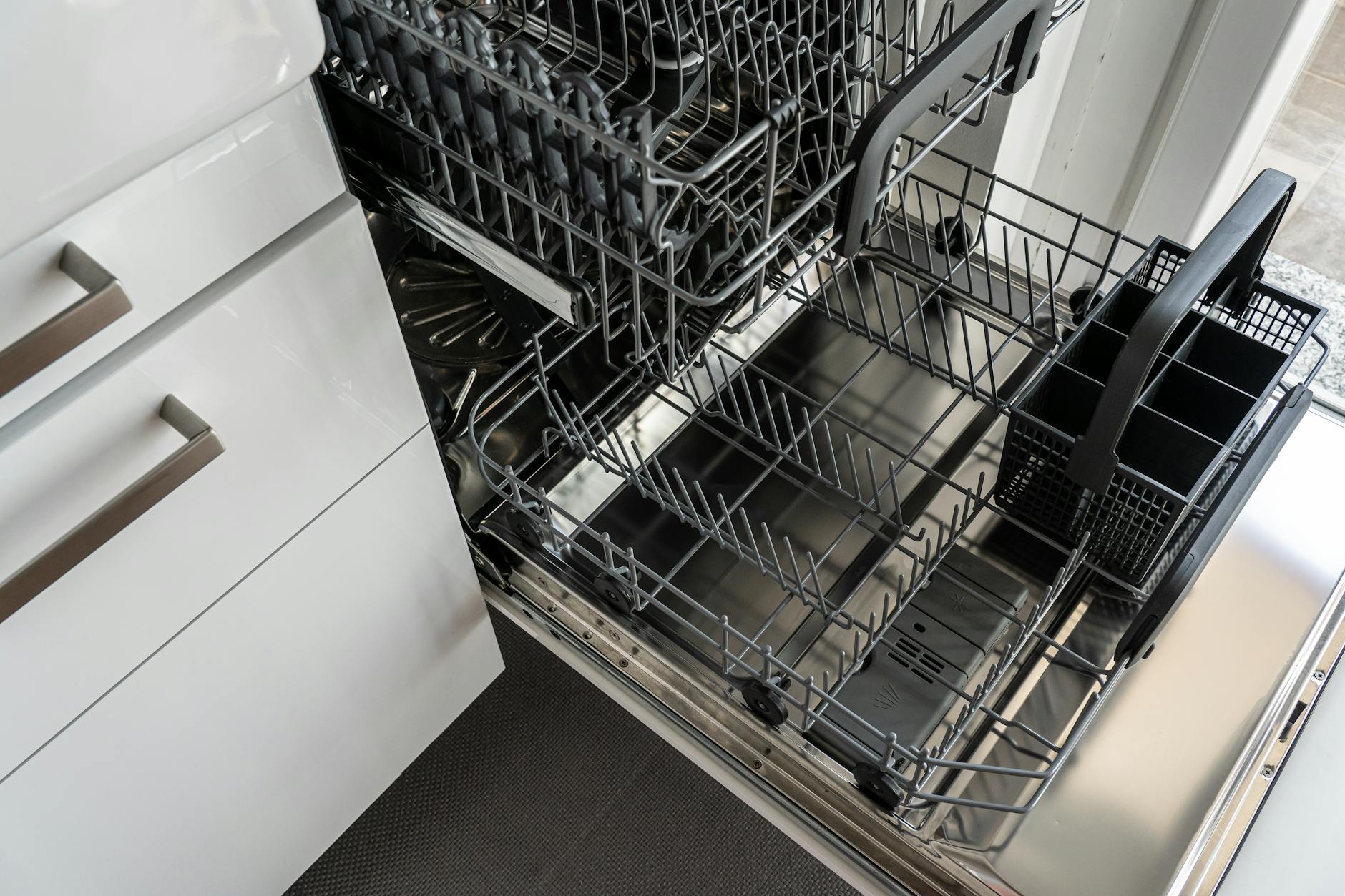
Standing water pooling in the bottom of your dishwasher after a cycle is one of the most common appliance complaints, and it's almost always fixable without a service call. The causes range from a food-clogged filter to a failed drain pump, and the trick is working through them in the right order—cheapest and easiest first—instead of guessing.
How the Drain System Works
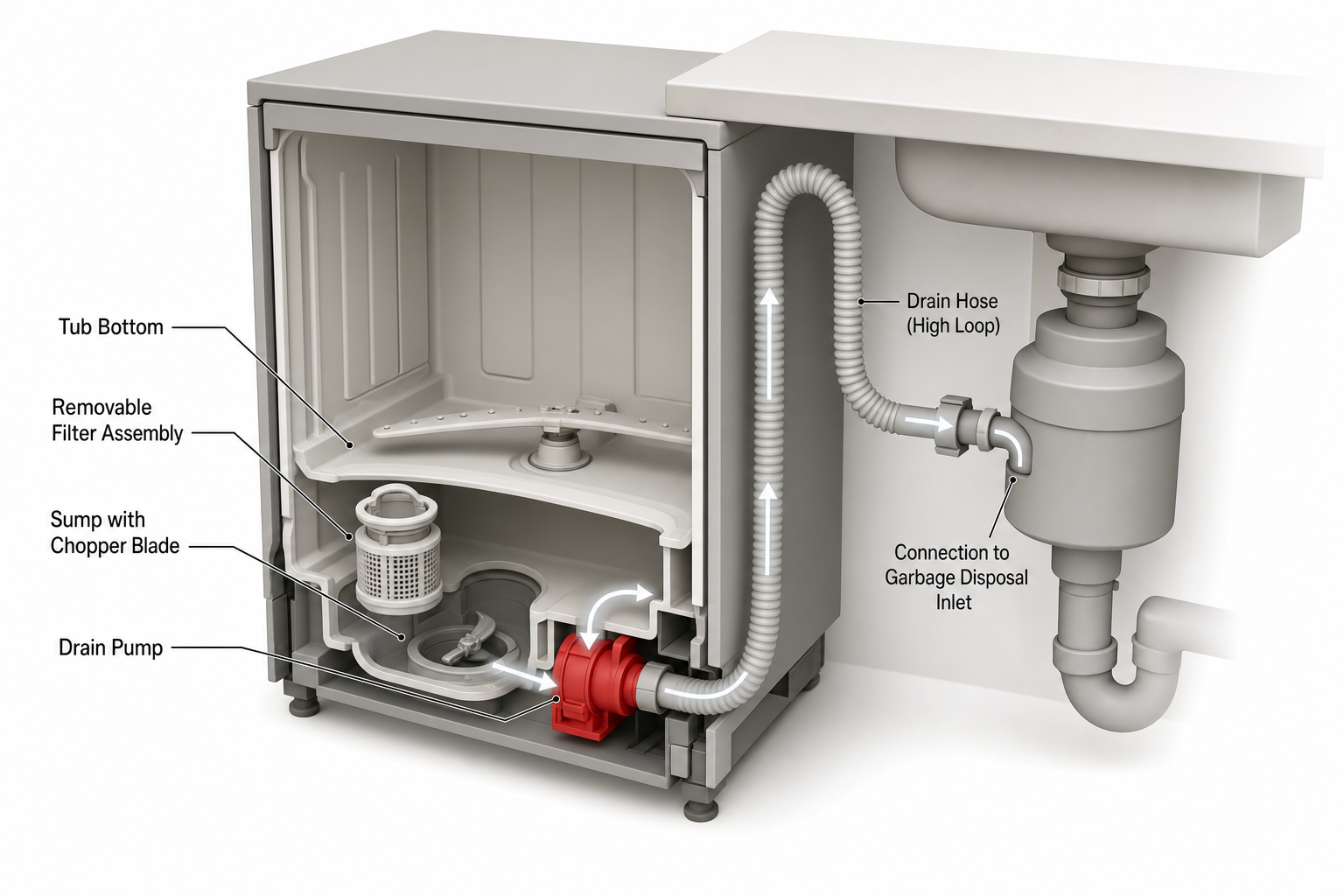
Most modern dishwashers use a single motor that reverses direction: one way to pump water into the spray arms, the other way to push wastewater out through a drain hose into your sink's drain line or a garbage disposal. Water has to pass through a filter assembly, then a sump area, then a drain pump, then a hose, then often a high loop or air gap, before it reaches your home's plumbing. A blockage or failure anywhere in that chain leaves water sitting in the tub.
Step 1: Check the Filter and Sump First
This is where most drainage problems actually live, and it's the easiest thing to check.
- Remove the bottom rack and locate the filter assembly at the bottom of the tub—usually a cylindrical or oval piece you twist counterclockwise a quarter turn and lift out.
- Inspect it for food debris, glass shards, produce stickers, or a broken piece of glass. Rinse it thoroughly under a faucet with an old toothbrush or soft brush.
- Look into the sump opening (where the filter sat). Shine a flashlight in and check for a bottle cap, twist tie, chicken bone, or other object stuck in the chopper blade or pump inlet. Remove anything you find by hand with the dishwasher unplugged.
- Check for a fine mesh screen underneath the main filter cylinder on some models; it can clog with coffee grounds and small food particles even when the main filter looks clean.
Step 2: Inspect the Drain Hose
If the filter and sump are clear but water still isn't draining, the corrugated drain hose running from the pump to under your sink is the next suspect.
- With the dishwasher pulled out from the cabinet (shut off power and the water supply valve first), locate the drain hose. It typically connects to a garbage disposal inlet or a dedicated dishwasher drain fitting under the sink, or to an air gap device mounted on the countertop.
- Check for kinks—dishwashers get pushed back into cabinets and the hose can fold sharply, especially if it's slightly too long.
- Disconnect the hose at both ends and look through it, or run a length of stiff wire or a plumber's snake through it, to clear grease or food clogs. A persistent partial clog often shows up as slow draining rather than a complete stoppage.
- If your dishwasher drains through a garbage disposal, make sure the knockout plug inside the disposal's dishwasher inlet was removed when the disposal was installed. A forgotten knockout plug is a surprisingly common cause of total drainage failure on newly installed disposals.
Step 3: Check the Air Gap or High Loop
Most installations require either an air gap (the small chrome cylinder often visible on the counter next to the faucet) or a high loop in the drain hose to prevent dirty sink water from siphoning back into the dishwasher.
- If you have an air gap, unscrew the cap and check the two hose barbs underneath for clogs; food debris commonly collects here.
- If instead your installation uses a high loop, confirm the hose is actually secured high—at least as high as the underside of the countertop—before running down to the drain connection. A loop that has sagged or been pulled down over time can prevent proper draining.
Step 4: Check the Garbage Disposal
If the dishwasher shares a drain path with a garbage disposal, a clogged or jammed disposal can back water up into the dishwasher.
- Run the disposal briefly (with water running) to confirm it spins freely and drains normally.
- If the disposal is new or was recently reconnected, double-check the dishwasher inlet knockout plug mentioned above.
- If the disposal itself is jammed, most units have a manual reset button on the underside, and many can be freed by turning the flywheel from below with an appropriate hex wrench inserted into the center bottom socket.
Step 5: Test the Drain Pump and Check Valve
If the filter, hose, and air gap are all clear but water still stands in the tub, suspect the drain pump itself or a stuck check valve.
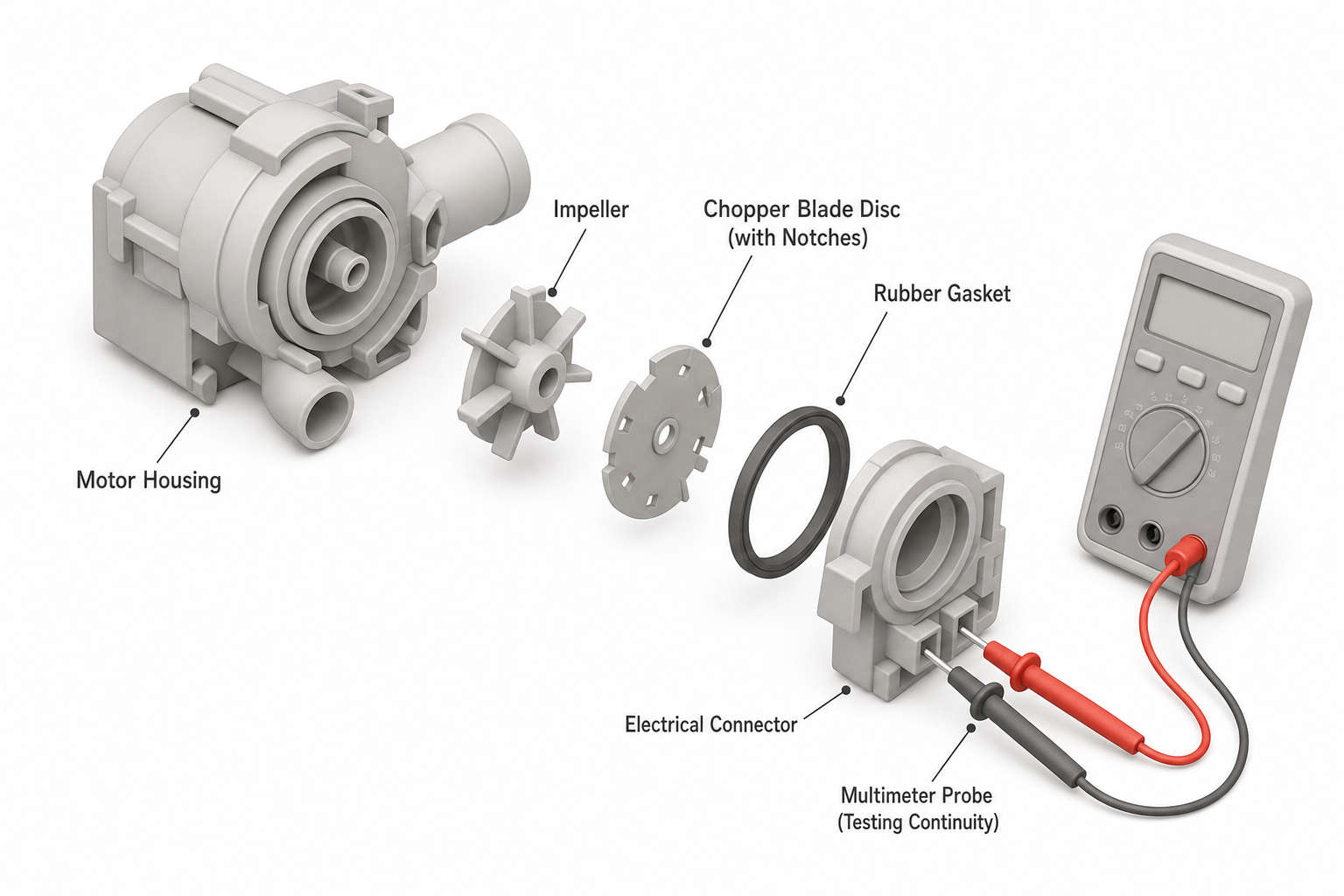
- Listen during the drain portion of a cycle. A pump that hums or whines but doesn't move water often has a jammed impeller or a seized motor bearing. Silence during what should be the drain phase suggests an electrical fault, a bad pump motor, or a failed door latch switch preventing the cycle from progressing.
- Some models have a small flapper-style check valve near the pump outlet or in the drain hose that can stick shut. If accessible, cycle it by hand to see if it moves freely.
- Testing the pump motor's windings with a multimeter for continuity, or fully removing the pump to inspect the impeller, generally means removing the lower access panel and disconnecting wiring harnesses.
Step 6: Rule Out a Control Board or Sensor Issue
On some dishwashers, a faulty float switch (the small cup-shaped sensor in the tub floor that detects water level) can prevent the control board from ever triggering the drain cycle. Lift the float by hand and make sure it moves freely up and down; debris underneath it is a common cause of it sticking. If the float moves freely and everything upstream is clear, but the pump still never engages, the control board or a wire harness connection may be at fault—this is usually a job for a technician, since replacement boards vary widely by model and misdiagnosis is easy.
Preventing Future Drain Clogs
- Scrape large food scraps off plates before loading rather than relying on the dishwasher to fully rinse them away.
- Clean the filter assembly every few weeks, or more often if you notice a smell or slow draining.
- Run the hot water at the kitchen sink for a few seconds before starting a cycle so the dishwasher fills with hot water immediately instead of lukewarm, which helps grease rinse away rather than solidify in the pump and hose.
- Periodically run an empty cycle with a dishwasher-safe cleaning product (see the recommendations below) to help dissolve grease buildup in the sump and hose.
FAQ
Why does my dishwasher have standing water even though it seems to run normally? Standing water after a completed cycle almost always points to a blockage between the tub and the home's drain line—most often the filter, sump, or drain hose—rather than a problem with the wash portion of the cycle, since fill and wash use a separate part of the pump path from drain.
Is it safe to just bail out the water and run another cycle? You can bail out standing water with a cup and towels to make inspection easier, but running another full cycle before addressing the actual clog usually just refills the tub with the same problem; troubleshoot the cause first.
Can a garbage disposal cause dishwasher drainage problems even if the disposal works fine for regular use? Yes—a partial clog in the disposal's dishwasher inlet chamber, or a forgotten knockout plug, can block dishwasher drainage even when the disposal grinds and drains normally for sink waste.
How do I know if I need a new drain pump versus just cleaning things out? If you've cleared the filter, sump, hose, and air gap and the pump makes no sound at all during the drain phase, or runs but produces no suction, that points toward a pump or electrical fault rather than a clog, and testing with a multimeter or replacing the pump is the next step.
Will vinegar or baking soda fix a dishwasher that won't drain? These can help with mild odor or light grease film as routine maintenance, but they won't clear a physical clog, a jammed impeller, or a stuck float switch, so don't rely on them as a fix for standing water.